Mechanical Energy and the Principle of Conservation of Energy
⏱️ 90 دقيقة📂 الميكانيكا🎯 مستوى متوسط
للتواصل: 00971504825082
⚡
كيف تتحول الطاقة بين الحركة والوضع؟ ومتى تبقى الطاقة الميكانيكية ثابتة؟How does energy shift between motion and position? When does mechanical energy stay constant?
KE = ½mv²الطاقة الحركيةKinetic energy
GPE = mghطاقة الوضع الجذبيةGravitational potential energy
ME = KE + GPEالطاقة الميكانيكيةMechanical energy
خريطة الدرسLesson map
مقدمة: الطاقة الميكانيكيةIntroduction: mechanical energy
الطاقة الحركية وطاقة الوضعKinetic and potential energy
مبدأ حفظ الطاقةThe principle of conservation of energy
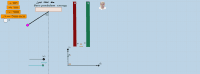
تجربة تفاعلية 1: كرة على مستوى مائلInteractive experiment 1: a ball on an incline
تجربة تفاعلية 2: البندولInteractive experiment 2: the pendulum
تمرين: أكمل جدول البندولExercise: complete the pendulum table
أمثلة محلولةWorked examples
حفظ الطاقة على المستوى المائل الأملسEnergy conservation on a smooth incline
الزنبرك: طاقة الوضع المرونية وحفظ الطاقةThe spring: elastic potential energy and conservation
القوى غير المحافظة والاحتكاكNon-conservative forces and friction
ملخص، ومراجعة، وامتحان من 20 سؤالًاSummary, review and a 20-question exam
١. مقدمة: الطاقة الميكانيكية1. Introduction: Mechanical Energy
الطاقة الميكانيكية لجسم هي مجموع طاقته الحركية وطاقة وضعه. وهي تتغير عندما تتغير سرعة الجسم أو ارتفاعه، لكن في نظام محافظ لا تتغير.The mechanical energy of a body is the sum of its kinetic energy and potential energy. It changes when the body’s speed or height changes, but in a conservative system it does not change.
ME = KE + GPEالطاقة الميكانيكية = الحركية + الوضعMechanical energy = kinetic + potential
٢. الطاقة الحركية وطاقة الوضع2. Kinetic and Potential Energy
الطاقة الحركية: طاقة يمتلكها الجسم بسبب حركته، ولا يمكن أن تكون سالبة.Kinetic energy: energy a body has because it moves; it can never be negative.
طاقة الوضع الجذبية: طاقة يمتلكها الجسم بسبب ارتفاعه عن المستوى المرجعي، وقد تكون سالبة إذا كان تحت المستوى المرجعي.Gravitational potential energy: energy a body has because of its height above a reference level; it can be negative below that level.
KE = ½ · m · v²m: الكتلة (kg)، v: السرعة (m/s)m: mass (kg), v: speed (m/s)
GPE = m · g · hh: الارتفاع عن المستوى المرجعي (m)h: height above the reference level (m)
٣. مبدأ حفظ الطاقة3. The Principle of Conservation of Energy
ينص مبدأ حفظ الطاقة على أن الطاقة في النظام المعزول لا تفنى ولا تُستحدث، ولكن تتحول من شكل إلى آخر. فتتحول الطاقة الحركية إلى حرارية بالاحتكاك، وتتحول طاقة الوضع إلى حركية أثناء السقوط الحر.The principle states that energy in an isolated system is neither created nor destroyed, but transforms from one form to another. Kinetic energy turns into heat through friction, and potential energy turns into kinetic energy during free fall.
🔑
شرط الحفظCondition for conservationفي النظام المحافظ (بدون احتكاك أو مقاومة هواء) تبقى الطاقة الميكانيكية ثابتة: KE + GPE = ثابت.In a conservative system (no friction or air resistance) the mechanical energy stays constant: KE + GPE = constant.
KE₁ + GPE₁ = KE₂ + GPE₂بين أي موضعين في النظام المحافظbetween any two positions of a conservative system
🧭
الاستنتاجConclusionيمكن أن تتغير طاقة الوضع وحدها، وتتغير الطاقة الحركية وحدها، لكن مجموعهما يبقى ثابتًا.Potential energy alone can change, and kinetic energy alone can change, but their sum stays constant.
٤. تجربة تفاعلية 1: كرة على مستوى مائل4. Interactive Experiment 1: A Ball on an Incline
جرّب بنفسك: اضغط «ابدأ»، ثم فعّل الاحتكاك وغيّر μ، ولاحظ أن المجموع يساوي الطاقة الابتدائية دائمًا.Try it yourself: press “Start”, then turn friction on and change μ. Notice that the total always equals the initial energy.
تجربة 1: كرة تنزلق على مستوى مائل (مع الاحتكاك وبدونه)Experiment 1: a ball sliding down an incline (with and without friction)
الهدف: أن تلاحظ أن مجموع الطاقة الحركية وطاقة الوضع ثابت إذا لم يوجد احتكاك، وأن جزءًا منه يتحول إلى حرارة إذا وُجد احتكاك. اضغط «ابدأ» ثم غيّر القيم.Goal: see that the sum of kinetic and potential energy stays constant without friction, and that part of it turns into heat when friction is present. Press “Start”, then change the values.
حركية KEKinetic KE
0 J
وضع PEPotential PE
0 J
حرارة QHeat Q
0 J
المجموعTotal
0 J
السرعة vSpeed v0 m/s
المسافة على المستوى sDistance on the slope s0 m
المجموع KE+PE+QKE + PE + Q0 J
الطاقة الابتدائية m·g·h₀Initial energy m·g·h₀0 J
لاحظ: «المجموع» يساوي «الطاقة الابتدائية» دائمًا. بدون احتكاك تتحول طاقة الوضع كلها إلى حركة، ومع الاحتكاك يضيع جزء منها حرارةً.Notice: the “Total” always equals the “Initial energy”. Without friction all potential energy becomes motion; with friction part of it is lost as heat.
٥. تجربة تفاعلية 2: البندول5. Interactive Experiment 2: The Pendulum
راقب تحول الطاقة في البندول، ثم فعّل مقاومة الهواء لترى تناقص الطاقة الميكانيكية.Watch the energy exchange in the pendulum, then turn on air resistance to see the mechanical energy decrease.
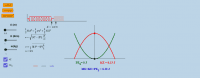
تجربة 2: البندول وتحول الطاقة بين الحركية والوضعExperiment 2: the pendulum and the exchange between kinetic and potential energy
الهدف: أن تلاحظ أن الطاقة الميكانيكية للبندول المثالي ثابتة عند كل نقطة، وأن الطاقة الحركية تكون أكبر عند القاع، وطاقة الوضع أكبر عند أعلى نقطة. فعّل «مقاومة الهواء» لترى تناقص الطاقة الميكانيكية.Goal: see that the mechanical energy of an ideal pendulum is the same at every point, that kinetic energy is largest at the bottom and potential energy largest at the highest point. Turn on “air resistance” to see the mechanical energy decrease.
حركية KEKinetic KE
0 J
وضع PEPotential PE
0 J
المجموع ETotal E
0 J
السرعة vSpeed v
0 m/s
الخط الأخضر (المجموع) يبقى مستويًا إذا لم توجد مقاومة هواء، ويهبط تدريجيًا إذا وُجدت.The green line (total) stays flat without air resistance, and falls gradually when it is present.
٦. تمرين: أكمل جدول البندول6. Exercise: Complete the Pendulum Table
A و C أقصى إزاحة على جهتي الاتزان، وB موضع الاتزان (h = 0).A and C are the maximum displacements on either side; B is equilibrium (h = 0).
خيط طوله L = 0.8 m، كتلته m = 0.2 kg، أُزيح بزاوية 30° عند الموضع A وترك ليهتز. أكمل الجدول بافتراض أن مستوى الصفر هو موضع الاتزان (g = 9.8 m/s²).A string of length L = 0.8 m carries m = 0.2 kg and is released from position A at 30°. Complete the table, taking equilibrium as the zero level (g = 9.8 m/s²).
طاقة الحركة KE (J)KE (J)
طاقة الوضع GPE (J)GPE (J)
الارتفاع h (m)Height h (m)
الموضعPosition
A
B
C
٧. أمثلة محلولة7. Worked Examples
📌
المثال 1: السيارة على التلExample 1: the car on a hillطاقة الوضع للسيارة أعلى ما يمكن عند أعلى المنحدر.The car’s potential energy is greatest at the top of the hill.
📌
المثال 2: السيارة على التلExample 2: the car on a hillالطاقة الحركية أعلى ما يمكن عند أسفل المنحدر، حيث السرعة أكبر ما يمكن.The kinetic energy is greatest at the bottom of the hill, where the speed is greatest.
📌
أين تكون الطاقة؟ (بندول)Where is the energy? (pendulum)الحركية أكبر ما يمكن عند موضع الاتزان. الوضع أكبر ما يمكن عند أقصى إزاحة (A وC). الوضع سالبة إذا كان البندول أسفل المستوى المرجعي.KE is greatest at equilibrium. PE is greatest at maximum displacement (A and C). PE is negative when the pendulum is below the reference level.
📌
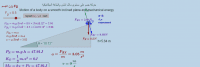
سؤال محلول: مكعب على مستوى مائلWorked question: a cube on an inclineمكعب كتلته 0.5 kg على مستوى أملس طوله 1 m يميل بزاوية 20°. الارتفاع h = L·sin20° = 0.342 m، والسرعة عند الأرض v = √(2gh) = √(2 × 9.8 × 0.342) ≈ 2.6 m/s (الإجابة B).A 0.5 kg cube on a smooth 1 m incline at 20°. The height h = L·sin20° = 0.342 m, and the speed at the ground v = √(2gh) = √(2 × 9.8 × 0.342) ≈ 2.6 m/s (answer B).
٨. حفظ الطاقة على المستوى المائل الأملس8. Energy Conservation on a Smooth Incline
عندما ينزلق جسم على مستوى أملس من السكون، تتحول طاقة وضعه كلها إلى حركية، فتكون سرعته عند أسفل المستوى v = √(2gh)، وهي لا تعتمد على الكتلة.When a body slides from rest down a smooth incline, all its potential energy becomes kinetic, so its speed at the bottom is v = √(2gh), which does not depend on mass.
v = √(2 · g · h)عند أسفل مستوى أملس من السكونat the bottom of a smooth incline, starting from rest
٩. الزنبرك: طاقة الوضع المرونية وحفظ الطاقة9. The Spring: Elastic Potential Energy and Conservation
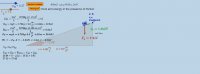
طاقة الوضع المرونية للزنبرك U_S = ½ K X². عند إزاحة جسم معلّق بزنبرك وتركه، تبقى الطاقة الميكانيكية ثابتة إذا لم يوجد احتكاك أو مقاومة هواء.The elastic potential energy of a spring is U_S = ½ K X². When a body hanging on a spring is displaced and released, the mechanical energy stays constant if there is no friction or air resistance.
U_S = ½ · K · X²K: ثابت الزنبرك (N/m)، X: الإزاحة (m)K: spring constant (N/m), X: displacement (m)
عند أقصى إزاحة (X = A): السرعة صفر، والطاقة كلها وضع: ½KA².At maximum displacement (X = A): speed is zero and all energy is potential: ½KA².
عند موضع الاتزان (X = 0): طاقة الوضع صفر، والسرعة أعظم ما يمكن.At equilibrium (X = 0): potential energy is zero and speed is maximum.
v_max = A · √(K/m)تطبيق حفظ الطاقة بين A والاتزانfrom conservation of energy between A and equilibrium
v = √((A² − X²) · K/m)السرعة عند أي إزاحة Xthe speed at any displacement X
تجربة تفاعلية: كتلة على زنبرك تهتز على سطح أفقي أملس. لاحظ تبادل الطاقة بين المرونية والحركية، وأن الزمن الدوري لا يتغير بتغير السعة.Interactive experiment: a mass on a spring oscillating on a smooth horizontal surface. Notice the exchange between elastic and kinetic energy, and that the period does not depend on the amplitude.
تجربة: كتلة متصلة بزنبرك تهتز على مستوى أفقي أملسExperiment: a mass on a spring oscillating on a smooth horizontal surface
الهدف: أن تلاحظ أن الحركة توافقية بسيطة، وأن الطاقة تتبادل بين طاقة الوضع المرونية وطاقة الحركة، وأن مجموعهما ثابت عند غياب الاحتكاك. النقاط المحددة على المسار: A أقصى إزاحة إلى اليسار، وB موضع الاتزان، وC أقصى إزاحة إلى اليمين. غيّر السعة والكتلة وثابت الزنبرك وراقب التغير.Goal: see that the motion is simple harmonic, that energy is exchanged between elastic potential energy and kinetic energy, and that their sum stays constant without friction. Marked points on the track: A is maximum displacement to the left, B is equilibrium, C is maximum displacement to the right. Change the amplitude, mass and spring constant and watch the changes.
حركية KEKinetic KE
0 J
مرونية UₛElastic Uₛ
0 J
المجموعTotal
0 J
الإزاحة xDisplacement x
0 m
الزمن الدوري TPeriod T0 s
السرعة القصوى v_maxMaximum speed v_max0 m/s
الطاقة الكلية ½KA²Total energy ½KA²0 J
الزمن tTime t0.00 s
عند الإزاحة القصوى تكون الطاقة كلها مرونية (والسرعة صفر)، وعند الاتزان تكون كلها حركية (والسرعة أعظم ما يمكن). مجموعهما ثابت دائمًا، ويتغير الزمن الدوري T = 2π√(m/K) مع الكتلة والزنبرك لا مع السعة.At maximum displacement all energy is elastic and the speed is zero; at equilibrium all energy is kinetic and the speed is maximum. Their sum is always constant, and the period T = 2π√(m/K) depends on the mass and spring, not on the amplitude.
١٠. القوى غير المحافظة والاحتكاك10. Non-Conservative Forces and Friction
عند حركة جسم على سطح خشن يُستهلك جزء من الطاقة في الاحتكاك ويتحول إلى طاقة حرارية. لذلك يكون مجموع الطاقة الميكانيكية الابتدائية والشغل ضد الاحتكاك مساويًا للطاقة الميكانيكية النهائية.When a body moves on a rough surface, part of the energy is used against friction and becomes thermal energy. So the initial mechanical energy plus the work done against friction equals the final mechanical energy.
KE₁ + GPE₁ + W_f = KE₂ + GPE₂W_f: الشغل المبذول ضد الاحتكاك (سالب)W_f: work done against friction (negative)
🧭
ملاحظةNoteالقوى غير المحافظة مثل الاحتكاك تجعل الطاقة الميكانيكية تتناقص، لأن جزءًا منها يتحول إلى حرارة.Non-conservative forces such as friction make mechanical energy decrease, because part of it turns into heat.
📖
مراجعة سريعةQuick review
ME = KE + GPE، وتبقى ثابتة في النظام المحافظ.ME = KE + GPE, and it stays constant in a conservative system.
السرعة عند القاع على مستوى أملس: v = √(2gh)، ولا تعتمد على الكتلة.Speed at the bottom of a smooth incline: v = √(2gh), independent of mass.
مع الاحتكاك أو مقاومة الهواء تتناقص الطاقة الميكانيكية وتتحول إلى حرارة.With friction or air resistance the mechanical energy decreases and turns into heat.
⚡🧪
اختبار الطاقة الميكانيكية ومبدأ حفظ الطاقةMechanical Energy and Conservation Quiz
20 سؤالاً - الطاقة الحركية، طاقة الوضع، وحفظ الطاقة20 Questions - Kinetic energy, potential energy and conservation
المعلوماتInfo
الأسئلةQuestions
النتائجResults
📌 تعليمات مهمة:
• عدد الأسئلة: 20 سؤالاً
• مدة الاختبار: 30 دقيقة
• لا يمكنك تغيير إجاباتك أو إعادة الاختبار إلا بعد 24 ساعة من التسليم.
• تأكد من إجاباتك قبل التسليم!
📌 Important Instructions:
• Number of questions: 20 questions
• Quiz duration: 30 minutes
• You cannot change your answers or retake the quiz for 24 hours after submission.
• Make sure of your answers before submitting!
🔒لقد قمت بهذا الاختبار بالفعل. لا يمكنك إعادته أو تغيير إجاباتك إلا بعد 24 ساعة.You have already taken this quiz. You cannot retake it or change your answers for 24 hours.
24:00:00
نتيجتك السابقة:Your previous score:0/20
30:00
السؤالQuestion1/20
التقدم:Progress:0%تم الإجابة:Answered:0/20
نتيجة الاختبارQuiz Results
0/20
🔗 محاكيات GeoGebra للاستعانة بها عند اللزوم🔗 GeoGebra simulations for reference
اضغط «تشغيل» لتعمل المحاكاة هنا داخل الدرس؛ ويمكن للطالب الرجوع إليها لتجربة الفكرة بطريقة أخرى.Press “Run” to start the simulation right here inside the lesson; the student can come back to it to try the idea another way.
حفظ الطاقة لبندول (GeoGebra)Conservation of energy for a pendulum (GeoGebra)