🎯 نواتج التعلم
🎯 Learning Outcomes
بعد دراسة هذا الدرس ستكون قادرًا على أن:
After this lesson you will be able to:
- تفسّر معنى الجسم الموجب والسالب والمتعادل بدلالة البروتونات والإلكترونات.Explain what a positive, negative and neutral body mean in terms of protons and electrons.
- تحسب الشحنة \(q=n\,e\) وعدد الإلكترونات المنتقلة، وتطبّق حفظ الشحنة.Calculate the charge \(q=n\,e\) and the number of electrons transferred, and apply conservation of charge.
- تميّز بين الموصلات والعوازل وأشباه الموصلات وفائقة التوصيل.Distinguish conductors, insulators, semiconductors and superconductors.
- تشرح الشحن بالدلك والحث والتلامس وتحدد نوع الشحنة الناتجة في كلٍّ منها.Explain charging by friction, induction and contact and decide the resulting charge in each.
- تحسب شحنة كل من موصلين بعد التلامس (المتماثلين وغير المتماثلين).Calculate the charge of each of two conductors after contact (identical and non-identical).
⚛️ نوعان من الشحنة
⚛️ Two Kinds of Charge
يوجد نوعان من الشحنة الكهربائية: موجبة وسالبة. تتكوّن كل مادة من ذرات، وفي مركز الذرة النواة وفيها بروتونات موجبة ونيوترونات متعادلة، وتدور حولها إلكترونات سالبة.
There are two kinds of electric charge: positive and negative. Every material is made of atoms; at the centre is the nucleus with positive protons and neutral neutrons, and negative electrons move around it.
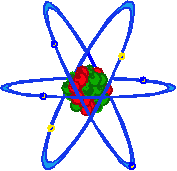
نموذج الذرة: نواة من بروتونات ونيوترونات وإلكترونات حولها.
A model of the atom: a nucleus of protons and neutrons with electrons around it.
| الجسيمParticle | الشحنةCharge | مكانهLocation | هل ينتقل بين الأجسام؟Does it transfer between bodies? |
|---|---|---|---|
| بروتونProton | \(+e=+1.6\times10^{-19}\ \mathrm{C}\)\(+e=+1.6\times10^{-19}\ \mathrm{C}\) | النواةnucleus | لاno |
| نيوترونNeutron | صفرzero | النواةnucleus | لاno |
| إلكترونElectron | \(-e=-1.6\times10^{-19}\ \mathrm{C}\)\(-e=-1.6\times10^{-19}\ \mathrm{C}\) | حول النواةaround the nucleus | نعم (يُكتسب أو يُفقد)yes (gained or lost) |
❓ لماذا الذرة متعادلة كهربائيًا؟
❓ Why is the atom electrically neutral?
لأن عدد البروتونات يساوي عدد الإلكترونات، وشحنة البروتون تساوي شحنة الإلكترون في المقدار: \(q_p=-q_e=e=1.6\times10^{-19}\ \mathrm{C}\). فمجموع الشحنات صفر.
Because the number of protons equals the number of electrons and the proton’s charge equals the electron’s in magnitude: \(q_p=-q_e=e=1.6\times10^{-19}\ \mathrm{C}\). The total charge is zero.
📌 معنى الجسم المشحون
📌 What a charged body means
- موجب الشحنة: فقد إلكترونات ⇒ عدد البروتونات أكبر من عدد الإلكترونات.Positively charged: lost electrons ⇒ protons outnumber electrons.
- سالب الشحنة: اكتسب إلكترونات ⇒ عدد الإلكترونات أكبر من عدد البروتونات.Negatively charged: gained electrons ⇒ electrons outnumber protons.
- متعادل: العددان متساويان.Neutral: the two numbers are equal.
المهم: الإلكترونات فقط هي التي تنتقل بين الأجسام (فالبروتونات مرتبطة بقوة في النواة)، لذلك لا نقول «اكتسب بروتونات» ولا «فقد بروتونات».
The key point: only electrons move between bodies (the protons are firmly bound in the nucleus), so we never say “gained protons” or “lost protons”.
🔢 مقدار الشحنة وحفظها
🔢 The Size of Charge and Its Conservation
📌 تكميم الشحنة
📌 Quantisation of charge
شحنة أي جسم عدد صحيح من الشحنة الأولية \(e\):
The charge of any body is a whole number of the elementary charge \(e\):
\[q=\pm n\,e,\qquad e=1.6\times10^{-19}\ \mathrm{C}\]
حيث \(n\) عدد الإلكترونات المكتسبة (الشحنة سالبة) أو المفقودة (الشحنة موجبة). ومنه \(n=\dfrac{|q|}{e}\) ويجب أن تخرج \(n\) عددًا صحيحًا.
where \(n\) is the number of electrons gained (negative charge) or lost (positive charge). Hence \(n=\dfrac{|q|}{e}\), and \(n\) must come out as a whole number.
📘 حفظ الشحنة
📘 Conservation of charge
الشحنة لا تفنى ولا تُستحدث، وإنما تنتقل من جسم إلى آخر. فإذا اكتسب جسم \(n\) إلكترونًا فقد جسم آخر \(n\) إلكترونًا، ويبقى المجموع الجبري للشحنات ثابتًا.
Charge is neither destroyed nor created; it only moves from one body to another. If one body gains \(n\) electrons another loses \(n\) electrons, and the algebraic sum of the charges stays constant.
🧪 تجربة 1: من الذرات إلى الشحنة: أضف الإلكترونات وانزعها
🧪 Experiment 1: From atoms to charge: add and remove electrons
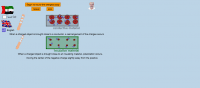
الجسم المتعادل فيه 12 بروتونًا موجبًا و12 إلكترونًا سالبًا. انقر إلكترونًا لنزعه أو اضغط «أضف إلكترونًا». لاحظ أن البروتونات لا تتحرك أبدًا، وأن إشارة الشحنة تتبع الزيادة، وأن \(q=n\,e\). جرّب «هدف جديد» لتحصل على شحنة محددة.
The neutral body has 12 positive protons and 12 negative electrons. Click an electron to remove it or press “Add an electron”. Notice that the protons never move, that the sign follows the excess, and that \(q=n\,e\). Try “New target” to reach a given charge.
دُلك قضيب زجاج بقطعة صوف فأصبح القضيب موجب الشحنة. ماذا حدث للقضيب وللصوف؟
A glass rod is rubbed with wool and becomes positively charged. What happened to the rod and to the wool?
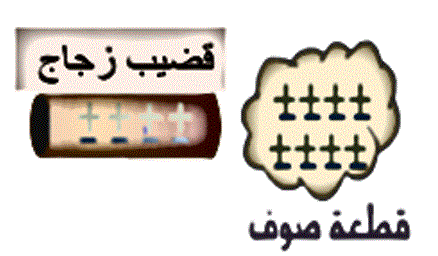
القضيب الزجاجي (موجب) وقطعة الصوف (سالبة).
The glass rod (positive) and the wool (negative).
دُلك بالون بقطعة صوف فأصبح البالون سالب الشحنة بمقدار \(8\times10^{-19}\ \mathrm{C}\). ماذا حدث لقطعة الصوف؟ (\(e=1.6\times10^{-19}\ \mathrm{C}\))
A balloon is rubbed with wool and becomes negative with a charge of \(8\times10^{-19}\ \mathrm{C}\). What happened to the wool? (\(e=1.6\times10^{-19}\ \mathrm{C}\))
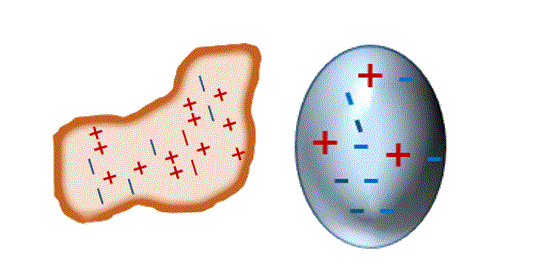
توزّع الشحنات على الصوف (موجب) وعلى البالون (سالب).
The distribution of the charges on the wool (positive) and on the balloon (negative).
الشحنات المتشابهة تنشأ بينها قوة …، والمختلفة قوة …
Like charges produce a … force and unlike charges a … force
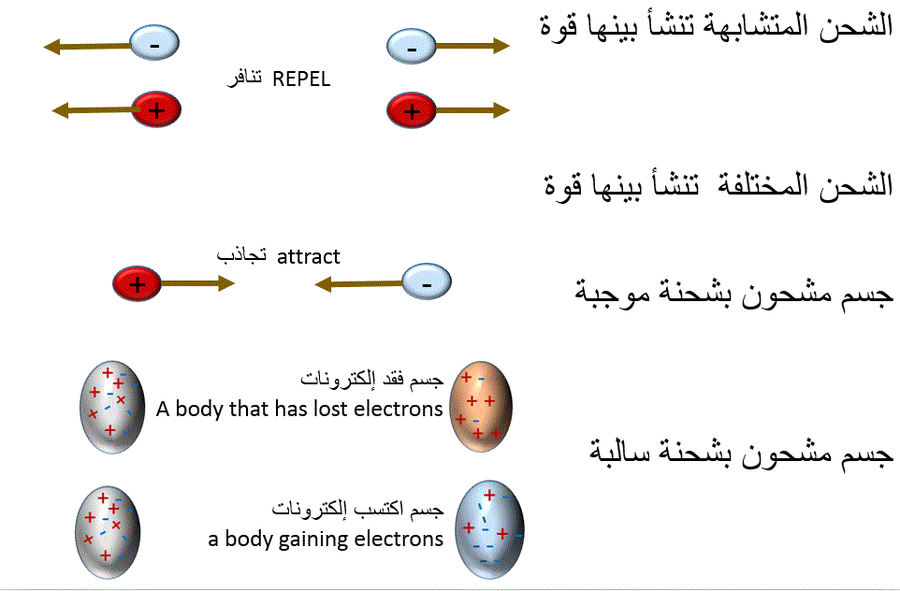
ملخص مصوّر: القوة بين الشحنات ومعنى الجسم الموجب والسالب.
An illustrated summary: the force between charges and the meaning of a positive and a negative body.
إذا كان عدد الإلكترونات في جسم أكبر من عدد البروتونات فإن الجسم:
If the number of electrons in a body is greater than the number of protons the body is:
جسم شحنته \(+4.8\times10^{-19}\ \mathrm{C}\) فقد:
A body of charge \(+4.8\times10^{-19}\ \mathrm{C}\) has lost:
🔌 الموصلات والعوازل وأشباه الموصلات وفائقة التوصيل
🔌 Conductors, Insulators, Semiconductors and Superconductors
| النوعKind | ما يميزهWhat characterises it | أمثلةExamples |
|---|---|---|
| موصلاتConductors | تحتوي على إلكترونات حرة تتحرك داخل المادة فتوصل الكهرباء والشحنةcontain free electrons that move inside the material, so they conduct electricity and charge | النحاس، الحديد، الألومنيوم، الفضةcopper, iron, aluminium, silver |
| عوازلInsulators | إلكتروناتها مرتبطة بالنواة غير حرة، فلا توصل التيار وتحتفظ بالشحنة موضعيًاelectrons are bound to the nuclei and not free, so they do not conduct and keep a charge where it was put | الخشب، البلاستيك، الإيبونيت، الزجاج، المطاطwood, plastic, ebonite, glass, rubber |
| أشباه موصلاتSemiconductors | توصل التيار في ظروف خاصة (حرارة أو شوائب أو ضوء)conduct under special conditions (heat, impurities or light) | الجرمانيوم والسيليكون (عناصر المجموعة 14)germanium and silicon (group 14) |
| فائقة التوصيلSuperconductors | مقاومتها شبه معدومة، ولا تظهر إلا عند درجات حرارة منخفضة جدًاalmost zero resistance, appearing only at very low temperatures | الزئبق، الرصاص، النيوبيومmercury, lead, niobium |
🆚 الفرق بين الموصلات والعوازل
🆚 The Difference Between Conductors and Insulators
السبب الوحيد للفرق هو الإلكترونات الحرة: في الموصل تتحرر إلكترونات التكافؤ من ذراتها وتجول بين الذرات (كالنحاس)، فإذا أضفنا شحنة إلى طرف انتقلت وانتشرت. أما في العازل فكل إلكترون مرتبط بذرته فلا يتحرك، فتبقى الشحنة في مكانها.
The only reason for the difference is the free electrons: in a conductor valence electrons are released from their atoms and roam between them (as in copper), so charge added at one end moves and spreads. In an insulator every electron is bound to its atom and cannot move, so the charge stays where it is.
| وجه المقارنةAspect | الموصلاتConductors | العوازلInsulators |
|---|---|---|
| الإلكتروناتElectrons | حرة الحركةfree to move | مرتبطة بذراتهاbound to their atoms |
| توصيل التيارConducting current | ✅ ممتاز✅ excellent | ❌ لا توصل❌ do not conduct |
| سلوك الشحنة المضافةAdded charge | تنتقل وتنتشر على السطح كلهmoves and spreads over the whole surface | تبقى موضعية حيث وُضعتstays local where it was put |
| الشحن بالدلكCharging by rubbing | تهرب الشحنة إن أُمسك باليدthe charge escapes if held in the hand | يحتفظ بالشحنة فيسهل شحنهkeeps the charge so it is easy to charge |
| أمثلةExamples | النحاس، الفضة، الألومنيوم، الحديدcopper, silver, aluminium, iron | الخشب، الزجاج، البلاستيك، المطاطwood, glass, plastic, rubber |
| استعمالهاUses | أسلاك الكهرباء ومسامير التأريضelectric wires and earthing rods | غلاف الأسلاك ومقابض الأدوات الآمنةwire insulation and safe tool handles |
📘 ماذا يحدث عند تقريب جسم مشحون؟
📘 What happens when a charged body comes near?
في الموصل: تتحرك الإلكترونات الحرة فتنفصل الشحنات: الوجه القريب من القضيب الموجب يصير سالبًا والبعيد موجبًا (إعادة ترتيب الشحنات)، وهذا أساس الشحن بالحث. وإذا أُبعد القضيب عادت الشحنات كما كانت.
In a conductor: free electrons move and the charges separate: the face near a positive rod becomes negative and the far face positive (rearrangement of the charge), which is the basis of charging by induction. When the rod is removed the charges return.
في العازل: لا توجد إلكترونات حرة تنتقل، لكن سحابة الإلكترونات في كل ذرة (أو جزيء) تنزاح قليلًا نحو القضيب الموجب، فتتكوّن ثنائيات أقطاب صغيرة متراصفة: هذا هو الاستقطاب. وتظهر شحنة سطحية ضعيفة، ولهذا يجذب القضيب قصاصات الورق (عازل) جذبًا ضعيفًا.
In an insulator: no free electrons can travel, but the electron cloud of each atom (or molecule) shifts slightly towards a positive rod, forming many small aligned dipoles: this is polarisation. A weak surface charge appears, which is why a rod attracts bits of paper (an insulator) only weakly.
🧪 تجربة 2: الموصل يُعيد ترتيب الشحنات والعازل يُستقطَب
🧪 Experiment 2: The conductor rearranges its charge and the insulator polarises
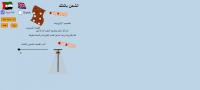
قرّب القضيب المشحون (اسحبه أو حرّك الشريط) من قطعتين: موصل في الأعلى وعازل في الأسفل. في الموصل تتحرك الإلكترونات الحرة فتتجمع شحنة سالبة عند الوجه القريب وموجبة عند البعيد (إعادة ترتيب). أما في العازل فلا إلكترونات حرة، فتنزاح سحابة كل ذرة قليلًا (استقطاب). أبعد القضيب لترى كل شيء يعود متعادلًا.
Bring the charged rod near (drag it or move the slider) two pieces: a conductor on top and an insulator below. In the conductor the free electrons move so negative charge gathers on the near face and positive on the far face (rearrangement). In the insulator there are no free electrons, so each atom’s cloud shifts slightly (polarisation). Move the rod away and everything returns to neutral.
وُصلت كرة مشحونة بكرة متعادلة بساق من مادة فلم تنتقل أي شحنة. المادة غالبًا:
A charged sphere was joined to a neutral one by a rod and no charge moved. The material is probably:
💡 فرق مهم لشحن الأجسام
💡 An important difference for charging
في العازل تبقى الشحنة حيث وُضعت (تنتقل بالدلك فقط وتبقى موضعية). وفي الموصل تنتشر الشحنة على سطحه كله، ولهذا نحمل الموصل بمقبض عازل كي لا تهرب شحنته إلى أيدينا.
In an insulator the charge stays where it is put (it appears by rubbing and stays local). In a conductor the charge spreads over its whole surface, which is why a conductor is held by an insulating handle so its charge does not escape through our hand.
مادة لا توصل التيار لأن إلكتروناتها مرتبطة بنواتها، هي:
A material that does not conduct because its electrons are bound to their nuclei is:
🧶 الشحن بالدلك
🧶 Charging by Friction
عند دلك جسمين مختلفين معًا تنتقل الإلكترونات من أحدهما إلى الآخر لأن المادتين تختلفان في قابلية فقد الإلكترونات أو اكتسابها. المادة الأكثر ميلًا إلى فقدها تصبح موجبة والأخرى سالبة، ويبقى المجموع صفرًا.
When two different bodies are rubbed together electrons move from one to the other because the materials differ in their tendency to lose or gain electrons. The material more inclined to lose them becomes positive and the other negative, and the total stays zero.
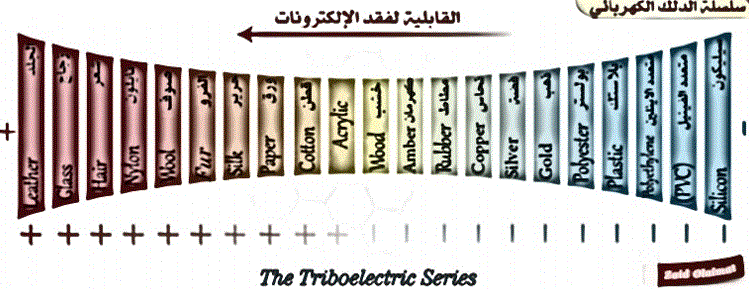
السلسلة الكهروستاتيكية: تتجه المواد من الأكثر فقدًا للإلكترونات (موجبة) إلى الأكثر اكتسابًا (سالبة).
The triboelectric series: materials run from the ones that lose electrons most (positive) to the ones that gain them most (negative).
🧪 تجربة 3: الشحن بالدلك: اختر مادتين ودلكهما
🧪 Experiment 3: Charging by friction: choose two materials and rub them
اختر مادة القضيب (A) ومادة القماش (B)، ثم اسحب القضيب فوق القماش مرات عدة. المادة الأعلى في «السلسلة الكهروستاتيكية» (الأقرب للفرو) تفقد الإلكترونات فتصبح موجبة، والأخرى تكتسبها فتصبح سالبة. ثم تنبّأ بشحنة A قبل أن تدلك.
Choose the rod material (A) and the cloth material (B), then drag the rod over the cloth several times. The material higher in the triboelectric series (nearer fur) loses electrons and becomes positive; the other gains them and becomes negative. Then predict the charge of A before rubbing.
دُلك قضيب مطاط بفرو فشُحن المطاط بشحنة سالبة. إذن الفرو:
A rubber rod is rubbed with fur and the rubber becomes negative. The fur is therefore:
🧲 الشحن بالحث
🧲 Charging by Induction
الحث هو فصل الشحنات في موصل دون تلامس مع الجسم المشحون، فتتأثر شحنات الموصل المتعادل بالمجال الكهربائي للقضيب القريب. وإذا ربطناه بالأرض في أثناء ذلك اكتسب شحنة مخالفة لشحنة القضيب.
Induction is the separation of charge in a conductor without contact with the charged body: the charges in the neutral conductor feel the electric field of the nearby rod. If we connect it to the earth meanwhile it gets a charge opposite to the rod’s.
📘 خطوات الشحن بالحث بشحنة سالبة (قضيب موجب)
📘 Steps for charging negatively by induction (positive rod)
- قرّب القضيب الموجب من الكرة دون لمسها: تنجذب الإلكترونات إلى الجهة القريبة وتتنافر الشحنات الموجبة نحو الجهة البعيدة.Bring the positive rod near the sphere without touching: electrons are drawn to the near side and the positive charge is pushed to the far side.
- أرِّض الكرة بلمسها باليد: تنتقل الشحنات الموجبة الحرة (أو تصعد إلكترونات من الأرض) فتبقى الإلكترونات المنجذبة.Ground the sphere by touching it with a hand: the free positive charge leaves (electrons rise from the earth) so the attracted electrons remain.
- اقطع التأريض (أبعد اليد) والقضيب ما زال قريبًا.Remove the ground (take the hand away) while the rod is still near.
- أبعد القضيب: تنتشر الشحنة السالبة على الكرة كلها.Remove the rod: the negative charge spreads over the whole sphere.
🧪 تجربة 4: الشحن بالحث: خطوة بخطوة
🧪 Experiment 4: Charging by induction: step by step
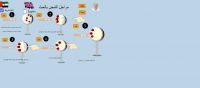
اضغط «الخطوة التالية» لتتبّع الشحن بالحث: تقريب القضيب دون تلامس، ثم التأريض، ثم قطع التأريض، ثم إبعاد القضيب. غيّر نوع القضيب، وجرّب تخطّي التأريض لترى أن الكرة تعود متعادلة.
Press “Next step” to follow charging by induction: bring the rod near without contact, ground the sphere, remove the ground, then remove the rod. Change the rod, and try skipping the grounding to see that the sphere ends up neutral.
قضيب موجب الشحنة قُرّب من موصلين متلامسين A وB (دون أن يلمسهما) وأُرِّض الموصل B ثم قُطع التأريض وأُبعد القضيب (انظر الشكل). ما شحنة الموصلين A وB؟
A positive rod is brought near two touching conductors A and B (without touching them), B is grounded, then the ground is removed and the rod is taken away (see the figure). What is the charge of conductors A and B?
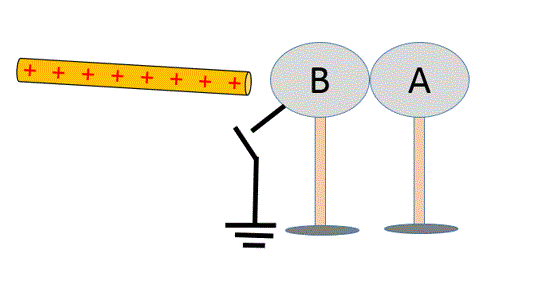
قضيب موجب قرب موصلين A وB وB مؤرَّض.
A positive rod near conductors A and B, with B grounded.
بالحث وبوجود التأريض يكتسب الموصل شحنة:
By induction with grounding the conductor gets a charge:
🤝 الشحن بالتلامس
🤝 Charging by Contact
عندما يلامس جسمٌ مشحون موصلًا آخر تنتقل الشحنة بينهما حتى يصلا إلى الاتزان الكهروستاتيكي (تساوي الجهد). ويكتسب الجسم الملامس شحنة من نوع شحنة الجسم المشحون نفسه:
When a charged body touches another conductor charge moves between them until they reach electrostatic equilibrium (equal potential). The touched body gets a charge of the same sign as the charged body:
آلية الانتقال
The mechanism
- الجسم المشحون سالبًا: تنتقل إليه الإلكترونات الزائدة إلى الجسم المتعادل فيصير سالبًا.A negatively charged body: its excess electrons move to the neutral body, which becomes negative.
- الجسم المشحون موجبًا: يسحب الإلكترونات من الجسم المتعادل فيصير موجبًا.A positively charged body: it pulls electrons from the neutral body, which becomes positive.
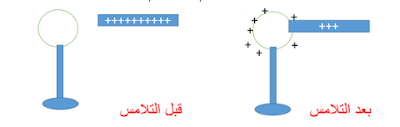
قبل التلامس: جسم مشحون وكرة متعادلة، وبعد التلامس: الكرة مشحونة بالنوع نفسه.
Before contact: a charged body and a neutral sphere; after contact: the sphere has the same kind of charge.
📌 تقاسم الشحنة
📌 Sharing of charge
بحفظ الشحنة تكون الشحنة الكلية بعد التلامس \(Q=q_1+q_2\). فإذا كان الموصلان متماثلين تمامًا (الشكل والحجم) تقاسما الشحنة بالتساوي:
By conservation of charge the total after contact is \(Q=q_1+q_2\). If the conductors are exactly identical (shape and size) they share it equally:
\[q_1'=q_2'=\dfrac{q_1+q_2}{2}\]
أما إذا اختلفا فلا يتقاسمان بالتساوي: يأخذ الأكبر شحنة أكبر. وللكرتين الموصلتين تتوزع الشحنة بنسبة نصفي القطرين: \(q_1^{\prime}=Q\dfrac{r_1}{r_1+r_2}\).
If they differ they do not share equally: the larger takes more. For two conducting spheres the charge divides in proportion to their radii: \(q_1^{\prime}=Q\dfrac{r_1}{r_1+r_2}\).
🧪 تجربة 5: الشحن بالتلامس: كيف تتقاسم الكرتان الشحنة؟
🧪 Experiment 5: Charging by contact: how do two spheres share charge?
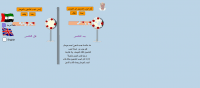
اختر شحنتي الكرتين A وB ونصفي قطريهما، ثم اضغط «تلامس» فتنتقل الشحنات حتى تتساوى الجهود، ثم «افصل». إذا تماثلت الكرتان تقاسمتا الشحنة الكلية بالتساوي، وإلا قُسمت بنسبة نصفي القطرين. لاحظ أن الشحنة الكلية لا تتغير.
Choose the charges and radii of spheres A and B, then press “Touch” so charge flows until the potentials are equal, then “Separate”. Identical spheres share the total charge equally; otherwise it divides in proportion to the radii. Notice that the total charge does not change.
موصل مشحون بشحنة \(+6\ \mu\mathrm{C}\) لامس موصلًا آخر متعادلًا مماثلًا له تمامًا ثم فُصلا. ما شحنة كل منهما؟
A conductor charged with \(+6\ \mu\mathrm{C}\) touches an identical neutral conductor and they are then separated. What is the charge of each?
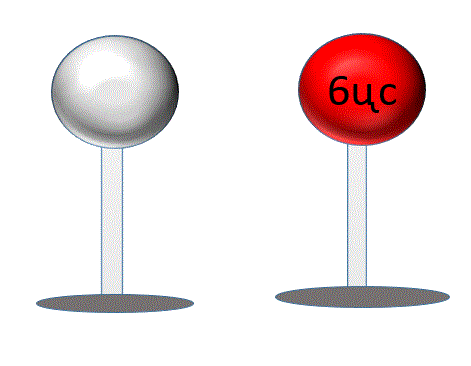
الشكل: كرتان متماثلتان إحداهما مشحونة والأخرى متعادلة.
The figure: two identical spheres, one charged and one neutral.
قضيب مشحون يقترب من كرة متعادلة ثم يلامسها في أحد الأشكال A وB وC وD. في أي شكل تزداد كتلة الكرة؟ (انظر الأشكال)
A charged rod approaches a neutral sphere and then touches it in one of the figures A, B, C, D. In which figure does the mass of the sphere increase? (see the figures)
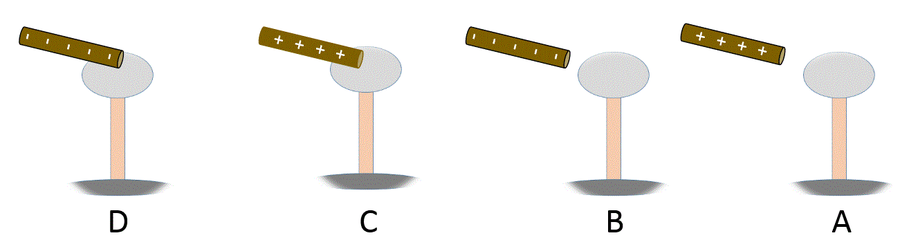
الأشكال A وB وC وD.
Figures A, B, C and D.
كرة موصلة شحنتها \(+8\ \mu\mathrm{C}\) لامست كرة متعادلة مماثلة. شحنة كل منهما بعد الفصل:
A conducting sphere of charge \(+8\ \mu\mathrm{C}\) touches an identical neutral sphere. The charge of each after separation is:
📊 مقارنة بين طرق الشحن
📊 Comparing the Methods of Charging
| وجه المقارنةAspect | الدلكFriction | الحثInduction | التلامسContact |
|---|---|---|---|
| التلامس المباشرDirect contact | نعم (احتكاك)yes (rubbing) | لاno | نعمyes |
| نوع الشحنة الناتجةResulting charge | جسمان بشحنتين مختلفتينtwo bodies with unlike charges | مخالفة للجسم المشحونopposite to the charged body | مماثلة للجسم المشحونsame as the charged body |
| الأجسام المناسبةSuitable bodies | عوازل غالبًاmostly insulators | موصلات معزولة مع تأريضinsulated conductors with grounding | موصلاتconductors |
| الجسم المشحون الأصليThe original charged body | —— | لا يفقد شحنةloses none | يفقد جزءًا من شحنتهloses part of its charge |
📚 ملخص الدرس
📚 Lesson Summary
| الفكرةIdea | القاعدةRule |
|---|---|
| الشحنةCharge | \(q=\pm n\,e,\ e=1.6\times10^{-19}\ \mathrm{C}\)\(q=\pm n\,e,\ e=1.6\times10^{-19}\ \mathrm{C}\) |
| الجسم الموجبPositive body | فقد إلكتروناتlost electrons |
| الجسم السالبNegative body | اكتسب إلكتروناتgained electrons |
| حفظ الشحنةConservation | \(\sum q\) ثابت\(\sum q\) is constant |
| متماثلان بعد التلامسIdentical after contact | \(q'=\dfrac{q_1+q_2}{2}\)\(q'=\dfrac{q_1+q_2}{2}\) |
| الحث بالتأريضInduction with grounding | شحنة مخالفة لشحنة القضيبcharge opposite to the rod |
⚠️ أخطاء شائعة
⚠️ Common mistakes
- القول إن الجسم «اكتسب بروتونات» أو «فقد بروتونات»؛ الذي ينتقل هو الإلكترونات.Saying the body “gained or lost protons”; electrons are what move.
- نسيان أن الشحنة السالبة تعني اكتساب إلكترونات، وأن الموجبة تعني فقدها.Forgetting that negative means gaining electrons and positive means losing them.
- تقسيم الشحنة بالتساوي في كل تلامس؛ هذا للموصلين المتماثلين فقط.Dividing the charge equally in every contact; that holds only for identical conductors.
- الخلط بين الحث (شحنة مخالفة) والتلامس (شحنة مماثلة).Mixing induction (opposite charge) with contact (same charge).
- نسيان تحويل الشحنة إلى كولوم قبل القسمة على \(e\).Forgetting to express the charge in coulombs before dividing by \(e\).
🧪 اختبر نفسك: امتحان من 20 سؤالاً
🧪 Test Yourself: a 20-Question Exam
أنهِ الدرس بالاختبار التفاعلي التالي؛ أسئلته تجمع بين الفهم والحساب وتغطي جميع أقسام الدرس.
Finish with the interactive exam below; its questions mix understanding with calculation and cover every section of the lesson.
اختبار الكهرباء الساكنة وطرق الشحن Static Electricity and Charging Methods Quiz
20 سؤالاً - الشحنة والموصلات وطرق الشحن الثلاث 20 Questions - charge, conductors and the three methods of charging
• عدد الأسئلة: 20 سؤالاً
• مدة الاختبار: 30 دقيقة
• لا يمكنك تغيير إجاباتك أو إعادة الاختبار إلا بعد 24 ساعة من التسليم.
• تأكد من إجاباتك قبل التسليم! 📌 Important Instructions:
• Number of questions: 20 questions
• Quiz duration: 30 minutes
• You cannot change your answers or retake the quiz for 24 hours after submission.
• Make sure of your answers before submitting!
🔗 محاكيات GeoGebra للاستعانة بها عند اللزوم
🔗 GeoGebra Simulations to Use When Needed
اضغط «تشغيل» لتعمل المحاكاة هنا داخل الدرس؛ ويمكن للطالب الرجوع إليها لتجربة الفكرة بطريقة أخرى.
Press “Run” to run the simulation right here inside the lesson; the student can use it to try the idea in another way.