🎯 نواتج التعلم
🎯 Learning Outcomes
بعد دراسة هذا الدرس ستكون قادرًا على أن:
After this lesson you will be able to:
- تعرّف القوة وتميّز بين قوى التلامس وقوى المجال.Define a force and distinguish contact forces from field forces.
- ترسم القوى المؤثرة في جسم بمقياس رسم وتجد محصلتها في بعد واحد.Draw the forces acting on a body to a scale and find their net force in one dimension.
- تطبّق قانون نيوتن الأول (الاتزان والقصور الذاتي) وقانون نيوتن الثاني \(\Sigma F=ma\).Apply Newton’s first law (equilibrium and inertia) and Newton’s second law \(\Sigma F=ma\).
- تفرّق بين الكتلة والوزن وتحسب الوزن الظاهري في المصعد.Distinguish mass from weight and calculate the apparent weight in an elevator.
- تفسّر القوة المعيقة والسرعة الحدية وقانون نيوتن الثالث (الفعل ورد الفعل).Explain the drag force, the terminal velocity and Newton’s third law (action and reaction).
💪 ما القوة؟
💪 What is a Force?
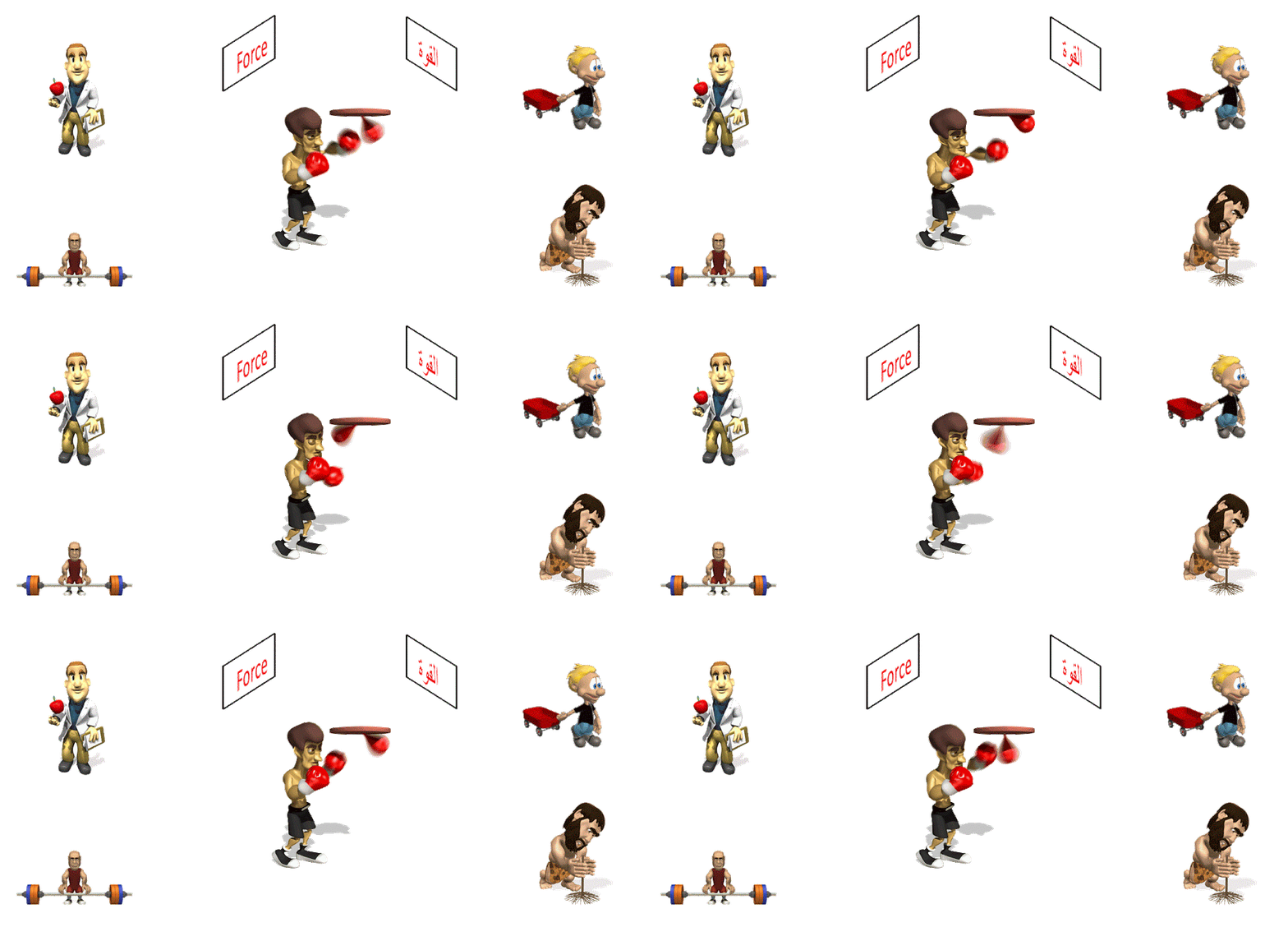
القوة في حياتنا اليومية: دفع وسحب ورفع وضغط.
Force in our daily life: pushing, pulling, lifting and squeezing.
القوة مؤثر خارجي يؤثر في جسم فيعمل على تغيير شكله أو تغيير حالته الحركية (أي يجعله يبدأ الحركة أو يتوقف أو يغيّر سرعته أو اتجاه حركته).
A force is an external influence acting on a body which changes its shape or changes its state of motion (that is, makes it start moving, stop, or change its speed or direction).
خصائص القوة
Properties of a force
- كمية متجهة: لها مقدار واتجاه، فلا تكفي القيمة وحدها لوصفها (نقول مثلًا: \(40\ \mathrm N\) نحو الشرق).A vector quantity: it has a magnitude and a direction, so the value alone does not describe it (for example \(40\ \mathrm N\) to the east).
- وحدتها النيوتن \(\mathrm N\): \(1\ \mathrm N=1\ \mathrm{kg\cdot m/s^2}\) أي القوة التي تكسب كتلة \(1\ \mathrm{kg}\) تسارعًا \(1\ \mathrm{m/s^2}\).Its unit is the newton \(\mathrm N\): \(1\ \mathrm N=1\ \mathrm{kg\cdot m/s^2}\), the force that gives a \(1\ \mathrm{kg}\) mass an acceleration of \(1\ \mathrm{m/s^2}\).
- تُقاس بالميزان النابضي (الدينامومتر): يزداد استطالة النابض بزيادة القوة المؤثرة فيه.It is measured with a spring balance (dynamometer): the extension of the spring grows with the applied force.
- لا توجد قوة واحدة معزولة: كل قوة تحتاج جسمين على الأقل: جسمًا يؤثر وجسمًا يتأثر (سنراه في قانون نيوتن الثالث).There is no isolated force: every force needs at least two bodies, one that acts and one that is acted on (we see this in Newton’s third law).
🧲 أنواع القوى: التلامس والمجال
🧲 Types of Forces: Contact and Field
تقسم القوى في الطبيعة إلى نوعين:
Forces in nature are divided into two types:
قوى التلامس: هي التي لا تحدث دون ملامسة الجسمين.
Contact forces: those that cannot occur without the two bodies touching.
قوى المجال: هي التي تؤثر عن بُعد دون حاجة إلى ملامسة.
Field forces: those that act at a distance without contact.
| النوعType | أمثلةExamples | ملاحظةNote |
|---|---|---|
| قوى التلامسContact forces | الدفع والسحب، قوة الشد في الحبل، القوة العمودية، الاحتكاك، مقاومة الهواء، قوة النابضPush and pull, tension in a rope, the normal force, friction, air resistance, the spring force | تحتاج إلى تلامس بين الجسمينNeed contact between the two bodies |
| قوى المجالField forces | الجاذبية (الوزن)، القوة الكهربائية، القوة المغناطيسيةGravity (weight), the electric force, the magnetic force | تؤثر عن بُعد داخل مجالAct at a distance within a field |
🔍 صنّف القوة في كل صورة
🔍 Classify the force in each picture
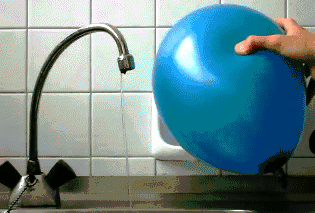
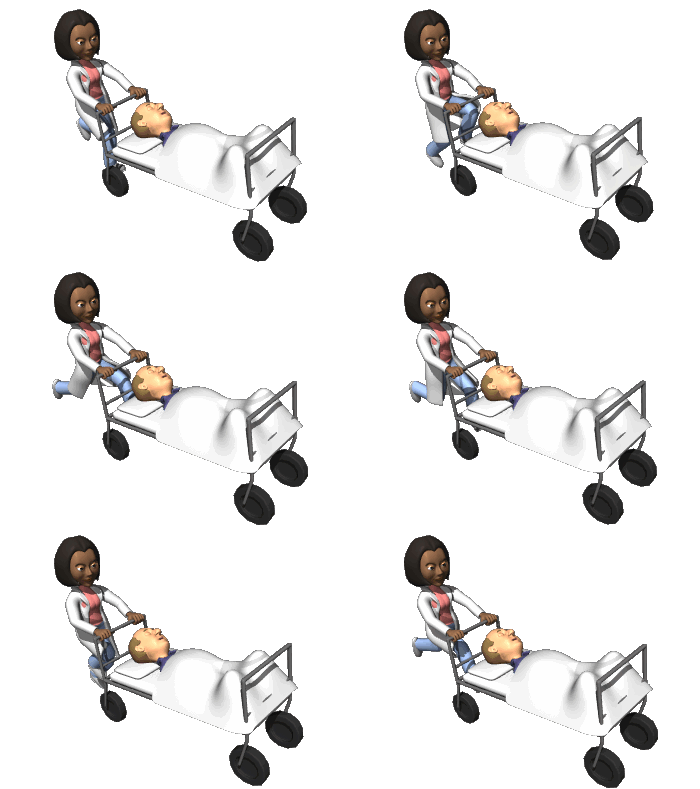
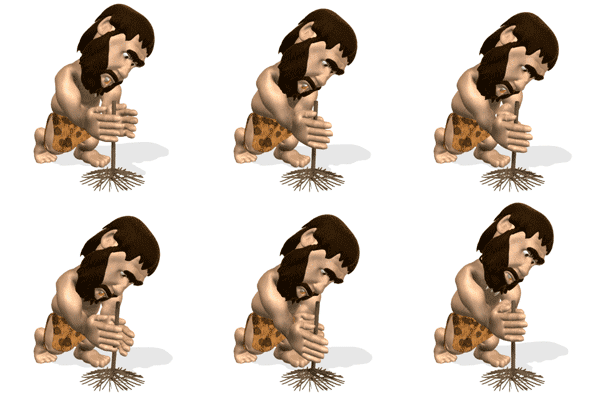
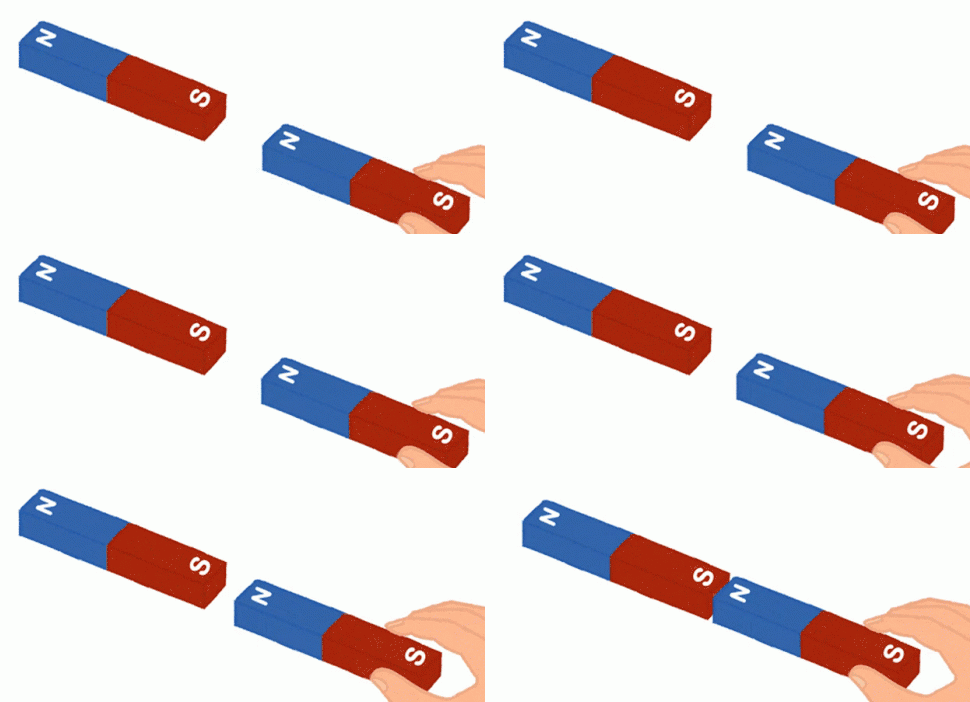
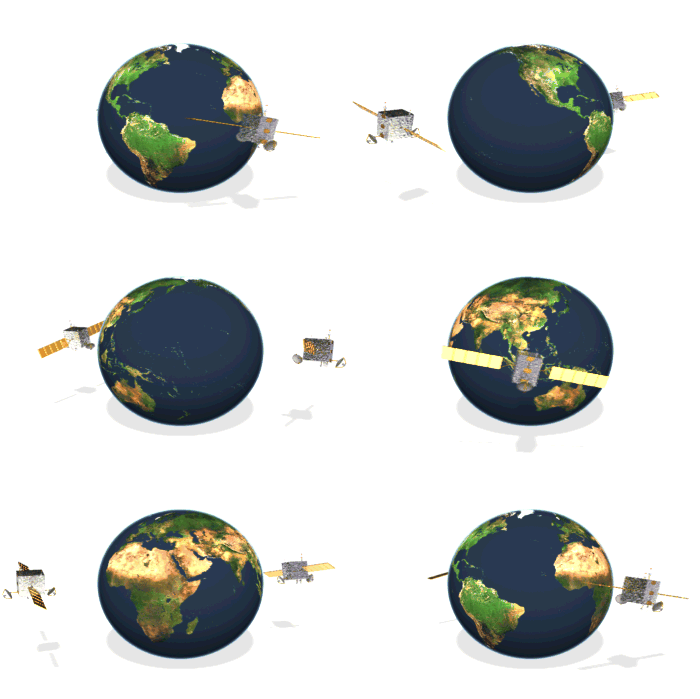
انظر إلى كل صورة، ثم اختر هل القوة المؤثرة قوة تلامس أم قوة مجال.
Look at each picture, then choose whether the acting force is a contact force or a field force.

✏️ رسم القوى (مخطط الجسم الحر)
✏️ Drawing the Forces (the Free-Body Diagram)
عند معالجة مسائل القوى نرسم مخطط الجسم الحر: نمثّل الجسم بنقطة أو مربع ثم نرسم من مركزه سهمًا لكل قوة يؤثر فيه؛ طول السهم يتناسب مع مقدار القوة واتجاهه هو اتجاه القوة.
When we solve force problems we draw the free-body diagram: we represent the body by a dot or a box and draw from its centre an arrow for each force acting on it; the length of the arrow is proportional to the magnitude of the force and its direction is the direction of the force.
خطوات الرسم
Steps of drawing
- حدّد مقياس الرسم (مثلًا \(10\ \mathrm N=1\ \mathrm{cm}\)).Choose a scale (for example \(10\ \mathrm N=1\ \mathrm{cm}\)).
- احسب طول كل سهم = مقدار القوة ÷ المقياس.Calculate the length of each arrow = the magnitude of the force ÷ the scale.
- ارسم الأسهم من مركز الجسم في اتجاه كل قوة واكتب اسم القوة ومقدارها.Draw the arrows from the centre of the body in the direction of each force and write the name and magnitude of the force.
- اختر اتجاهًا موجبًا (مثلًا نحو اليمين أو الشرق) وتذكّر أن القوة في الاتجاه المعاكس تكون سالبة.Choose a positive direction (for example to the right or to the east) and remember that a force in the opposite direction is negative.
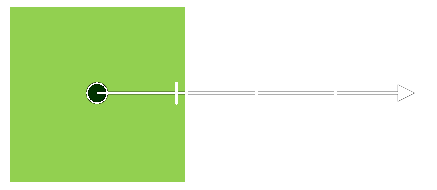
أثّرت قوة \(40\ \mathrm N\) نحو الشرق على المكعب: بمقياس \(10\ \mathrm N=1\ \mathrm{cm}\) يكون طول السهم \(4\ \mathrm{cm}\) نحو الشرق.
A force of \(40\ \mathrm N\) acts on the cube toward the east: with the scale \(10\ \mathrm N=1\ \mathrm{cm}\) the arrow is \(4\ \mathrm{cm}\) long toward the east.
أثّرت قوة مقدارها \(40\ \mathrm N\) نحو الشرق في مكعب. كم يكون طول السهم الذي يمثلها بمقياس رسم \(10\ \mathrm N=1\ \mathrm{cm}\)؟ وما طوله بمقياس \(5\ \mathrm N=1\ \mathrm{cm}\)؟
A force of \(40\ \mathrm N\) toward the east acts on a cube. How long is the arrow that represents it with the scale \(10\ \mathrm N=1\ \mathrm{cm}\)? And with the scale \(5\ \mathrm N=1\ \mathrm{cm}\)?
مثال لمخطط الجسم الحر: صندوق على طاولة تدفعه يد نحو اليمين: تؤثر فيه أربع قوى؛ الوزن \(W\) نحو الأسفل، والقوة العمودية \(N\) نحو الأعلى (وهما متساويتان إذا لم تكن هناك حركة رأسية)، والدفع \(F\) نحو اليمين، والاحتكاك \(f\) نحو اليسار.
An example of a free-body diagram: a box on a table pushed by a hand to the right: four forces act on it; the weight \(W\) downward, the normal force \(N\) upward (equal if there is no vertical motion), the push \(F\) to the right and the friction \(f\) to the left.
➕ محصلة القوى في بعد واحد
➕ The Net Force in One Dimension
المحصلة \(\Sigma F\) هي القوة الوحيدة التي تُحدث في الجسم الأثر نفسه الذي تُحدثه جميع القوى معًا. وفي بعد واحد نجمع القوى جمعًا جبريًا بعد اختيار اتجاه موجب.
The net force \(\Sigma F\) is the single force that has the same effect on the body as all the forces together. In one dimension we add the forces algebraically after choosing a positive direction.
📌 محصلة القوى
📌 The net force
\[\Sigma F=F_1+F_2+F_3+\cdots\qquad(\text{signs: }+\ \text{positive direction},\ -\ \text{opposite})\]
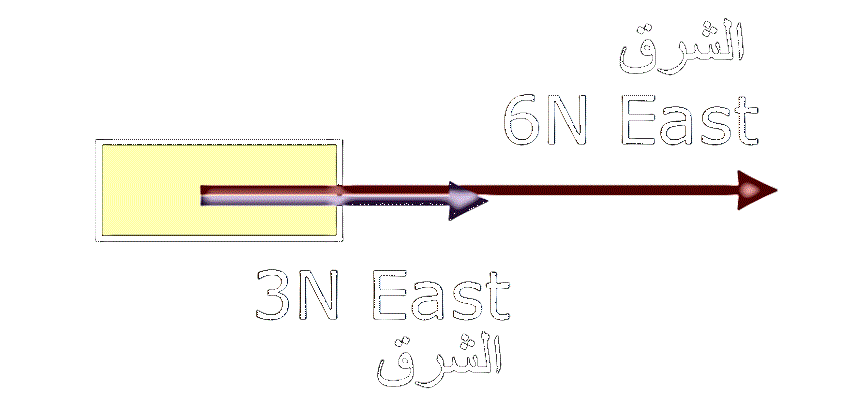
قوتان في الاتجاه نفسه: \(3\ \mathrm N\) و\(6\ \mathrm N\) نحو الشرق فالمحصلة \(9\ \mathrm N\) نحو الشرق.
Two forces in the same direction: \(3\ \mathrm N\) and \(6\ \mathrm N\) to the east so the net force is \(9\ \mathrm N\) to the east.
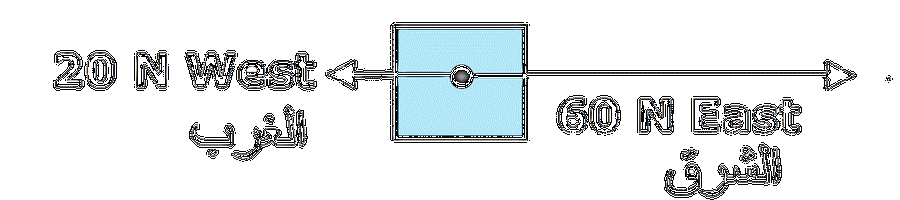
قوتان متعاكستان: \(60\ \mathrm N\) شرقًا و\(20\ \mathrm N\) غربًا فالمحصلة \(40\ \mathrm N\) شرقًا.
Two opposite forces: \(60\ \mathrm N\) east and \(20\ \mathrm N\) west so the net force is \(40\ \mathrm N\) east.
| الحالةCase | المحصلةNet force | الاتجاهDirection |
|---|---|---|
| قوى في الاتجاه نفسهForces in the same direction | \(F_1+F_2\) | اتجاه القوتينThe direction of the forces |
| قوى متعاكسةOpposite forces | \(|F_1-F_2|\) | اتجاه القوة الأكبرThe direction of the larger force |
| قوتان متساويتان ومتعاكستانTwo equal and opposite forces | \(0\) | لا اتجاه (اتزان)None (equilibrium) |
قوتان \(6\ \mathrm N\) و\(3\ \mathrm N\) تؤثران في الاتجاه نفسه. ما محصلتهما؟
Two forces \(6\ \mathrm N\) and \(3\ \mathrm N\) act in the same direction. What is their net force?
قوتان \(60\ \mathrm N\) و\(20\ \mathrm N\) في اتجاهين متعاكسين. ما مقدار محصلتهما واتجاهها؟
Two forces \(60\ \mathrm N\) and \(20\ \mathrm N\) in opposite directions. What are the magnitude and the direction of the net force?
تؤثر في جسم قوتان: \(20\ \mathrm N\) نحو الشرق و\(35\ \mathrm N\) نحو الغرب. ثم أضيفت قوة ثالثة \(10\ \mathrm N\) نحو الشرق. أوجد المحصلة في الحالتين.
Two forces act on a body: \(20\ \mathrm N\) to the east and \(35\ \mathrm N\) to the west. A third force of \(10\ \mathrm N\) to the east is then added. Find the net force in both cases.
🧪 تجربة 1: محصلة قوتين في بعد واحد
🧪 Experiment 1: The Net Force of Two Forces in One Dimension
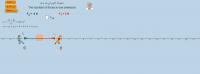
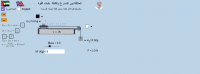
يسحب شخصان صندوقًا على سطح أملس، الأول بقوة \(F_1\) نحو اليمين والثاني بقوة \(F_2\) نحو اليسار. غيّر القوتين والكتلة وراقب المحصلة وتسارع الصندوق، ثم اضغط «ابدأ الحركة».
Two people pull a box on a smooth surface, the first with a force \(F_1\) to the right and the second with a force \(F_2\) to the left. Change the two forces and the mass and watch the net force and the acceleration of the box, then press “Start the motion”.
⚖️ قانون نيوتن الأول: الاتزان والقصور الذاتي
⚖️ Newton’s First Law: Equilibrium and Inertia
ينص قانون نيوتن الأول على أن الجسم الساكن يبقى ساكنًا، والجسم المتحرك يبقى متحركًا بسرعة ثابتة في خط مستقيم، ما لم تؤثر فيه قوة خارجية محصلتها لا تساوي صفرًا.
Newton’s first law states that a body at rest stays at rest, and a moving body keeps moving with constant velocity in a straight line, unless an external net force that is not zero acts on it.
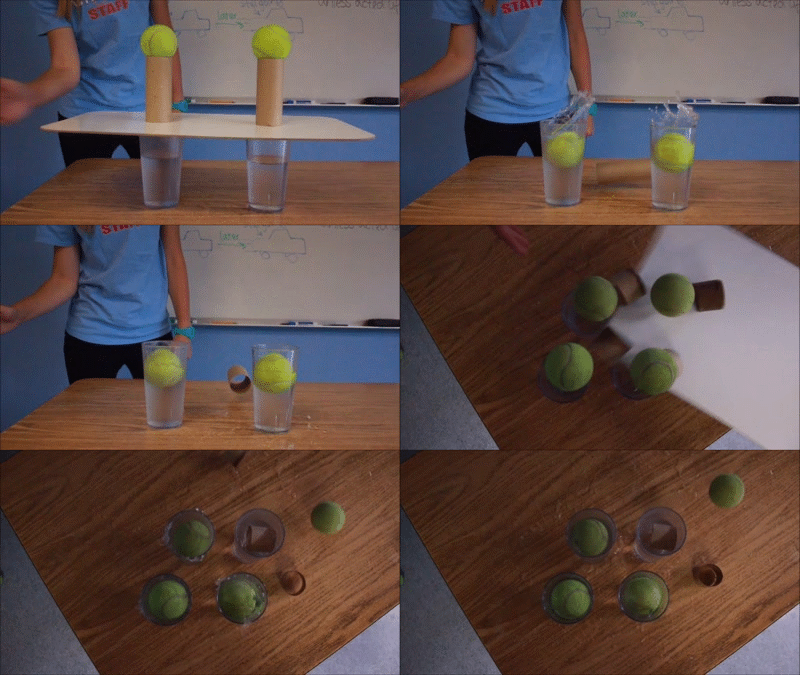
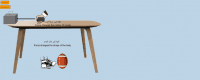
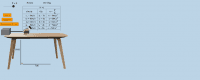
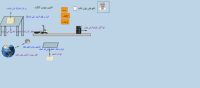
عند سحب اللوح بسرعة تبقى الكرتان في مكانهما فتسقطان في الكأسين: القصور الذاتي.
When the board is pulled away quickly the balls stay in place and drop into the glasses: inertia.
هذه الخاصية التي تجعل الأجسام تقاوم أي تغيير في حالتها الحركية تسمى القصور الذاتي، ويقيسها مقدار الكتلة: كلما زادت الكتلة زاد القصور الذاتي.
This property that makes bodies resist any change in their state of motion is called inertia, and it is measured by the mass: the larger the mass the larger the inertia.
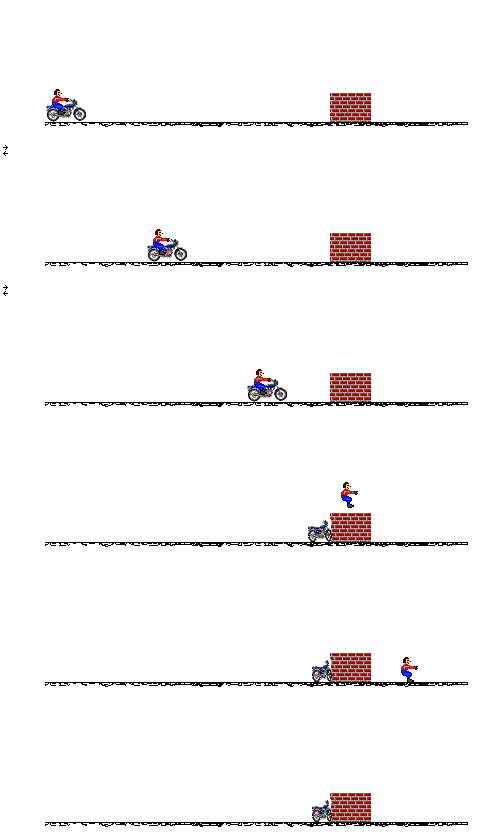
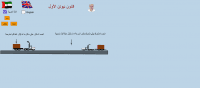
عند اصطدام الدراجة بالحاجز يتوقف الدراجة بينما يستمر راكبها في الحركة بسرعته: القصور الذاتي.
When the bike hits the wall the bike stops while the rider keeps moving with his speed: inertia.
حالة الاتزان
The state of equilibrium
- يكون الجسم في اتزان عندما تكون محصلة القوى المؤثرة فيه صفرًا \(\Sigma F=0\) فيكون تسارعه صفرًا.A body is in equilibrium when the net force on it is zero \(\Sigma F=0\) so its acceleration is zero.
- الاتزان لا يعني السكون دائمًا: الجسم المتحرك بسرعة ثابتة في خط مستقيم متزن أيضًا (اتزان حركي).Equilibrium does not always mean rest: a body moving with constant velocity in a straight line is also in equilibrium (dynamic equilibrium).
- لا يحتاج الجسم إلى قوة محصلة كي يستمر في الحركة بسرعة ثابتة؛ القوة المحصلة تلزم لتغيير السرعة فقط.A body needs no net force to keep moving with constant velocity; a net force is needed only to change the velocity.
تنصح إدارة المرور السائق وركاب السيارة بوضع حزام الأمان أثناء الحركة. فسّر السبب.
The traffic authorities advise the driver and passengers to wear seat belts while the car is moving. Explain why.
🚀 قانون نيوتن الثاني
🚀 Newton’s Second Law
عند التأثير بقوة محصلة ثابتة في جسم قابل للحركة يكتسب تسارعًا ثابتًا في اتجاه المحصلة، ويتناسب هذا التسارع طرديًا مع القوة المحصلة وعكسيًا مع كتلة الجسم.
When a constant net force acts on a body that is free to move, it acquires a constant acceleration in the direction of the net force; this acceleration is directly proportional to the net force and inversely proportional to the mass of the body.
📌 قانون نيوتن الثاني
📌 Newton’s second law
\[\Sigma F=ma\qquad\Longleftrightarrow\qquad a=\frac{\Sigma F}{m}\]
\[1\ \mathrm N=1\ \mathrm{kg}\cdot\mathrm{m/s^2}\]
| العلاقةRelation | الشرطCondition | الرسم البيانيThe graph |
|---|---|---|
| \(a\propto\Sigma F\)\(a\propto\Sigma F\) | الكتلة ثابتةMass constant | خط مستقيم من الأصل ميله \(1/m\)A straight line from the origin of slope \(1/m\) |
| \(a\propto 1/m\)\(a\propto 1/m\) | القوة ثابتةForce constant | \(a\) مع \(m\): قطع زائد، و\(a\) مع \(1/m\): خط مستقيم ميله \(F\)\(a\) against \(m\): a hyperbola, and \(a\) against \(1/m\): a straight line of slope \(F\) |
قوة محصلة مقدارها \(20\ \mathrm N\) تؤثر في جسم كتلته \(4\ \mathrm{kg}\). ما تسارع الجسم؟
A net force of \(20\ \mathrm N\) acts on a body of mass \(4\ \mathrm{kg}\). What is its acceleration?
يدفع شخص صندوقًا كتلته \(8\ \mathrm{kg}\) بقوة \(50\ \mathrm N\) على سطح أفقي، وتقاوم حركته قوة احتكاك \(10\ \mathrm N\). أوجد تسارع الصندوق.
A person pushes a \(8\ \mathrm{kg}\) box with a force of \(50\ \mathrm N\) on a horizontal surface, and a friction force of \(10\ \mathrm N\) resists the motion. Find the acceleration of the box.
سيارة كتلتها \(1000\ \mathrm{kg}\) تنطلق من السكون بقوة محرك \(3000\ \mathrm N\) وتقاومها قوى \(1000\ \mathrm N\). ما سرعتها بعد \(5\ \mathrm s\)؟
A car of mass \(1000\ \mathrm{kg}\) starts from rest with an engine force of \(3000\ \mathrm N\) and is resisted by forces of \(1000\ \mathrm N\). What is its speed after \(5\ \mathrm s\)?
🧪 تجربة 2: قانون نيوتن الثاني: التسارع والقوة والكتلة
🧪 Experiment 2: Newton’s Second Law: Acceleration, Force and Mass
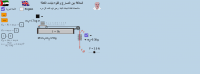
تُسحب عربة على مسار أملس بقوة أفقية ثابتة. غيّر القوة والكتلة وحرّك العربة، وسجّل القياسات (نقطة لكل قياس) لترى العلاقة البيانية بين التسارع والقوة، ثم بين التسارع والكتلة.
A cart is pulled along a smooth track by a constant horizontal force. Change the force and the mass, move the cart and record the measurements (one point per measurement) to see the graph of the acceleration against the force and then against the mass.
🌍 الكتلة والوزن
🌍 Mass and Weight
| وجه المقارنةAspect | الكتلة \(m\)Mass \(m\) | الوزن \(W\)Weight \(W\) |
|---|---|---|
| التعريفDefinition | مقدار المادة في الجسم، وهي مقياس القصور الذاتيThe amount of matter in the body, a measure of its inertia | قوة جذب الكوكب للجسم (قوة مجال)The force with which the planet attracts the body (a field force) |
| الكميةQuantity | قياسيةScalar | متجهة نحو مركز الكوكبA vector toward the centre of the planet |
| الوحدةUnit | كيلوجرام \(\mathrm{kg}\)kilogram \(\mathrm{kg}\) | نيوتن \(\mathrm N\)newton \(\mathrm N\) |
| تتغير بتغير المكان؟Changes with place? | لاNo | نعم (بتغير \(g\))Yes (with \(g\)) |
| أداة القياسInstrument | الميزان ذو الكفتينThe beam balance | الميزان النابضيThe spring balance |
📌 الوزن
📌 Weight
\[W=F_g=mg\]
\[g_{\text{Earth}}\approx9.8\ \mathrm{m/s^2},\quad g_{\text{Moon}}\approx1.6\ \mathrm{m/s^2},\quad g_{\text{Mars}}\approx3.7\ \mathrm{m/s^2}\]
جسم كتلته \(15\ \mathrm{kg}\) على سطح الأرض (\(g=10\ \mathrm{m/s^2}\)). ما وزنه؟
A body of mass \(15\ \mathrm{kg}\) on the surface of the Earth (\(g=10\ \mathrm{m/s^2}\)). What is its weight?
رائد فضاء كتلته \(80\ \mathrm{kg}\) على الأرض (\(g=9.8\)) وعلى القمر (\(g=1.6\)). قارن كتلته ووزنه في المكانين.
An astronaut of mass \(80\ \mathrm{kg}\) on the Earth (\(g=9.8\)) and on the Moon (\(g=1.6\)). Compare his mass and weight in the two places.
🛗 الوزن الظاهري والمصعد
🛗 Apparent Weight and the Elevator
الوزن الظاهري هو القوة التي يشعر بها الجسم أو يقرؤها الميزان، أي القوة العمودية \(N\) التي تؤثر بها الأرضية في الجسم. وهو يختلف عن الوزن الحقيقي \(mg\) عندما يتحرك الجسم بتسارع رأسيًا.
The apparent weight is the force that the body feels or the scale reads, that is the normal force \(N\) with which the floor acts on the body. It differs from the real weight \(mg\) when the body moves with an acceleration vertically.
نطبّق قانون نيوتن الثاني على الشخص الواقف على الميزان مع اعتبار الاتجاه الموجب لأعلى:
We apply Newton’s second law to the person standing on the scale taking the positive direction as upward:
📌 الوزن الظاهري
📌 The apparent weight
\[N-mg=ma\quad\Longrightarrow\quad N=m(g+a)\]
حيث \(a\) موجب إذا كان التسارع نحو الأعلى وسالب إذا كان نحو الأسفل.
where \(a\) is positive when the acceleration is upward and negative when it is downward.
| حركة المصعدMotion of the elevator | اتجاه التسارعDirection of \(a\) | الوزن الظاهري \(N\)Apparent weight \(N\) |
|---|---|---|
| يصعد وسرعته تزدادRising and speeding up | لأعلىUpward | \(N\gt mg\) (أثقل)\(N\gt mg\) (heavier) |
| يهبط وسرعته تقلGoing down and slowing | لأعلىUpward | \(N\gt mg\) (أثقل)\(N\gt mg\) (heavier) |
| يصعد وسرعته تقلRising and slowing | لأسفلDownward | \(N\lt mg\) (أخف)\(N\lt mg\) (lighter) |
| يهبط وسرعته تزدادGoing down and speeding up | لأسفلDownward | \(N\lt mg\) (أخف)\(N\lt mg\) (lighter) |
| بسرعة ثابتةWith constant velocity | \(a=0\)\(a=0\) | \(N=mg\)\(N=mg\) |
| سقوط حرFree fall | \(a=g\) لأسفل\(a=g\) downward | \(N=0\) (انعدام الوزن الظاهري)\(N=0\) (apparent weightlessness) |
رجل كتلته \(70\ \mathrm{kg}\) في مصعد يتحرك لأعلى بتسارع \(3\ \mathrm{m/s^2}\). ما وزنه الظاهري؟ (\(g=10\ \mathrm{m/s^2}\))
A man of mass \(70\ \mathrm{kg}\) in an elevator accelerating upward at \(3\ \mathrm{m/s^2}\). What is his apparent weight? (\(g=10\ \mathrm{m/s^2}\))
الرجل نفسه في مصعد يتسارع لأسفل بمقدار \(2\ \mathrm{m/s^2}\). ما قراءة الميزان؟ ومتى تنعدم؟
The same man in an elevator accelerating downward at \(2\ \mathrm{m/s^2}\). What does the scale read? And when does it become zero?
🧪 تجربة 3: الوزن الظاهري في المصعد
🧪 Experiment 3: Apparent Weight in an Elevator
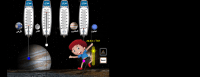
اضبط كتلة الشخص وتسارع المصعد (موجب لأعلى وسالب لأسفل) أو اختر حالة جاهزة، وراقب قراءة الميزان \(N\) ومخطط القوى. اضغط «حرّك المصعد» لترى الحركة.
Set the person’s mass and the elevator’s acceleration (positive upward, negative downward) or choose a ready state, and watch the scale reading \(N\) and the free-body diagram. Press “Move the elevator” to see the motion.
🌬️ القوة المعيقة: مقاومة الهواء والسرعة الحدية
🌬️ The Drag Force: Air Resistance and the Terminal Velocity
عندما يسقط جسم في الهواء يكون وزنه \(mg\) هو القوة الوحيدة في بداية السقوط. وبازدياد السرعة تظهر القوة المعيقة (مقاومة الهواء) \(F_d\) التي تعاكس اتجاه الحركة وتزداد بزيادة السرعة.
When a body falls through air, its weight \(mg\) is the only force at the beginning of the fall. As the speed increases the drag force (air resistance) \(F_d\) appears, which opposes the motion and grows with the speed.
📌 القوة المعيقة
📌 The drag force
\[F_d=\tfrac12\,\rho\,C_d\,A\,v^2=k\,v^2\]
\(\rho\) كثافة المائع، \(A\) مساحة مقطع الجسم، \(C_d\) معامل الإعاقة (يتعلق بالشكل)، \(v\) السرعة. (للسرعات الصغيرة جدًّا في المواد اللزجة تكون \(F_d\approx k_1 v\) تقريبًا.)
\(\rho\) is the fluid density, \(A\) the cross-sectional area of the body, \(C_d\) the drag coefficient (depends on the shape), \(v\) the speed. (For very small speeds in viscous fluids \(F_d\approx k_1 v\).)
وتنقص المحصلة \(mg-F_d\) فيقل التسارع، حتى تتساوى \(F_d\) مع \(mg\) فتنعدم المحصلة ويصبح التسارع صفرًا ويهبط الجسم بسرعة ثابتة هي السرعة الحدية \(v_t\):
The net force \(mg-F_d\) decreases so the acceleration decreases, until \(F_d\) equals \(mg\); then the net force vanishes, the acceleration becomes zero and the body falls at a constant speed, the terminal velocity \(v_t\):
📌 السرعة الحدية
📌 The terminal velocity
\[F_d=mg\ \Rightarrow\ kv_t^2=mg\ \Rightarrow\ v_t=\sqrt{\frac{mg}{k}}=\sqrt{\frac{2mg}{\rho C_dA}}\]
مظلي كتلته \(80\ \mathrm{kg}\) ومعامل مقاومته \(k=0.42\ \mathrm{kg/m}\) قبل فتح المظلة. أوجد سرعته الحدية، ثم سرعته الحدية بعد فتح المظلة إذا أصبح \(k=22.5\ \mathrm{kg/m}\). (\(g=9.8\))
A skydiver of mass \(80\ \mathrm{kg}\) has a drag factor \(k=0.42\ \mathrm{kg/m}\) before opening the parachute. Find his terminal velocity, then the terminal velocity after the parachute opens if \(k=22.5\ \mathrm{kg/m}\). (\(g=9.8\))
🧪 تجربة 4: السقوط مع مقاومة الهواء والسرعة الحدية
🧪 Experiment 4: Falling with Air Resistance and the Terminal Velocity
يسقط جسم من السكون وتؤثر فيه مقاومة هواء \(F_d=kv^2\). غيّر الكتلة ومعامل المقاومة \(k\) (يزداد بالمساحة الأكبر) أو اختر حالة جاهزة، ثم اضغط «أسقط الجسم» وراقب كيف تقترب السرعة من قيمتها الحدية.
A body falls from rest and an air resistance \(F_d=kv^2\) acts on it. Change the mass and the drag factor \(k\) (which grows with a larger area) or choose a ready state, then press “Drop the body” and watch the speed approach its terminal value.
🔁 قانون نيوتن الثالث: الفعل ورد الفعل
🔁 Newton’s Third Law: Action and Reaction
لكل فعل رد فعل مساوٍ له في المقدار ومعاكس له في الاتجاه. أي إذا أثّر الجسم \(A\) بقوة في الجسم \(B\) فإن \(B\) يؤثر في \(A\) بقوة مساوية لها في المقدار ومعاكسة في الاتجاه: \(F_{AB}=-F_{BA}\).
For every action there is an equal and opposite reaction. If body \(A\) exerts a force on body \(B\) then \(B\) exerts on \(A\) a force equal in magnitude and opposite in direction: \(F_{AB}=-F_{BA}\).
خصائص زوج الفعل ورد الفعل
Properties of an action–reaction pair
- متساويان في المقدار ومتعاكسان في الاتجاه ويحدثان في اللحظة نفسها.Equal in magnitude, opposite in direction and simultaneous.
- من النوع نفسه (كلاهما جاذبية أو كلاهما تلامس…).Of the same type (both gravitational, both contact …).
- يؤثران في جسمين مختلفين، لذلك لا نستطيع جمعهما أو إيجاد محصلتهما ولا يلغي أحدهما الآخر.They act on two different bodies, so we cannot add them or find their net force and one does not cancel the other.
لماذا يتحرك الجسم رغم أن الفعل ورد الفعل متساويان؟
Why does the body move although action and reaction are equal?
لأن القوتين تؤثران في جسمين مختلفين؛ ما يحدد حركة جسم هو القوى المؤثرة فيه هو فقط. وحين تؤثر القوة نفسها في جسمين مختلفي الكتلة يكتسب الأخف تسارعًا أكبر (\(a=F/m\)).
Because the two forces act on two different bodies; the motion of a body is decided by the forces acting on it only. When the same force acts on two bodies of different masses the lighter one gets the larger acceleration (\(a=F/m\)).
متزلجان على جليد أملس: كتلة الأول \(60\ \mathrm{kg}\) والثاني \(80\ \mathrm{kg}\). دفع الأول الثاني بقوة \(120\ \mathrm N\). أوجد تسارع كل منهما.
Two skaters on smooth ice: the first has a mass of \(60\ \mathrm{kg}\) and the second \(80\ \mathrm{kg}\). The first pushes the second with a force of \(120\ \mathrm N\). Find the acceleration of each.
تنبيه: وزن الكتاب على الطاولة والقوة العمودية من الطاولة على الكتاب ليسا فعلًا وردَّ فعل (يؤثران في الجسم نفسه ومن نوعين مختلفين)؛ ردّ فعل وزن الكتاب هو جذب الكتاب للأرض.
Note: the weight of a book on a table and the normal force of the table on the book are not an action–reaction pair (they act on the same body and are of different types); the reaction to the weight of the book is the pull of the book on the Earth.
🧪 تجربة 5: قانون نيوتن الثالث: عربتان تتدافعان
🧪 Experiment 5: Newton’s Third Law: Two Carts Pushing Apart
نابض مضغوط بين عربتين على مسار أملس. اضبط الكتلتين وقوة التفاعل ثم حرّر النابض (تُعرض الحركة بسرعة مناسبة) وقارن القوتين والتسارعين.
A compressed spring lies between two carts on a smooth track. Set the two masses and the interaction force then release the spring (the motion is shown at a convenient speed) and compare the two forces and the two accelerations.
🧩 تطبيقات: خطوات حل مسائل القوى
🧩 Applications: Steps to Solve Force Problems
خطوات الحل
Steps of the solution
- ارسم الجسم والقوى المؤثرة فيه (مخطط الجسم الحر).Draw the body and the forces acting on it (the free-body diagram).
- اختر اتجاهًا موجبًا يوافق اتجاه الحركة أو التسارع.Choose a positive direction in the direction of the motion or of the acceleration.
- اكتب \(\Sigma F=ma\) مع الإشارات: القوة في الاتجاه الموجب \(+\) وعكسها \(-\).Write \(\Sigma F=ma\) with the signs: a force in the positive direction \(+\) and the opposite \(-\).
- أوجد المجهول واستخدم معادلات الحركة إن لزم (\(v=v_0+at\) وغيرها).Find the unknown and use the equations of motion if needed (\(v=v_0+at\) etc.).
صندوق كتلته \(10\ \mathrm{kg}\) على أرض أفقية يُسحب بقوة أفقية \(60\ \mathrm N\) وقوة الاحتكاك \(20\ \mathrm N\). أوجد التسارع والقوة العمودية. (\(g=10\))
A box of mass \(10\ \mathrm{kg}\) on a horizontal floor is pulled with a horizontal force of \(60\ \mathrm N\) and the friction is \(20\ \mathrm N\). Find the acceleration and the normal force. (\(g=10\))
جسم كتلته \(2\ \mathrm{kg}\) ساكن تؤثر فيه محصلة \(6\ \mathrm N\). ما سرعته والمسافة التي قطعها بعد \(4\ \mathrm s\)؟
A body of mass \(2\ \mathrm{kg}\) at rest is acted on by a net force of \(6\ \mathrm N\). What are its speed and the distance covered after \(4\ \mathrm s\)?
⚠️ أخطاء شائعة
⚠️ Common Mistakes
تجنّب هذه الأخطاء
Avoid these mistakes
- «الجسم المتحرك يحتاج دائمًا إلى قوة»: خطأ؛ السرعة الثابتة تعني محصلة صفرية.“A moving body always needs a force”: wrong; constant velocity means a zero net force.
- جمع قوتين متعاكستين جمعًا حسابيًا: يجب أخذ الإشارة أو الطرح بحسب الاتجاه.Adding two opposite forces arithmetically: the sign must be taken, or subtract according to the direction.
- الخلط بين الكتلة والوزن: الكتلة بالكيلوجرام ثابتة، والوزن بالنيوتن يتغير بتغيّر \(g\).Confusing mass and weight: the mass in kilograms is constant, the weight in newtons changes with \(g\).
- الاعتقاد أن الوزن الحقيقي يتغير في المصعد: ما يتغير هو القوة العمودية (الوزن الظاهري) \(N\).Thinking the real weight changes in the elevator: what changes is the normal force (the apparent weight) \(N\).
- عدّ الفعل ورد الفعل قوتين على الجسم نفسه فيلغي أحدهما الآخر: هما على جسمين مختلفين.Counting action and reaction as two forces on the same body that cancel: they act on two different bodies.
📝 ملخص الدرس
📝 Lesson Summary
أهم ما تعلمناه
Key points
- القوة كمية متجهة وحدتها النيوتن، وتنقسم إلى قوى تلامس وقوى مجال.Force is a vector quantity measured in newtons, and it is divided into contact forces and field forces.
- المحصلة في بعد واحد: \(\Sigma F=F_1\pm F_2\) بحسب الاتجاه، وتساوي صفرًا في الاتزان.The net force in one dimension: \(\Sigma F=F_1\pm F_2\) according to the direction, and zero in equilibrium.
- نيوتن الأول: القصور الذاتي؛ نيوتن الثاني: \(\Sigma F=ma\)؛ نيوتن الثالث: \(F_{AB}=-F_{BA}\) على جسمين مختلفين.Newton’s first: inertia; second: \(\Sigma F=ma\); third: \(F_{AB}=-F_{BA}\) on two different bodies.
- الوزن \(W=mg\) والوزن الظاهري في المصعد \(N=m(g+a)\).Weight \(W=mg\) and the apparent weight in an elevator \(N=m(g+a)\).
- مقاومة الهواء \(F_d=kv^2\) والسرعة الحدية \(v_t=\sqrt{mg/k}\) عندما \(F_d=mg\).Air resistance \(F_d=kv^2\) and the terminal velocity \(v_t=\sqrt{mg/k}\) when \(F_d=mg\).
🎲 تدرّب على المسائل
🎲 Practice Problems
🧪 تجربة 6: تدرّب: مسائل القوى في بعد واحد
🧪 Experiment 6: Practice: Forces in One Dimension Problems
مسائل عشوائية بأرقام مختلفة. احسب واكتب الجواب ثم اضغط «تحقّق».
Random problems with different numbers. Work it out, enter the answer and press “Check”.
✅ قيّم نفسك
✅ Self-Check
قوتان \(8\ \mathrm N\) نحو اليمين و\(5\ \mathrm N\) نحو اليسار. المحصلة:
Two forces \(8\ \mathrm N\) to the right and \(5\ \mathrm N\) to the left. The net force:
جسم كتلته \(3\ \mathrm{kg}\) تؤثر فيه محصلة \(12\ \mathrm N\). تسارعه:
A \(3\ \mathrm{kg}\) body acted on by a net force of \(12\ \mathrm N\). Its acceleration:
وزن جسم كتلته \(5\ \mathrm{kg}\) على القمر (\(g=1.6\)):
The weight of a \(5\ \mathrm{kg}\) body on the Moon (\(g=1.6\)):
مصعد يتحرك لأعلى بسرعة ثابتة. الوزن الظاهري لراكبه:
An elevator moves upward with constant velocity. The apparent weight of its passenger:
أي العبارات الآتية عن قانون نيوتن الثالث صحيحة؟
Which of the following statements about Newton’s third law is correct?
🧪 اختبر نفسك: امتحان من 20 سؤالاً
🧪 Test Yourself: a 20-Question Exam
أنهِ الدرس بالاختبار التفاعلي التالي؛ أسئلته تجمع بين الفهم والحساب وتغطي جميع أقسام الدرس.
Finish with the interactive exam below; its questions mix understanding with calculation and cover every section of the lesson.
اختبار القوى في بعد واحد Forces in One Dimension Quiz
20 سؤالاً - القوة، محصلة القوى، قوانين نيوتن، الوزن، المقاومة، الفعل ورد الفعل 20 Questions - force, net force, Newton’s laws, weight, drag, action and reaction
• عدد الأسئلة: 20 سؤالاً
• مدة الاختبار: 30 دقيقة
• لا يمكنك تغيير إجاباتك أو إعادة الاختبار إلا بعد 24 ساعة من التسليم.
• تأكد من إجاباتك قبل التسليم! 📌 Important Instructions:
• Number of questions: 20 questions
• Quiz duration: 30 minutes
• You cannot change your answers or retake the quiz for 24 hours after submission.
• Make sure of your answers before submitting!
🔗 محاكيات GeoGebra للاستعانة بها عند اللزوم
🔗 GeoGebra Simulations to Use When Needed
اضغط «تشغيل» لتعمل المحاكاة هنا داخل الدرس؛ ويمكن للطالب الرجوع إليها لتجربة الفكرة بطريقة أخرى.
Press “Run” to run the simulation right here inside the lesson; the student can use it to try the idea in another way.