ما الطاقة التي يمتلكها الجسم بسبب حركته؟ وكيف يغيّر الشغل هذه الطاقة؟What energy does a body have because it moves? And how does work change this energy?
KE = ½mv²الطاقة الحركيةKinetic energy
W = F·d·cosθالشغلWork
Wtot = ΔKEنظرية الشغل والطاقةWork–energy theorem
خريطة الدرسLesson map
مقدمة: الطاقة الحركيةIntroduction: kinetic energy
العوامل المؤثرة: الكتلة والسرعةFactors: mass and speed
القانون KE = ½mv² وتجربة الجدولينThe law KE = ½mv² and the two-table experiment
الشغل وعلاقته بالطاقة الحركيةWork and its link to kinetic energy
تجربة تفاعلية: الشغل والطاقةInteractive experiment: work and energy
أمثلة محلولةWorked examples
حاسبة الشغل والطاقة الحركيةWork and kinetic energy calculator
شغل الجاذبية والرفع والإنزالWork of gravity, lifting and lowering
ملخص، ومراجعة، وامتحان من 20 سؤالًاSummary, review and a 20-question exam
١. مقدمة: الطاقة الحركية1. Introduction: Kinetic Energy
الطاقة الحركية هي الطاقة التي يمتلكها الجسم نتيجة حركته. تنتج هذه الطاقة بفعل حركة الأجسام المختلفة، وهي من الكميات القياسية، نعبّر عنها بقيمة عددية ووحدة، وتقاس بوحدة الجول (J).Kinetic energy is the energy a body has because of its motion. It is produced by the motion of different bodies, is a scalar quantity expressed by a number and a unit, and is measured in joules (J).
٢. العوامل المؤثرة في الطاقة الحركية2. Factors Affecting Kinetic Energy
تعتمد الطاقة الحركية على كتلة الجسم وسرعته. فهي تتناسب طرديًا مع الكتلة، وتتناسب طرديًا مع مربع السرعة.Kinetic energy depends on the body’s mass and speed. It is directly proportional to the mass, and directly proportional to the square of the speed.
📌
مثال على الكتلةExample: massأضرار حادث شاحنة كبيرة بسرعة 50 km/h أكبر بكثير من أضرار سيارة عائلة صغيرة بالسرعة نفسها، لأن الكتلة أكبر فتكون الطاقة الحركية أكبر.The damage from a large truck at 50 km/h is far greater than from a small family car at the same speed, because its mass is larger and so its kinetic energy is larger.
📌
مثال على السرعةExample: speedسيارة سباق بسرعة 20 m/s لها طاقة حركية أكبر من سيارة لها الكتلة نفسها بسرعة 15 m/s، لأن الطاقة تتناسب مع مربع السرعة: (20/15)² ≈ 1.78.A racing car at 20 m/s has more kinetic energy than an identical-mass car at 15 m/s, because energy scales with the square of speed: (20/15)² ≈ 1.78.
٣. القانون KE = ½mv² وتجربة الجدولين3. The Law KE = ½mv² and the Two-Table Experiment
KE = ½ · m · v²m: الكتلة (kg)، v: السرعة (m/s)، KE: الطاقة الحركية (J)m: mass (kg), v: speed (m/s), KE: kinetic energy (J)
نفذ التجربة التالية: ثبّت الكتلة وغيّر السرعة، ثم ثبّت السرعة وغيّر الكتلة، واحسب الطاقة الحركية في كل حالة ثم تحقق.Carry out the next experiment: fix the mass and change the speed, then fix the speed and change the mass, calculate the kinetic energy in each case, then check.
تجربة: كيف تعتمد الطاقة الحركية على الكتلة والسرعة؟Experiment: how does kinetic energy depend on mass and speed?
الجدول الأول: ثبّت الكتلة m = 2 kg وغيّر السرعة. الجدول الثاني: ثبّت السرعة v = 4 m/s وغيّر الكتلة. احسب الطاقة الحركية ثم تحقق.Table 1: keep m = 2 kg and change the speed. Table 2: keep v = 4 m/s and change the mass. Calculate the kinetic energy, then check.
الكتلة (kg)Mass (kg)
السرعة (m/s)Speed (m/s)
الطاقة الحركية KE (J)KE (J)
2
2
2
4
2
6
2
8
الكتلة (kg)Mass (kg)
السرعة (m/s)Speed (m/s)
الطاقة الحركية KE (J)KE (J)
1
4
2
4
3
4
4
4
ماذا تلاحظ؟ عند مضاعفة السرعة تتضاعف الطاقة أربع مرات (تتناسب مع v²)، وعند مضاعفة الكتلة تتضاعف الطاقة مرتين (تتناسب طرديًا مع m).What do you notice? Doubling the speed multiplies the energy by four (proportional to v²); doubling the mass doubles the energy (proportional to m).
٤. الشغل وعلاقته بالطاقة الحركية4. Work and Its Link to Kinetic Energy
إذا أثّرنا بقوة ثابتة على جسم قابل للحركة فتغيرت سرعته، فإن الشغل المبذول يساوي تغير طاقته الحركية. ونستنتج ذلك من قانون نيوتن الثاني وقوانين الحركة:If we apply a constant force to a movable body and its speed changes, the work done equals the change in its kinetic energy. We derive this from Newton’s second law and the equations of motion:
F = m·aقانون نيوتن الثانيNewton’s second law
v_f² = v_i² + 2·a·dمن معادلات الحركة بتسارع ثابتfrom the equations of motion with constant acceleration
½m·v_f² − ½m·v_i² = F·dبضرب الطرفين في ½mmultiplying both sides by ½m
ΔKE = W = F·d·cosθنظرية الشغل والطاقةthe work–energy theorem
🔑
نظرية الشغل والطاقةWork–energy theoremالشغل الكلي المبذول على الجسم يساوي التغير في طاقته الحركية: W_tot = K_f − K_i.The total work done on a body equals the change in its kinetic energy: W_tot = K_f − K_i.
٥. تجربة تفاعلية: الشغل والطاقة الحركية5. Interactive Experiment: Work and Kinetic Energy
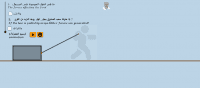
جسم يبدأ من السكون، تسحبه قوة بزاوية. قارن الشغل الكلي بالتغير في الطاقة الحركية، وفعّل الاحتكاك لترى أن الشغل الكلي يصغر.A body starts from rest and is pulled by a force at an angle. Compare the total work with the change in kinetic energy, and turn on friction to see the total work decrease.
تجربة: قوة تسحب جسمًا من السكون، والعلاقة بين الشغل والطاقة الحركيةExperiment: a force pulls a body from rest, and the link between work and kinetic energy
الهدف: أن تتحقق من أن الشغل الكلي المبذول على الجسم يساوي تغير طاقته الحركية. غيّر القوة والزاوية والمسافة، وفعّل الاحتكاك لترى أثره.Goal: verify that the total work done on the body equals its change in kinetic energy. Change the force, angle and distance, and turn on friction to see its effect.
شغل F: W_FWork of F: W_F
0 J
شغل الاحتكاك W_fFriction work W_f
0 J
الشغل الكليTotal work
0 J
تغير الحركية ΔKEChange in KE, ΔKE
0 J
التسارع aAcceleration a: —
السرعة النهائية vFinal speed v: —
الشغل الكلي = ΔKE؟Total work = ΔKE?: —
الشغل الكلي = F·d·cosθ − μk·N·d، والجسم يبدأ من السكون، فيساوي الشغل الكلي تغير طاقته الحركية ½mv². لاحظ أن قوة الاحتكاك تقلل الشغل الكلي وتقلل السرعة النهائية.Total work = F·d·cosθ − μk·N·d. Starting from rest, the total work equals the change in kinetic energy ½mv². Notice that friction reduces the total work and the final speed.
٦. أمثلة محلولة6. Worked Examples
📌
مثال 1: وحدة الجولExample 1: the joule unitالجول J يعادل kg·m²/s²، لأن J = N·m و N = kg·m/s².The joule J equals kg·m²/s², because J = N·m and N = kg·m/s².
📌
مثال 2: مضاعفة السرعةExample 2: doubling the speedسيارة طاقتها الحركية 10 J، إذا تضاعفت سرعتها تصبح الطاقة 4 × 10 = 40 J، لأن KE ∝ v².A car with 10 J of kinetic energy: if its speed doubles the energy becomes 4 × 10 = 40 J, because KE ∝ v².
📌
مثال 3: تغير الطاقة الحركيةExample 3: change in kinetic energyسيارة كتلتها 1500 kg تغيرت سرعتها من 10 m/s إلى 3 m/s: ΔKE = ½ · 1500 · (3² − 10²) = −68250 J. والسالب يعني أن الطاقة نقصت.A 1500 kg car changes speed from 10 m/s to 3 m/s: ΔKE = ½ · 1500 · (3² − 10²) = −68250 J. The negative sign means the energy decreased.
٧. حاسبة الشغل والطاقة الحركية7. Work and Kinetic Energy Calculator
حاسبة الشغل والطاقة الحركيةWork and kinetic energy calculator
اختر المطلوب، وأدخل القيم المعروفة. تستخدم الحاسبة ΔKE = ½m(v_f² − v_i²) و W = F·d·cosθ − f·d.Choose what to find and enter the known values. The calculator uses ΔKE = ½m(v_f² − v_i²) and W = F·d·cosθ − f·d.
٨. شغل الجاذبية والرفع والإنزال8. Work of Gravity, Lifting and Lowering
عند سقوط جسم سقوطًا حرًا، يكون الشغل الذي تبذله الجاذبية موجبًا لأن القوة والإزاحة في الاتجاه نفسه: W = m·g·h. أما عند قذف جسم رأسيًا لأعلى فيكون الشغل سالبًا: W = −m·g·h.When a body falls freely, the work done by gravity is positive because the force and displacement point the same way: W = m·g·h. When a body is thrown vertically upward, the work is negative: W = −m·g·h.
عند رفع جسم بحبل بسرعة ثابتة، أو إنزاله، تبذل القوة الخارجية شغلًا يعادل تغير طاقة وضعه: عند الرفع W = +m·g·h، وعند الإنزال W = −m·g·h، لأن الجسم يبدأ من السكون وينتهي بالسكون.When a body is lifted with a rope, or lowered, the external force does work equal to the change in its potential energy: when lifting W = +m·g·h, when lowering W = −m·g·h, because the body starts and ends at rest.
W = ±m · g · h+ عندما تكون القوة والإزاحة في اتجاه واحد، و− عندما يكونان متعاكسين+ when the force and displacement point the same way; − when they oppose
🧭
البكراتPulleysالبكرة الثابتة تغيّر اتجاه القوة فقط، والبكرة المتحركة تضاعف القوة وتجعل الحبل يتحرك ضعف مسافة الجسم. شغل القوة الخارجية يبقى نفسه. تفصيل أكثر في درس البكرات.A fixed pulley only changes the direction of the force, while a moving pulley doubles the force and makes the rope move twice the distance of the load. The work of the external force stays the same. More detail is in the pulleys lesson.
📖
مراجعة سريعةQuick review
KE = ½mv²: تتناسب مع الكتلة طرديًا ومع مربع السرعة.KE = ½mv²: proportional to the mass and to the square of the speed.
W_tot = ΔKE: الشغل الكلي يساوي التغير في الطاقة الحركية.W_tot = ΔKE: the total work equals the change in kinetic energy.
الشغل موجب إذا كانت القوة في اتجاه الإزاحة، وسالب إذا كانت عكسها.Work is positive when the force points along the displacement, and negative when it points against it.
🏃🧪
اختبار الطاقة الحركية وعلاقتها بالشغلKinetic Energy and Work Quiz
20 سؤالاً - الطاقة الحركية، والشغل، ونظرية الشغل والطاقة20 Questions - Kinetic energy, work and the work–energy theorem
المعلوماتInfo
الأسئلةQuestions
النتائجResults
📌 تعليمات مهمة:
• عدد الأسئلة: 20 سؤالاً
• مدة الاختبار: 30 دقيقة
• لا يمكنك تغيير إجاباتك أو إعادة الاختبار إلا بعد 24 ساعة من التسليم.
• تأكد من إجاباتك قبل التسليم!
📌 Important Instructions:
• Number of questions: 20 questions
• Quiz duration: 30 minutes
• You cannot change your answers or retake the quiz for 24 hours after submission.
• Make sure of your answers before submitting!
🔒لقد قمت بهذا الاختبار بالفعل. لا يمكنك إعادته أو تغيير إجاباتك إلا بعد 24 ساعة.You have already taken this quiz. You cannot retake it or change your answers for 24 hours.
24:00:00
نتيجتك السابقة:Your previous score:0/20
30:00
السؤالQuestion1/20
التقدم:Progress:0%تم الإجابة:Answered:0/20
نتيجة الاختبارQuiz Results
0/20
🔗 محاكيات GeoGebra للاستعانة بها عند اللزوم🔗 GeoGebra simulations for reference
اضغط «تشغيل» لتعمل المحاكاة هنا داخل الدرس؛ ويمكن للطالب الرجوع إليها لتجربة الفكرة بطريقة أخرى.Press “Run” to start the simulation right here inside the lesson; the student can come back to it to try the idea another way.
جسم يتحرك على مستوى أفقي (GeoGebra)Body moving on a horizontal surface (GeoGebra)