🔊 الصوت
🔊 Sound
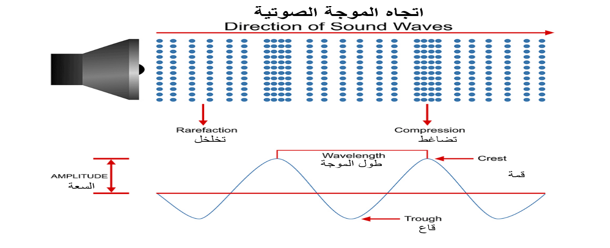
💡 الصوت: شكل من أشكال الطاقة، يهتز وينتقل في موجات. في مكبر الصوت: عندما يتحرك المخروط الورقي نحو الأمام، يدفع جزيئات الهواء معًا فتتكوّن منطقة ذات ضغط مرتفع تسمى التضاغط. وعندما يتحرك المخروط في الاتجاه المعاكس، يخلق منطقة ذات ضغط منخفض فيتكوّن التخلخل.
💡 Sound: a form of energy that vibrates and travels in waves. In a loudspeaker: when the paper cone moves forward, it pushes air particles together, creating a high-pressure region called a compression. When the cone moves the other way, it creates a low-pressure region, forming a rarefaction.
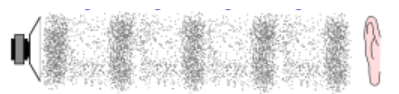
🧪 محاكاة: اهتزاز جزيئات الهواء بسبب الصوت
🧪 Simulation: Air Particle Vibration Due to Sound
شغّل المحاكاة وراقب جزيئات الهواء (النقاط الزرقاء) تهتز حول مواضعها الأصلية (الخطوط الرمادية) دون أن تنتقل من مكانها. المناطق التي تتقارب فيها الجزيئات تسمى تضاغطًا، والمناطق التي تتباعد فيها تسمى تخلخلاً.
Run the simulation and watch the air particles (blue dots) vibrate around their original positions (gray lines) without actually moving away from their location. Regions where particles bunch together are compressions, and regions where they spread apart are rarefactions.
📌 صفات الصوت
📌 Properties of Sound
- الصوت موجة ميكانيكية لأنه يحتاج إلى وسط مادي كي ينتقل فيه.Sound is a mechanical wave because it needs a material medium to travel through.
- الصوت موجة طولية لأن اهتزاز الجسيمات فيه يوازي اتجاه انتشار الاهتزاز.Sound is a longitudinal wave because particle vibration is parallel to the direction the vibration spreads.
- عدد الأمواج التي يصدرها المصدر في الثانية الواحدة يسمى تردد الموجة.The number of waves emitted by the source per second is called the wave's frequency.
- تقارب جزيئات الهواء من بعضها يسمى تضاغطًا، وابتعادها عن بعضها يسمى تخلخلاً.Air particles bunching together is called a compression, and their spreading apart is called a rarefaction.
- المسافة بين تضاغطين متتاليين (أو تخلخلين متتاليين) تسمى طول الموجة.The distance between two consecutive compressions (or two consecutive rarefactions) is the wavelength.
- أقصى إزاحة عن موضع الاتزان لجزيئات الهواء تسمى سعة الموجة.The maximum displacement of air particles from equilibrium is the wave's amplitude.
📏 سرعة الصوت
📏 The Speed of Sound
سرعة الموجة الصوتية هي المسافة التي تقطعها الموجة خلال وحدة الزمن:
The speed of a sound wave is the distance the wave travels per unit time:
تتغيّر سرعة الصوت بتغيّر نوع الوسط أو درجة حرارته.
The speed of sound changes with the type of medium or its temperature.
| الوسط عند درجة حرارة معيّنةMedium at a given temperature | m/s |
|---|---|
| الهواء بالدرجة 0°Air at 0°C | 331 |
| الهواء بالدرجة 20°Air at 20°C | 343 |
| الهليوم بالدرجة 0°Helium at 0°C | 965 |
| الماء بالدرجة 25°Water at 25°C | 1497 |
| ماء البحر بالدرجة 25°Seawater at 25°C | 1535 |
| النحاس بالدرجة 20°Copper at 20°C | 4760 |
| الحديد بالدرجة 20°Iron at 20°C | 4994 |
بالاطلاع على بيانات الجدول، فسِّر: (1) لماذا تتغيّر سرعة الصوت في الهواء بتغيّر درجة الحرارة؟ (2) لماذا سرعة الصوت في الوسط الصلب أكبر من سرعتها في الوسط السائل؟
From the table's data, explain: (1) why does the speed of sound in air change with temperature? (2) why is the speed of sound in a solid greater than in a liquid?
🎙️ الكشف عن موجات الضغط
🎙️ Detecting Pressure Waves
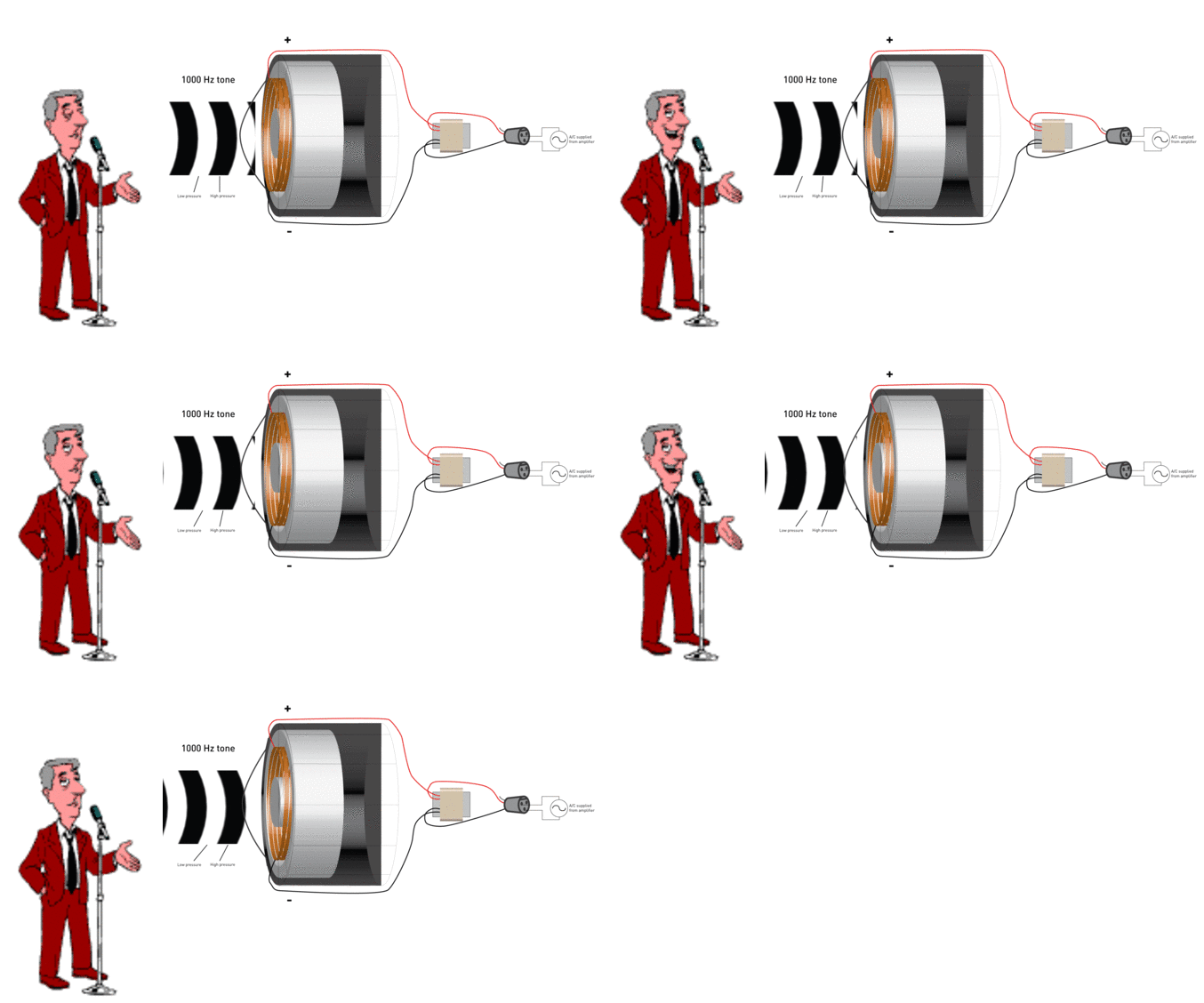
يتكوّن الميكروفون من مجال مغناطيسي وملف متصل بغشاء رقيق. عندما نتكلم أمام الغشاء، يتعرّض لتضاغط وتخلخل جزيئات الهواء فيهتز، ما يُهزّ الملف الموجود داخل المجال المغناطيسي، فتتولّد تيارات مستحثة متغيّرة الشدة تمثّل الإشارة الصوتية كهربائيًا.
A microphone consists of a magnetic field and a coil attached to a thin diaphragm. When we speak in front of the diaphragm, it is exposed to compressions and rarefactions of air particles and vibrates, shaking the coil inside the magnetic field, which generates an induced current of varying strength that represents the sound signal electrically.
👂 الأذن
👂 The Ear
عندما يحدث صوت، تدخل الموجات الصوتية إلى الأذن الخارجية وتنتقل عبر ممر ضيق يسمى قناة الأذن حتى تصل إلى طبلة الأذن. تهتز طبلة الأذن بسبب الموجات الصوتية الواردة، وترسل هذه الاهتزازات إلى ثلاث عظيمات تسمى المطرقة والسندان والركاب. تعمل هذه العظيمات على تضخيم الاهتزازات الصوتية وإرسالها إلى القوقعة، فتتسبب في تموّج السائل داخلها، الذي تنقله بدوره إلى الخلايا الحسية.
When a sound occurs, sound waves enter the outer ear and travel through a narrow passage called the ear canal until they reach the eardrum. The eardrum vibrates due to the incoming sound waves and sends these vibrations to three small bones called the hammer (malleus), anvil (incus), and stirrup (stapes). These bones amplify the sound vibrations and send them to the cochlea, causing the fluid inside it to ripple, which in turn transmits the signal to the sensory cells.

🎚️ الخصائص الفيزيائية للصوت
🎚️ Physical Properties of Sound
🎵 درجة الصوت
🎵 Pitch
صفة من صفات الصوت تميّزها الأذن بين الصوت الحاد الرفيع والصوت الغليظ الأجش. كلما زاد تردد الصوت أصبح أكثر حدّة ورفعة. يستطيع الإنسان أن يسمع الأصوات التي يتراوح ترددها بين \(20\,Hz\) و\(16000\,Hz\) تقريبًا، بينما تستطيع بعض الحيوانات سماع ترددات لا يستطيع الإنسان سماعها.
A property of sound the ear distinguishes between a high, sharp sound and a low, deep one. The higher the frequency, the sharper and higher the pitch. Humans can hear sounds with frequencies roughly between \(20\,Hz\) and \(16000\,Hz\), while some animals can hear frequencies humans cannot.
🔉 شدة الصوت
🔉 Loudness
صفة أخرى من صفات الصوت تميّزها الأذن، وتُعرَّف بأنها الطاقة التي تحملها الموجات الصوتية لكل وحدة مساحة. تعتمد على سعة الموجة والبعد عن المصدر وعوامل أخرى، ولتقليل أثر هذه العوامل يُستخدم مستوى شدة الصوت المُقدَّر بوحدة الديسيبل. يستطيع الإنسان سماع الأصوات التي يتراوح مستواها بين \(0\,dB\) و\(120\,dB\)، وعند تجاوز \(120\,dB\) يشعر الإنسان بالألم.
Another property the ear distinguishes, defined as the energy carried by sound waves per unit area. It depends on the wave's amplitude, distance from the source, and other factors; to reduce the effect of these factors, sound intensity level is measured in decibels. Humans can hear sounds ranging from \(0\,dB\) to \(120\,dB\), and beyond \(120\,dB\) a person feels pain.
🚑 تأثير دوبلر
🚑 The Doppler Effect
ظاهرة سماع صوت بتردد مختلف عن التردد الأصلي الذي أصدره المصدر. تحدث هذه الظاهرة عندما يتحرك مصدر الصوت مقتربًا أو مبتعدًا عن السامع، أو عندما يتحرك السامع مقتربًا أو مبتعدًا عن مصدر الصوت. يُحسب تردد الصوت الذي يصل إلى السامع نتيجة تحرّك المصدر أو السامع أو كليهما بالعلاقة:
The phenomenon of hearing a sound at a frequency different from the one actually emitted by the source. It occurs when the sound source moves toward or away from the listener, or when the listener moves toward or away from the source. The frequency reaching the listener, due to the motion of the source, the listener, or both, is calculated by:
عند تطبيق تأثير دوبلر يجب تحديد اتجاه موجب، وهو من المصدر إلى المراقب. سرعة الصوت \(v\) دائمًا موجبة (لأن الصوت أمواج كروية تنتشر في جميع الاتجاهات)، أما سرعة المصدر \(v_s\) وسرعة السامع \(v_d\) فتأخذان إشارة موجبة أو سالبة بحسب الاتجاه الموجب المفروض.
When applying the Doppler effect, a positive direction must be defined, taken from the source to the observer. The speed of sound \(v\) is always positive (since sound is a spherical wave spreading in all directions), while the source speed \(v_s\) and detector speed \(v_d\) take a positive or negative sign depending on the assumed positive direction.
| المراقب يبتعد عن المصدرObserver moves away | المراقب يقترب من المصدرObserver moves toward | مراقب ثابتStationary observer | |
|---|---|---|---|
| مصدر ثابتStationary source | \(f_d=f_s\frac{v-v_d}{v}\) | \(f_d=f_s\frac{v+v_d}{v}\) | \(f_s=f_d\) |
| المصدر يقترب من المراقبSource moves toward | \(f_d=f_s\frac{v-v_d}{v-v_s}\) | \(f_d=f_s\frac{v+v_d}{v-v_s}\) | \(f_d=f_s\frac{v}{v-v_s}\) |
| المصدر يبتعد عن المراقبSource moves away | \(f_d=f_s\frac{v-v_d}{v+v_s}\) | \(f_d=f_s\frac{v+v_d}{v+v_s}\) | \(f_d=f_s\frac{v}{v+v_s}\) |
في هذه المحاكاة، تحقّق من نتائج الجدول أعلاه:
In this simulation, verify the results of the table above:
قطار يصدر صوتًا ترددُه \(250\,Hz\) وهو يتحرك بسرعة \(40\,m/s\)، في هواء ساكن تبلغ فيه سرعة الصوت \(344\,m/s\). ما التردد الذي يسمعه شخص متوقف على جانب السكة (أ) عند اقتراب القطار منه؟ (ب) بعد ابتعاد القطار عنه؟
A train emits a sound of frequency \(250\,Hz\) while moving at \(40\,m/s\), in still air where the speed of sound is \(344\,m/s\). What frequency does a person standing by the track hear (a) as the train approaches? (b) after the train has passed and moves away?
🎺 الموجات الواقفة في أعمدة الهواء
🎺 Standing Waves in Air Columns
عندما تنتقل موجة صوتية داخل أنبوب مملوء بالهواء، تنعكس بعض الموجات عند وصولها لنهاية الأنبوب (سواء كان طرفه مفتوحًا أم مغلقًا)، وتتردد ذهابًا وإيابًا بين الطرفين. تشكّل بعض الترددات المحددة موجات ثابتة (مستقرة) في عمود الهواء، وتُستخدَم هذه الظاهرة في كثير من الآلات الموسيقية (كآلات النفخ النحاسية والخشبية) كمصدر أساسي لأصواتها المميزة. يوجد دائمًا بطن عند أي طرف مفتوح، وعقدة عند أي طرف مغلق.
When a sound wave travels down an air-filled tube, some of it reflects back when it reaches the end of the tube (whether that end is open or closed), and it bounces back and forth between the ends. Certain specific frequencies form standing waves in the air column, a phenomenon used in many musical instruments (like brass and woodwind instruments) as the primary source of their distinctive sound. There is always an antinode at any open end, and a node at any closed end.
🔵 عمود هواء مفتوح من الطرفين
🔵 An Air Column Open at Both Ends
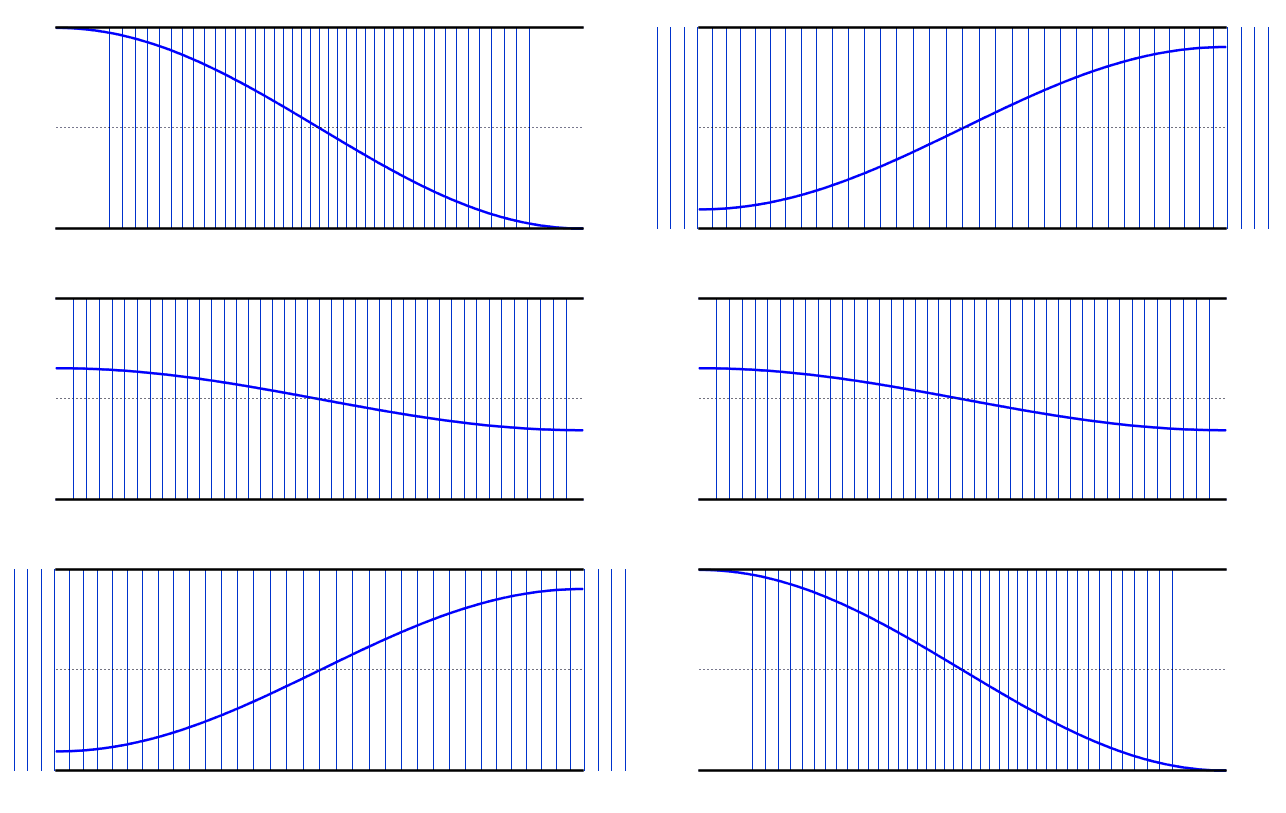
الوضع الأساسي للاهتزاز (التوافقي الأول) يحتوي على عقدة واحدة في المركز وبطن في كل نهاية، ويكون طول عمود الهواء مساويًا لنصف الطول الموجي للموجة الواقفة، لأن المسافة من بطن إلى أقرب عقدة تعادل ربع طول موجي.
The fundamental mode of vibration (1st harmonic) has one node in the middle and an antinode at each end, and the air column's length equals half the standing wave's wavelength, since the distance from an antinode to the nearest node equals a quarter-wavelength.
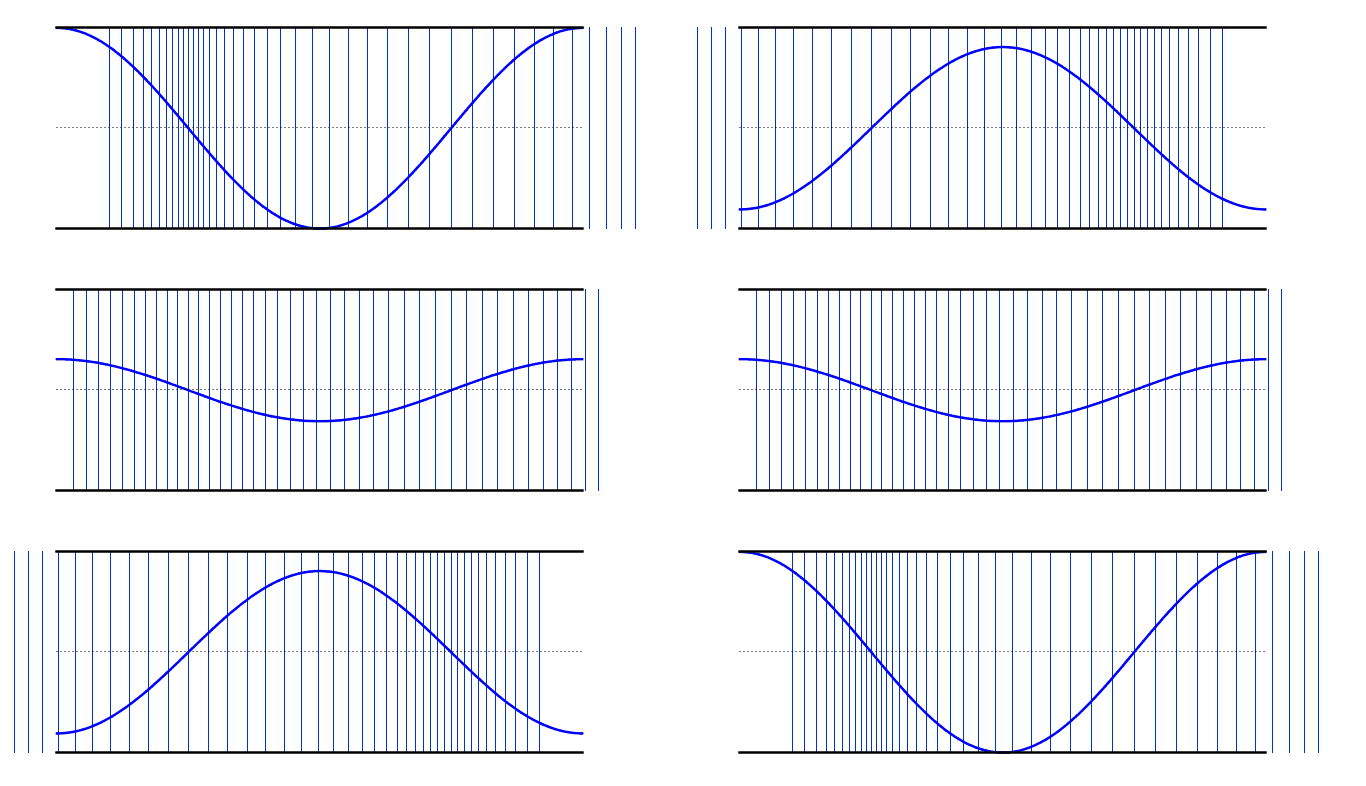
التوافقي الثاني: يكون الطول الموجي نصف الطول الموجي الأساسي، وبالتالي يكون التردد ضعف التردد الأساسي.
2nd harmonic: the wavelength is half the fundamental wavelength, so the frequency is double the fundamental frequency.
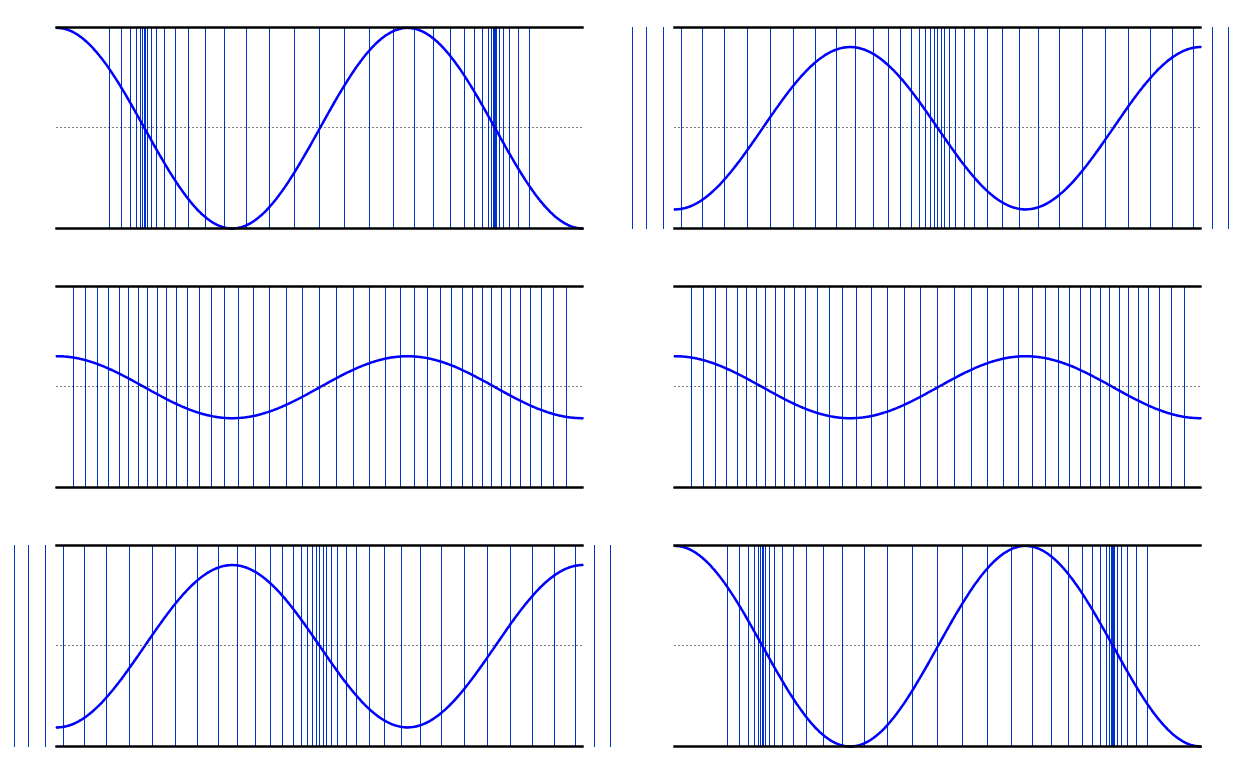
التوافقي الثالث: يكون الطول الموجي ثلث الطول الموجي الأساسي، وبالتالي يكون التردد ثلاثة أضعاف التردد الأساسي.
3rd harmonic: the wavelength is one-third the fundamental wavelength, so the frequency is three times the fundamental frequency.
🔴 عمود هواء مغلق من أحد الطرفين
🔴 An Air Column Closed at One End
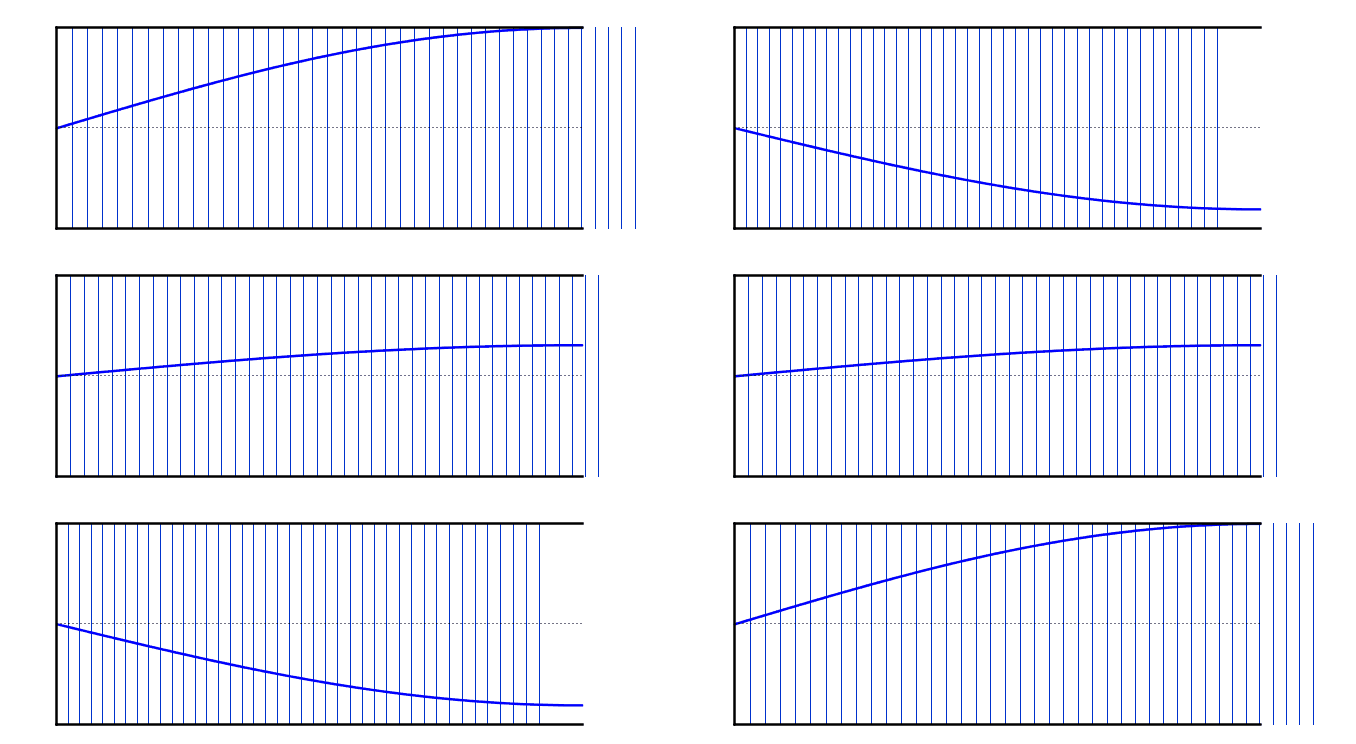
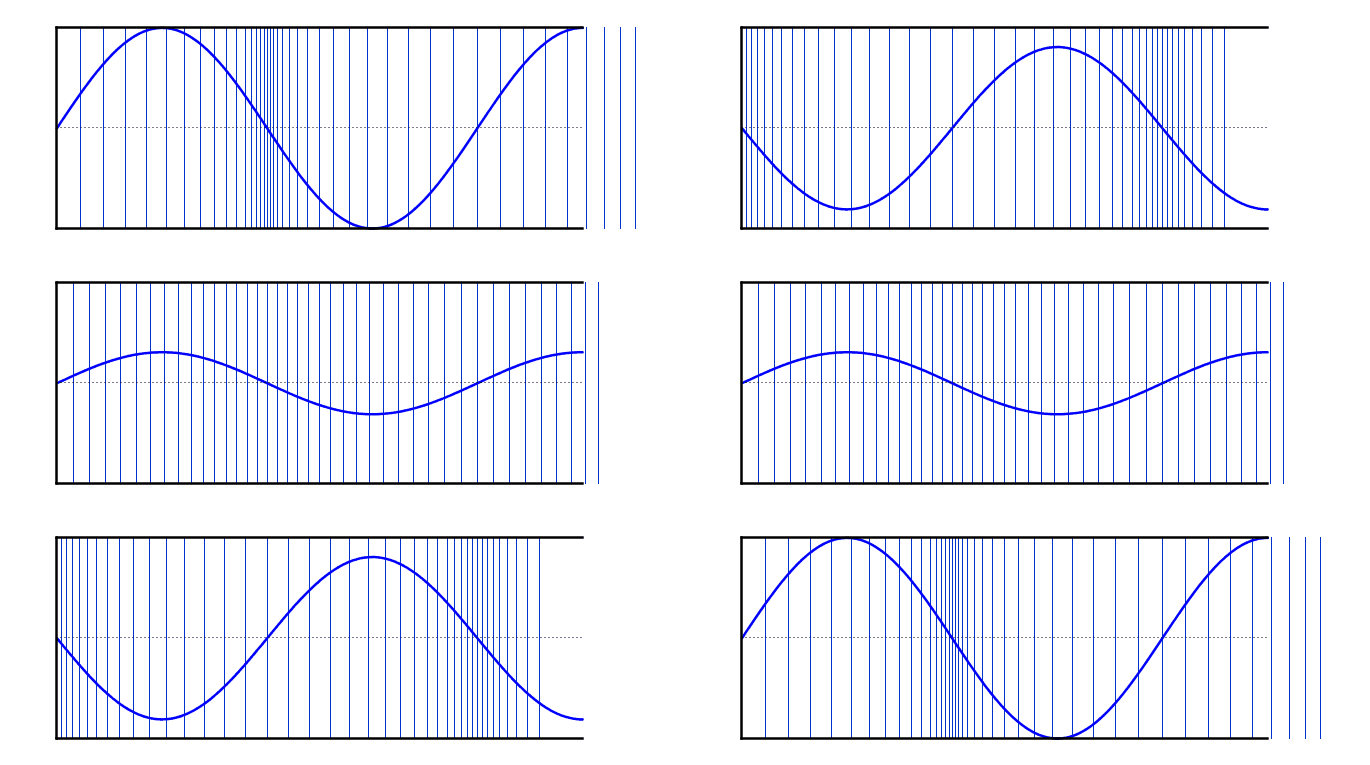
إذا كان عمود الهواء مفتوحًا من طرف ومغلقًا من الآخر، فإن الوضع الأساسي للاهتزاز يكون له بطن عند الطرف المفتوح وعقدة عند الطرف المغلق. طول عمود الهواء في التوافقي الأول يساوي ربع الطول الموجي، لأن المسافة من عقدة إلى أقرب بطن تعادل ربع طول الموجة. لا يوجد توافقي ثانٍ في هذا النوع من الأعمدة — إذ إن الوضع الثاني المسموح به تردده ثلاثة أضعاف الأساسي فعليًا (أي التوافقي الثالث)، فلا تتشكّل موجات ثابتة إلا عند التوافقيات الفردية فقط.
If an air column is open at one end and closed at the other, the fundamental mode has an antinode at the open end and a node at the closed end. The air column's length at the 1st harmonic equals a quarter-wavelength, since the distance from a node to the nearest antinode equals a quarter-wavelength. There is no 2nd harmonic for this type of column — the next allowed mode actually has three times the fundamental frequency (i.e., the 3rd harmonic), so standing waves only form at odd harmonics.
التوافقي الثالث: يتكوّن من ربع ونصف طول موجي، أي أن الطول الموجي يساوي ثلث الطول الموجي الأساسي، فيكون التردد ثلاثة أضعاف التردد الأساسي.
3rd harmonic: consists of a quarter plus a half wavelength, i.e., the wavelength is one-third the fundamental wavelength, so the frequency is three times the fundamental frequency.
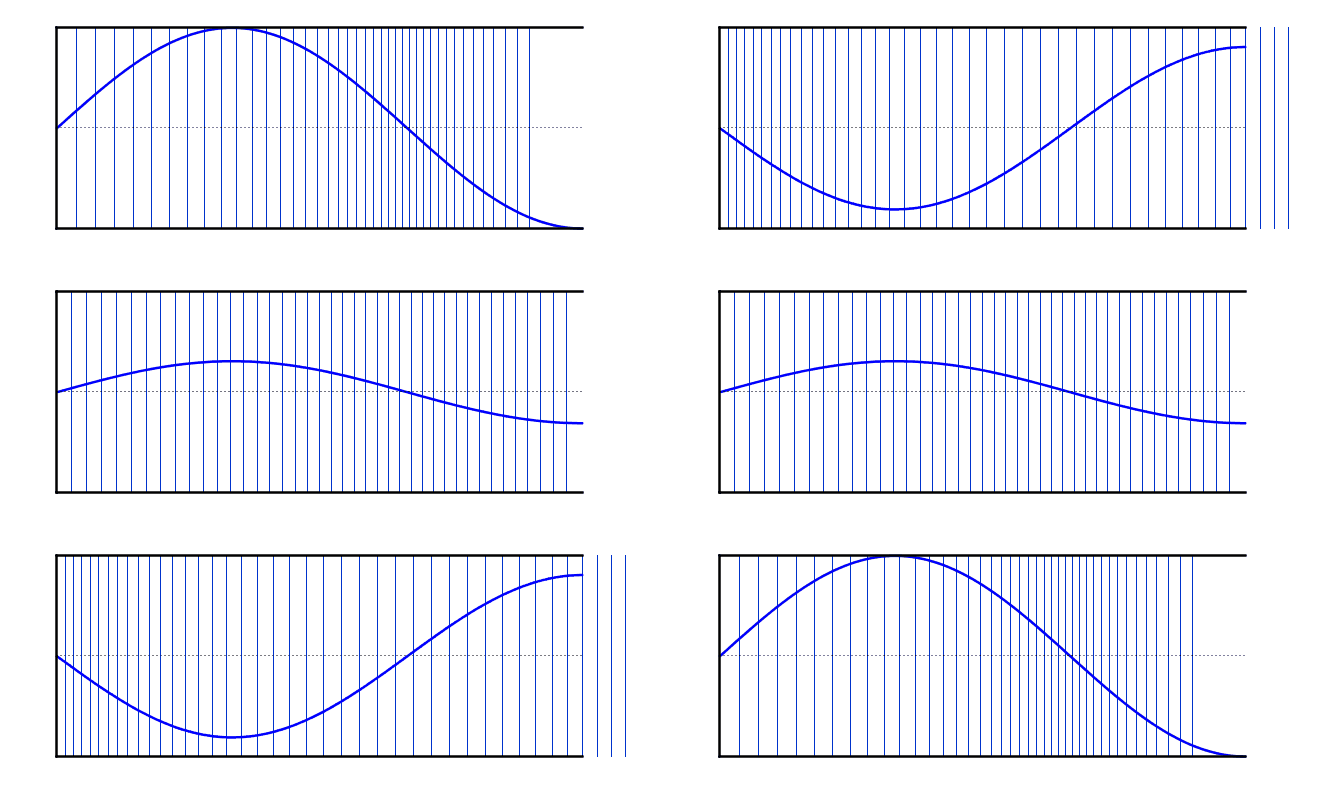
التوافقي الخامس: تتكوّن الموجة الواقفة من موجة وربع، أي أن الطول الموجي يساوي خُمس الطول الموجي الأساسي، فيكون التردد خمسة أضعاف التردد الأساسي.
5th harmonic: the standing wave consists of one-and-a-quarter wavelengths, i.e., the wavelength is one-fifth the fundamental wavelength, so the frequency is five times the fundamental frequency.
🎻 الموجات الواقفة على الأوتار
🎻 Standing Waves on Strings
عندما تتشكّل موجة واقفة على وتر (حبل مشدود)، توجد دائمًا عقدة عند كل طرف من طرفيه (لأنهما مثبَّتان).
When a standing wave forms on a string (a taut cord), there is always a node at each of its two ends (since both ends are fixed).
التوافقي الأول (التردد الأساسي): يكون طول الوتر مساويًا لنصف الطول الموجي للموجة الواقفة، لأن المسافة من عقدة إلى أقرب عقدة تالية تساوي نصف طول موجي.
1st harmonic (fundamental frequency): the string's length equals half the standing wave's wavelength, since the distance from a node to the next node equals half a wavelength.
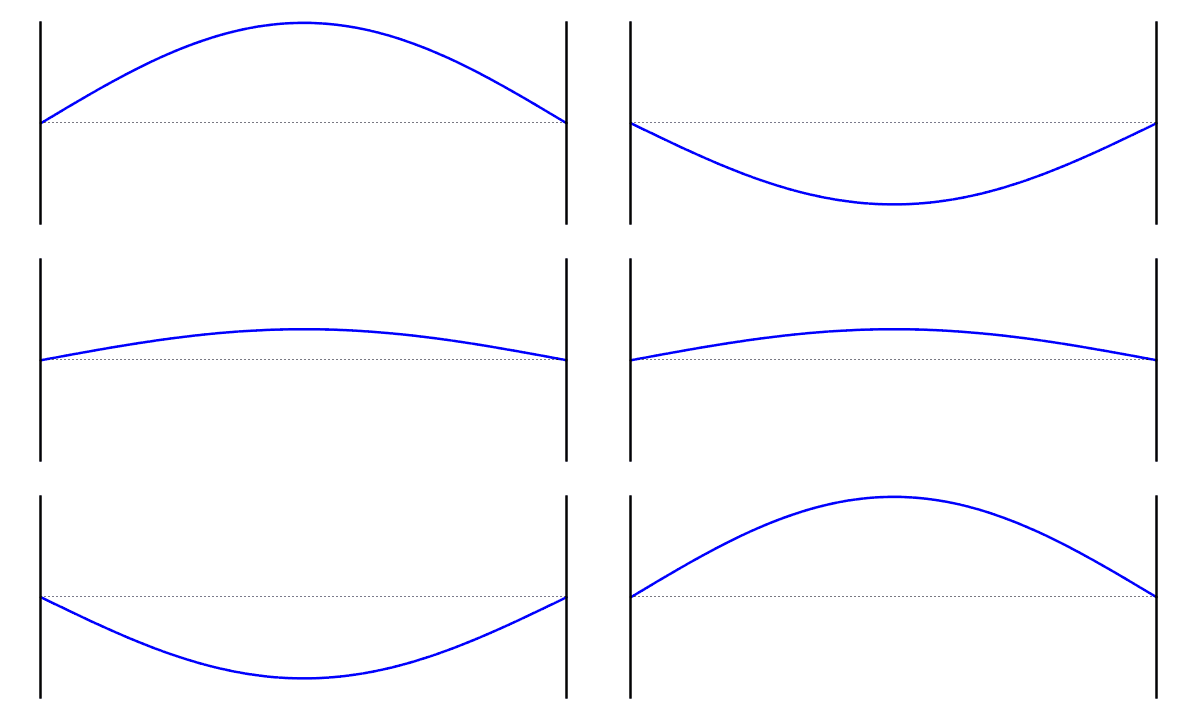
التوافقي الثاني: تتكوّن الموجة الواقفة من جزأين، فيكون الطول الموجي نصف الطول الموجي الأساسي، وبالتالي يكون التردد ضعف التردد الأساسي.
2nd harmonic: the standing wave consists of two segments, so the wavelength is half the fundamental wavelength, and the frequency is double the fundamental frequency.
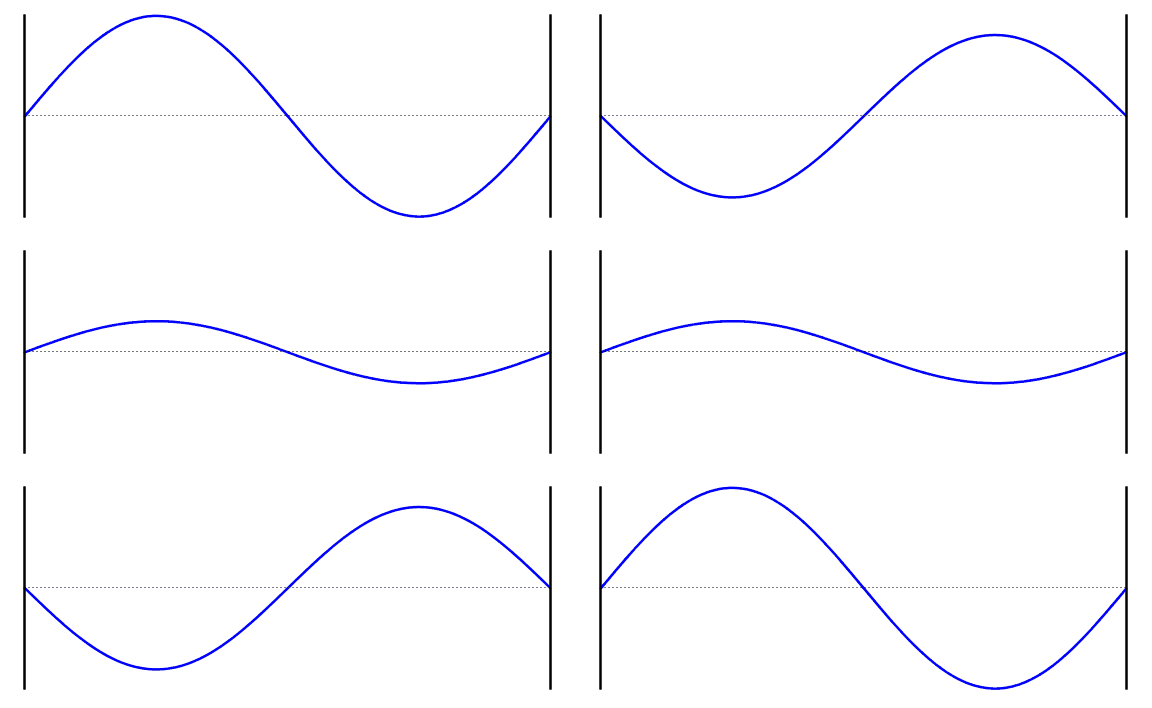
التوافقي الثالث: تتكوّن الموجة الواقفة من ثلاثة أجزاء، فيكون الطول الموجي ثلث الطول الموجي الأساسي، وبالتالي يكون التردد ثلاثة أضعاف التردد الأساسي.
3rd harmonic: the standing wave consists of three segments, so the wavelength is one-third the fundamental wavelength, and the frequency is three times the fundamental frequency.