🎯 نواتج التعلم
🎯 Learning Outcomes
بعد دراسة هذا الدرس ستكون قادرًا على أن:
After this lesson you will be able to:
- تشرح طرق الشحن الثلاث: الدلك والتلامس والحث، وتحدد نوع الشحنة الناتجة في كل منها.Explain the three charging methods: friction, contact and induction, and determine the kind of the resulting charge in each.
- تستعمل السلسلة الكهربائية بالدلك لتحديد الجسم الذي يفقد الإلكترونات والذي يكتسبها.Use the triboelectric series to determine which body loses electrons and which gains them.
- تقارن بين الموصلات والعوازل أمام جسم مشحون (حركة حرة أم استقطاب).Compare conductors and insulators near a charged body (free motion or polarization).
- تشحن كشافًا كهربائيًا بالتلامس وبالحث وتستعمله في كشف نوع الشحنة.Charge an electroscope by contact and by induction and use it to detect the kind of charge.
⚛️ تذكير: الشحنة وحفظها
⚛️ Recap: Charge and Its Conservation
الذرة المتعادلة فيها عدد من البروتونات (+) يساوي عدد الإلكترونات (−). والجسم يصير سالبًا إذا اكتسب إلكترونات وموجبًا إذا فقدها، وشحنته \(Q=\pm n\,e\) حيث \(e=1.6\times10^{-19}\ \mathrm C\). والشحنة محفوظة: لا تفنى ولا تُستحدث بل تنتقل من جسم إلى آخر. وفي كل طرق الشحن تنتقل الإلكترونات فقط.
A neutral atom has a number of protons (+) equal to the number of electrons (−). A body becomes negative if it gains electrons and positive if it loses them, and its charge is \(Q=\pm n\,e\) where \(e=1.6\times10^{-19}\ \mathrm C\). Charge is conserved: it is neither created nor destroyed but transferred from one body to another. In all charging methods only the electrons move.
قضيب شحنته \(-3\times10^{-9}\ \mathrm C\). كم إلكترونًا زائدًا عليه؟
A rod has a charge of \(-3\times10^{-9}\ \mathrm C\). How many excess electrons are on it?
طرق الشحن الثلاث باختصار
The three methods in brief
- الدلك: ينتج شحنتين متساويتين ومتعاكستين على الجسمين.Friction: produces two equal and opposite charges on the two bodies.
- التلامس: يكتسب الجسم المتعادل شحنة من نوع شحنة الجسم المشحون نفسه.Contact: the neutral body gets a charge of the same kind as the charged body’s.
- الحث: يكتسب الموصل شحنة معاكسة دون تلامس.Induction: the conductor gets an opposite charge without contact.
🧶 الشحن بالدلك
🧶 Charging by Friction
عند دلك جسمين مختلفين تنتقل الإلكترونات من المادة التي تمسك بها أضعف إلى المادة التي تمسك بها أقوى. فالمادة التي تفقدها (مثل الصوف) تصير موجبة، والتي تكتسبها (مثل البلاستيك والإيبونيت) تصير سالبة، ويكون عدد الإلكترونات المفقودة مساويًا لعدد المكتسبة.
When two different bodies are rubbed, the electrons move from the material that holds them more weakly to the material that holds them more strongly. The material that loses them (such as wool) becomes positive, the one that gains them (such as plastic and ebonite) becomes negative, and the number of lost electrons equals the number of gained ones.
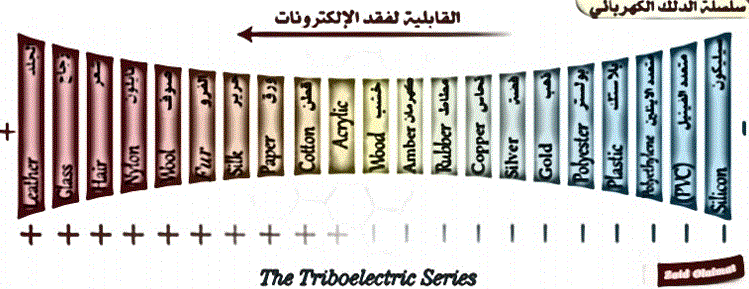
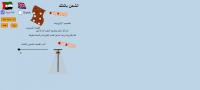
السلسلة الكهربائية بالدلك: المواد في اليسار أقرب لفقد الإلكترونات (تصير موجبة)
The triboelectric series: the materials on the left are likelier to lose electrons (becoming positive)
تطبيقات
Applications
- مولدات فان دي غراف الكهروستاتيكية.Van de Graaff electrostatic generators.
- الطلاء الكهروستاتيكي وتنقية الهواء من الجسيمات العالقة.Electrostatic painting and purifying the air from suspended particles.
- تجارب تعليمية لفهم الكهرباء الساكنة (البالون والصوف).Educational experiments to understand static electricity (the balloon and the wool).
🧪 تجربة 1: الشحن بالدلك
🧪 Experiment 1: Charging by Friction
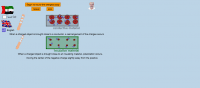
نتتبع الإلكترونات عند دلك القضيب بالصوف: من يفقدها ومن يكتسبها وكم تكون الشحنة الناتجة.
We follow the electrons when the rod is rubbed with the wool: who loses them, who gains them and how large the resulting charge is.
🛠️ خطوات العمل
🛠️ Procedure
- اضغط «الخطوة التالية» وراقب الجسمين المتعادلين (عدد + يساوي عدد −).Press “Next step” and watch the two neutral bodies (number of + equals number of −).
- في خطوة الدلك تحرّك الإلكترونات الثلاثة نحو القضيب.In the rubbing step the three electrons move toward the rod.
- بعد الفصل اقرأ شحنة كل جسم.After separating read the charge of each body.
🧪 تجربة 1: الشحن بالدلك
🧪 Experiment 1: Charging by Friction
اضغط «الخطوة التالية» لترى كيف تنتقل الإلكترونات من الصوف إلى القضيب عند الدلك ثم عند الفصل.
Press “Next step” to see how the electrons move from the wool to the rod when rubbing and then when separating.
🔎 ماذا نلاحظ؟ وما الاستنتاج؟
🔎 What do we observe? What is the conclusion?
- الجسم الذي فقد إلكترونات صار موجبًا، والذي اكتسبها صار سالبًا.The body that lost electrons became positive and the one that gained them became negative.
- عدد الإلكترونات المفقودة = عدد المكتسبة فالشحنتان متساويتان في المقدار.The number of lost electrons = the number of gained ones so the two charges are equal in magnitude.
الدلك يولّد شحنتين متساويتين متعاكستين دون أن تتغير الشحنة الكلية.
Friction produces two equal opposite charges without changing the total charge.
عند دلك قضيب إيبونيت بالصوف يصير القضيب سالبًا لأن:
When an ebonite rod is rubbed with wool the rod becomes negative because:
🤝 الشحن بالتلامس
🤝 Charging by Contact
عند لمس جسم متعادل بجسم مشحون تنتقل شحنات بينهما حتى يتوازنا، فيكتسب الجسم المتعادل شحنة من نوع شحنة الجسم المشحون نفسه. إذا كان القضيب سالبًا انتقلت إلكترونات منه إلى الجسم، وإذا كان موجبًا سحب إلكترونات من الجسم فصار الجسم موجبًا. وعند تلامس كرتين موصلتين متماثلتين تتقاسمان الشحنة الكلية بالتساوي.
When a neutral body touches a charged body, charges move between them until they are balanced, so the neutral body gets a charge of the same kind as the charged body’s. If the rod is negative electrons move from it to the body, and if it is positive it pulls electrons from the body which becomes positive. When two identical conducting spheres touch they share the total charge equally.
كرتان موصلتان متماثلتان شحنتاهما \(-6\ \mu\mathrm C\) و\(+2\ \mu\mathrm C\) تلامستا ثم فُصلتا. أوجد شحنة كل منهما.
Two identical conducting spheres have charges \(-6\ \mu\mathrm C\) and \(+2\ \mu\mathrm C\) and they touched then were separated. Find the charge of each.
🧪 تجربة 2: الشحن بالتلامس
🧪 Experiment 2: Charging by Contact
نلمس كرة موصلة متعادلة بقضيب سالب لنرى كيف تنتقل الإلكترونات إليها وما نوع شحنتها بعد إبعاد القضيب.
We touch a neutral conducting sphere with a negative rod to see how the electrons move to it and what kind of charge it has after the rod is removed.
🛠️ خطوات العمل
🛠️ Procedure
- اضغط «الخطوة التالية» لتقريب القضيب من الكرة حتى يلمسها.Press “Next step” to bring the rod to the sphere until it touches it.
- راقب انتقال 3 إلكترونات زائدة من القضيب إلى الكرة.Watch 3 excess electrons move from the rod to the sphere.
- أبعد القضيب واقرأ شحنة الكرة وشحنة القضيب.Remove the rod and read the charge of the sphere and of the rod.
🧪 تجربة 2: الشحن بالتلامس
🧪 Experiment 2: Charging by Contact
اضغط «الخطوة التالية» لترى كيف تنتقل الإلكترونات من القضيب السالب إلى الكرة عند اللمس.
Press “Next step” to see how the electrons move from the negative rod to the sphere on touching.
🔎 ماذا نلاحظ؟ وما الاستنتاج؟
🔎 What do we observe? What is the conclusion?
- الكرة اكتسبت شحنة سالبة من نوع شحنة القضيب نفسه.The sphere gained a negative charge of the same kind as the rod’s.
- شحنة القضيب قلّت من −6e إلى −3e وشحنة الكرة صارت −3e: المجموع −6e محفوظ.The rod’s charge decreased from −6e to −3e and the sphere’s became −3e: the total −6e is conserved.
الشحن بالتلامس يعطي الجسم المتعادل شحنة من نوع شحنة الجسم المشحون، ويتقاسمان الشحنة الكلية.
Charging by contact gives the neutral body a charge of the same kind as the charged body’s and they share the total charge.
🧲 الشحن بالحث
🧲 Charging by Induction
هو شحن جسم موصل دون ملامسته بالجسم المشحون، فتكون الشحنة الناتجة معاكسة لشحنة الجسم المحِثّ. يعتمد على أن الإلكترونات الحرة في الموصل تتحرك بتأثير المجال الكهربائي للجسم المشحون فتنفصل الشحنتان داخل الموصل (استقطاب)، ثم نسمح لإحدى الشحنتين بالهرب بالتأريض.
It is charging a conducting body without touching it with the charged body, so the resulting charge is opposite to the charge of the inducing body. It depends on the free electrons of the conductor moving under the electric field of the charged body so the two charges separate inside the conductor (polarization), then we let one of the two charges escape by grounding.
خطوات الشحن بالحث (قضيب سالب وكرة موصلة معزولة)
Steps of charging by induction (a negative rod and an isolated conducting sphere)
- نقرّب القضيب السالب دون لمس: تتنافر الإلكترونات إلى الطرف البعيد ويظهر الطرف القريب موجبًا.We bring the negative rod near without touching: the electrons are repelled to the far side and the near side appears positive.
- نؤرّض الكرة (نلمسها بالإصبع أو بسلك إلى الأرض): تهرب الإلكترونات الحرة إلى الأرض.We ground the sphere (touching it with a finger or a wire to the Earth): the free electrons escape to the Earth.
- نزيل التأريض أولًا ثم نبعد القضيب.We remove the grounding first then the rod.
- تبقى الكرة مشحونة بشحنة موجبة معاكسة لشحنة القضيب، موزعة على سطحها.The sphere stays positively charged, opposite to the rod’s charge, spread over its surface.
مثال عملي: عند تقريب بالون سالب من علبة ألومنيوم، تنجذب الشحنات الموجبة نحو البالون وتبتعد السالبة إلى الطرف البعيد؛ فإذا أُرِّضت العلبة غادرت السالبة إلى الأرض، وبعد إبعاد البالون تبقى العلبة موجبة.
A practical example: when a negative balloon is brought near an aluminium can, the positive charges are attracted toward the balloon and the negative ones move to the far end; if the can is grounded the negative ones leave to the Earth, and after the balloon is removed the can stays positive.
🧪 تجربة 3: الشحن بالحث
🧪 Experiment 3: Charging by Induction
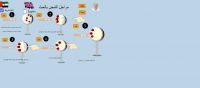
نشحن كرة موصلة بقضيب سالب دون أن يلمسها. الترتيب الصحيح للخطوات هو سر نجاح الحث.
We charge a conducting sphere with a negative rod without it touching the sphere. The correct order of the steps is the secret of the success of induction.
🛠️ خطوات العمل
🛠️ Procedure
- اضغط «الخطوة التالية» لتقريب القضيب دون لمس ولاحظ الاستقطاب في الكرة.Press “Next step” to bring the rod near without touching and notice the polarization in the sphere.
- في خطوة التأريض راقب هروب إلكترونين إلى الأرض.In the grounding step watch two electrons escape to the Earth.
- أزل التأريض أولًا ثم أبعد القضيب، واقرأ الشحنة النهائية.Remove the grounding first then remove the rod and read the final charge.
- جرّب الرجوع بزر «السابقة» لإعادة أي خطوة.Try going back with the “Previous” button to repeat any step.
🧪 تجربة 3: الشحن بالحث
🧪 Experiment 3: Charging by Induction
اضغط «الخطوة التالية» لتتتبع الخطوات الخمس: تقريب، تأريض، إزالة التأريض، إبعاد القضيب. جرّب الرجوع بزر «السابقة».
Press “Next step” to follow the five steps: bringing near, grounding, removing the grounding, removing the rod. Try going back with the “Previous” button.
🔎 ماذا نلاحظ؟ وما الاستنتاج؟
🔎 What do we observe? What is the conclusion?
- الكرة صارت موجبة (+2e) وهي عكس شحنة القضيب السالب.The sphere became positive (+2e) which is opposite to the negative rod’s charge.
- لو أُبعد القضيب قبل إزالة التأريض لعادت الإلكترونات من الأرض وبقيت الكرة متعادلة.If the rod were removed before the grounding the electrons would come back from the Earth and the sphere would remain neutral.
الحث يعطي شحنة معاكسة لشحنة الجسم المؤثر دون أي تلامس، بشرط التأريض ثم إزالته قبل إبعاد القضيب.
Induction gives a charge opposite to that of the inducing body without any contact, provided that the grounding is applied and then removed before the rod is moved away.
شُحنت كرة موصلة بالحث بتقريب قضيب موجب منها. شحنتها النهائية:
A conducting sphere is charged by induction by bringing a positive rod near it. Its final charge is:
🔌 الموصلات والعوازل
🔌 Conductors and Insulators
| الخاصيةProperty | الموصلاتConductors | العوازلInsulators |
|---|---|---|
| حركة الإلكتروناتMotion of electrons | إلكترونات حرةFree electrons | مرتبطة بذراتهاBound to their atoms |
| التوصيل الكهربائيElectrical conduction | ممتازExcellent | لا يوصلDoes not conduct |
| التوصيل الحراريThermal conduction | جيدGood | ضعيفPoor |
| أمثلةExamples | النحاس والفضة والألومنيومCopper, silver, aluminium | الخشب والزجاج والمطاطWood, glass, rubber |
| توزيع الشحنةDistribution of charge | تنتشر على السطح الخارجيSpreads over the outer surface | تبقى في مكانهاStays in place |
| الاستعمالUse | أسلاك التوصيلConnecting wires | عزل الأسلاك ومنع الصعقInsulating wires and preventing shocks |
عند تقريب جسم مشحون من موصل تتحرك الإلكترونات الحرة وتُعاد ترتيب الشحنات، أما في العازل فلا تتحرك الشحنات بحرية، وإنما يبتعد مركز الشحنة الموجبة قليلًا عن مركز السالبة داخل كل ذرة (استقطاب) دون انتقال شحنة.
When a charged body is brought near a conductor the free electrons move and the charges rearrange, whereas in an insulator the charges do not move freely but the centre of the positive charge shifts slightly from the centre of the negative charge inside each atom (polarization) with no transfer of charge.
🧪 تجربة 4: الموصل والعازل أمام قضيب مشحون
🧪 Experiment 4: A Conductor and an Insulator near a Charged Rod
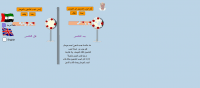
نقرّب القضيب السالب نفسه من جسم موصل ثم من جسم عازل ونقارن بين تأثيره في الشحنات داخل كل منهما.
We bring the same negative rod near a conducting body then near an insulating body and compare its effect on the charges inside each.
🛠️ خطوات العمل
🛠️ Procedure
- اختر «موصل» وحرّك شريط التقريب إلى أقصاه.Choose “conductor” and move the nearness slider to its maximum.
- لاحظ مكان الإلكترونات الحرة (−) والشحنات الموجبة الثابتة (+).Notice the places of the free electrons (−) and of the fixed positive charges (+).
- كرّر مع «عازل» وقارن درجة انفصال الشحنة.Repeat with “insulator” and compare the degree of charge separation.
🧪 تجربة 4: الموصل والعازل أمام قضيب مشحون
🧪 Experiment 4: A Conductor and an Insulator near a Charged Rod
قرّب قضيبًا سالبًا من جسم موصل ثم من جسم عازل وقارن بين ما يحدث للشحنات داخل كل منهما.
Bring a negative rod near a conducting body then near an insulating one and compare what happens to the charges inside each.
🔎 ماذا نلاحظ؟ وما الاستنتاج؟
🔎 What do we observe? What is the conclusion?
- في الموصل تتجمع الإلكترونات عند الطرف البعيد فيظهر الطرف القريب موجبًا.In the conductor the electrons gather at the far end so the near end appears positive.
- في العازل لا تتحرك إلكترونات حرة؛ تنزاح الشحنات داخل كل ذرة قليلًا فقط.In the insulator no free electrons move; the charges shift only slightly inside every atom.
الجسم متعادل في الحالتين، لكن الموصل ينفصل فيه الشحنتان انفصالًا كاملًا (ما يمكّن من الشحن بالحث) أما العازل فيُستقطب فقط.
The body is neutral in both cases, but in the conductor the two charges separate completely (which makes charging by induction possible) while the insulator is only polarized.
📡 الكشاف الكهربائي
📡 The Electroscope
الكشاف الكهربائي جهاز يكشف وجود الشحنة ونوعها: قرص معدني متصل بساق موصلة تنتهي بورقتين رقيقتين من المعدن داخل صندوق زجاجي. عند شحنه تحمل الورقتان شحنة من النوع نفسه فتتنافران وتنفرجان، وتزداد الزاوية بزيادة الشحنة.
The electroscope is a device that detects the presence and the kind of charge: a metal disc connected to a conducting rod ending in two thin metal leaves inside a glass box. When charged the two leaves carry charges of the same kind so they repel and diverge, and the angle increases with the charge.
شحن كشاف بالحث (شحنة سالبة بقضيب موجب)
Charging an electroscope by induction (negative charge with a positive rod)
- نقرّب القضيب الموجب من القرص دون لمس: تنجذب الإلكترونات نحو القرص وتنفرج الورقتان لاكتسابهما شحنة موجبة.We bring the positive rod near the disc without touching: the electrons are attracted toward the disc and the leaves diverge for they gain a positive charge.
- نلمس القرص أو القاعدة بالإصبع (تأريض): تنتقل إلكترونات من الأرض فتنطبق الورقتان.We touch the disc or the base with a finger (grounding): electrons move from the Earth so the leaves close.
- نبعد الإصبع أولًا ثم نبعد القضيب.We remove the finger first then the rod.
- يبقى الكشاف مشحونًا بشحنة سالبة فتنفرج الورقتان.The electroscope stays negatively charged so the leaves diverge.
🧪 تجربة 5: الكشاف الكهربائي وكشف نوع الشحنة
🧪 Experiment 5: The Electroscope and Detecting the Kind of Charge
نشحن الكشاف بشحنة معلومة ثم نقرّب قضيبًا موجبًا أو سالبًا ونستنتج نوع الشحنة من تغيّر زاوية الورقتين.
We charge the electroscope with a known charge then bring a positive or a negative rod near and deduce the kind of charge from the change in the angle of the leaves.
🛠️ خطوات العمل
🛠️ Procedure
- اضبط شحنة الكشاف سالبة (مثلًا −4e) وقرّب القضيب السالب تدريجيًا.Set the charge of the electroscope negative (for example −4e) and bring the negative rod near gradually.
- بدّل القضيب إلى الموجب وقارن زاوية الورقتين.Change the rod to the positive one and compare the angle of the leaves.
- اجعل شحنة الكشاف صفرًا وكرّر مع القضيبين.Make the charge of the electroscope zero and repeat with the two rods.
🧪 تجربة 5: الكشاف الكهربائي: كشف نوع الشحنة
🧪 Experiment 5: The Electroscope: Detecting the Kind of Charge
اشحن الكشاف بشحنة معلومة ثم قرّب منه قضيبًا موجبًا أو سالبًا وراقب زاوية الورقتين لتستنتج نوع الشحنة.
Charge the electroscope with a known charge then bring a positive or a negative rod near it and watch the angle of the leaves to deduce the kind of charge.
🔎 ماذا نلاحظ؟ وما الاستنتاج؟
🔎 What do we observe? What is the conclusion?
- قضيب من نوع شحنة الكشاف يزيد زاوية الورقتين، والمعاكس ينقصها.A rod of the same kind as the electroscope’s charge increases the angle of the leaves and the opposite one decreases it.
- الكشاف المتعادل تنفرج ورقتاه بأي قضيب مشحون، ولذلك لا يكفي الانفراج وحده لمعرفة النوع.A neutral electroscope’s leaves diverge with any charged rod, so the divergence alone is not enough to know the kind.
يُحدَّد نوع شحنة جسم بكشاف معلوم الشحنة: ازدياد الزاوية = الشحنة من النوع نفسه، ونقصانها = معاكسة.
The kind of charge of a body is determined with an electroscope of a known charge: an increase of the angle = the same kind, and a decrease = the opposite kind.
كشاف سالب الشحنة قُرِّب منه قضيب فانطبقت ورقتاه تدريجيًا. القضيب:
A negatively charged electroscope has a rod brought near it and its leaves gradually closed. The rod is:
📊 المقارنة بين طرق الشحن
📊 Comparing the Charging Methods
| وجه المقارنةAspect | الدلكFriction | التلامسContact | الحثInduction |
|---|---|---|---|
| التلامسContact | بين جسمين مختلفينBetween two different bodies | مباشرDirect | لا يوجدNone |
| نوع الشحنة الناتجةResulting charge | متعاكستانOpposite on the two | من نوع شحنة المشحونSame kind as the charged body | معاكسة لشحنة المحِثّOpposite to the inducer |
| التأريضGrounding | غير لازمNot needed | غير لازمNot needed | لازمNeeded |
| الأجسامBodies | عازلة غالبًاMostly insulators | موصلةConductors | موصلة معزولةIsolated conductors |
⚠️ أخطاء شائعة
⚠️ Common Mistakes
تجنّب هذه الأخطاء
Avoid these mistakes
- الظن أن البروتونات تنتقل؛ الإلكترونات وحدها تنتقل.Thinking that protons move; only the electrons move.
- نسيان إزالة التأريض قبل إبعاد القضيب في الشحن بالحث.Forgetting to remove the grounding before removing the rod in induction.
- الخلط بين الحث (شحنة معاكسة) والتلامس (شحنة مماثلة).Confusing induction (an opposite charge) with contact (a similar charge).
- الاعتماد على انفراج الورقتين وحده لتحديد نوع الشحنة.Relying on the divergence of the leaves alone to determine the kind of charge.
📚 ملخص
📚 Summary
أهم ما تعلمناه
Key points
- الدلك: شحنتان متساويتان متعاكستان؛ التلامس: شحنة من النوع نفسه؛ الحث: شحنة معاكسة.Friction: two equal opposite charges; contact: a charge of the same kind; induction: an opposite charge.
- تنتقل الإلكترونات فقط والشحنة الكلية محفوظة في كل الطرق.Only electrons move and the total charge is conserved in all methods.
- الموصل تتحرك فيه الإلكترونات الحرة، والعازل يُستقطب فقط.In a conductor free electrons move, an insulator only polarizes.
- الكشاف يكشف الشحنة ونوعها بمقارنة زاوية الورقتين عند تقريب قضيب معلوم.The electroscope detects the charge and its kind by comparing the angle of the leaves when a known rod is brought near.
🧪 اختبر نفسك: امتحان من 20 سؤالاً
🧪 Test Yourself: a 20-Question Exam
أنهِ الدرس بالاختبار التفاعلي التالي؛ أسئلته تجمع بين الفهم والحساب وتغطي جميع أقسام الدرس.
Finish with the interactive exam below; its questions mix understanding with calculation and cover every section of the lesson.
اختبار أنواع الشحن الكهربائي Types of Electric Charging Quiz
20 سؤالاً - الدلك والتلامس والحث والموصلات والعوازل والكشاف 20 Questions - friction, contact, induction, conductors, insulators and the electroscope
• عدد الأسئلة: 20 سؤالاً
• مدة الاختبار: 30 دقيقة
• لا يمكنك تغيير إجاباتك أو إعادة الاختبار إلا بعد 24 ساعة من التسليم.
• تأكد من إجاباتك قبل التسليم! 📌 Important Instructions:
• Number of questions: 20 questions
• Quiz duration: 30 minutes
• You cannot change your answers or retake the quiz for 24 hours after submission.
• Make sure of your answers before submitting!
🔗 محاكيات GeoGebra للاستعانة بها عند اللزوم
🔗 GeoGebra Simulations to Use When Needed
اضغط «تشغيل» لتعمل المحاكاة هنا داخل الدرس؛ ويمكن للطالب الرجوع إليها لتجربة الفكرة بطريقة أخرى.
Press “Run” to run the simulation right here inside the lesson; the student can use it to try the idea in another way.