يوجد نوعين من الشحن الكهربائية: سالبة وموجبة. There are two types of electric charges: Negative and Positive.
ماذا يعني جسم مشحون بشحنة موجبة؟What does a positively charged body mean? يعني أن الجسم فقد إلكترونات. It means the body has lost electrons.
ماذا يعني جسم مشحون بشحنة سالبة؟What does a negatively charged body mean? يعني أن الجسم اكتسب إلكترونات. It means the body has gained electrons.

تتكون أي مادة من نواة تحتوي على بروتونات ذات شحنة موجبة ونيوترونات متعادلة، وتدور حول النواة إلكترونات ذات شحنة سالبة. Any material consists of a nucleus containing positively charged protons and neutral neutrons, with negatively charged electrons orbiting around it.
لماذا الذرة متعادلة كهربائياً؟Why is the atom electrically neutral? لأن عدد البروتونات = عدد الإلكترونات، وشحنة البروتون = شحنة الإلكترون. Because number of protons = number of electrons, and proton charge = electron charge.
الإلكترونات هي التي تُكتسب أو تُفقد. الأجسام المشحونة تحتوي على بروتونات وإلكترونات ولكن عددها مختلف. Electrons are gained or lost. Charged bodies contain protons and electrons but their numbers are different.
🔹 جسم سالب الشحنة اكتسب إلكترونات ⟵ عدد الإلكترونات > عدد البروتونات
Negative body: gained electrons → electrons > protons
🔹 جسم موجب الشحنة فقد إلكترونات ⟵ عدد البروتونات > عدد الإلكترونات
Positive body: lost electrons → protons > electrons

في هذه المحاكاة يتم دلك بالون بقطعة من الصوف. لاحظ الشحنات التي يكتسبها البالون ونوع شحنته، وماذا حدث لقطعة الصوف ونوع شحنتها. قم بدلك البالون الآخر بقطعة الصوف وقرب البالونين من بعضهما وحدد نوع القوة بينهما، ثم قرب البالون من قطعة الصوف وحدد نوع القوة بينهما. In this simulation, a balloon is rubbed with a piece of wool. Observe the charges gained by the balloon and its charge type, what happens to the wool and its charge type. Rub the other balloon with wool, bring them close together and determine the force, then bring the balloon close to the wool and determine the force.
📌 قانون كولوم الكهربائي: القوة الكهربائية بين شحنتين تتناسب طردياً مع حاصل ضرب الشحنتين وعكسياً مع مربع المسافة بينهما.
📌 الشحنات المتشابهة (++ أو --) تنشأ بينها قوة تنافر.
✅ الإجابة الصحيحة: تنافر. ✏️ Solution:
📌 Coulomb's Law: The electric force between two charges is directly proportional to the product of the charges and inversely proportional to the square of the distance between them.
📌 Like charges (++ or --) produce a repulsion force.
✅ Correct answer: Repulsion.
📌 الشحنات المختلفة (+ و -) تجذب بعضها البعض.
📌 تنشأ بينها قوة تجاذب.
✅ الإجابة الصحيحة: تجاذب. ✏️ Solution:
📌 Opposite charges (+ and -) attract each other.
📌 They produce an attraction force.
✅ Correct answer: Attraction.
📌 الشحنة الموجبة تعني أن عدد البروتونات أكبر من عدد الإلكترونات.
📌 البروتونات لا تنتقل بين المواد، فقط الإلكترونات هي التي تتحرك.
📌 إذا فقد الجسم إلكترونات يصبح موجب الشحنة.
✅ الإجابة الصحيحة: فقد إلكترونات. ✏️ Solution:
📌 Positive charge means more protons than electrons.
📌 Protons don't move between materials, only electrons transfer.
📌 If a body loses electrons, it becomes positively charged.
✅ Correct answer: Lost electrons.
📌 الشحنة السالبة تعني أن عدد الإلكترونات أكبر من عدد البروتونات.
📌 إذا اكتسب الجسم إلكترونات يصبح سالب الشحنة.
✅ الإجابة الصحيحة: اكتسب إلكترونات. ✏️ Solution:
📌 Negative charge means more electrons than protons.
📌 If a body gains electrons, it becomes negatively charged.
✅ Correct answer: Gained electrons.

📐 القوانين الهامة📐 Important Formulas
حيث q = شحنة الجسم، n = عدد الإلكترونات المكتسبة أو المفقودة، الشحنة الأولية للإلكترون \[e = 1.6 \times 10^{-19}C\] Where q = charge, n = number of electrons gained/lost, elementary charge \[ e = 1.6 \times 10^{-19}C\]
🔴 الشحنات الموجبة: لونها أحمر 🔵 الشحنات السالبة: لونها أزرق🔴 Positive charges: Red 🔵 Negative charges: Blue
📌 مثال 1📌 Example 1
تم دلك قضيب من الزجاج بقطعة من الصوف فأصبح القضيب الزجاجي مشحون بشحنة موجبة. فإن القضيب:A glass rod is rubbed with wool and becomes positively charged. The rod:
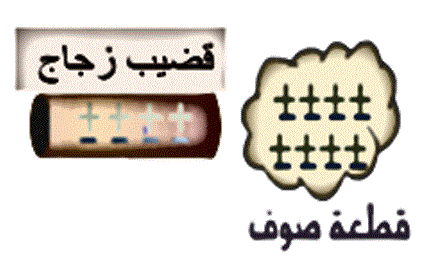
1️⃣ عند دلك الزجاج بالصوف، يكتسب الزجاج شحنة موجبة.
2️⃣ الشحنة الموجبة تعني أن الجسم فقد إلكترونات (لأن البروتونات لا تنتقل).
3️⃣ الصوف يكتسب الإلكترونات المفقودة ويصبح سالب الشحنة.
✅ الإجابة الصحيحة: فقد إلكترونات (B). ✏️ Solution:
1️⃣ When glass is rubbed with wool, the glass becomes positively charged.
2️⃣ Positive charge means the body lost electrons (protons don't move).
3️⃣ The wool gains the lost electrons and becomes negatively charged.
✅ Correct answer: Lost electrons (B).
📌 مثال 2📌 Example 2
تم دلك بالون بقطعة من الصوف فأصبح البالون مشحون بشحنة سالبة قدرها \(8 \times 10^{-19}C\)، فإن قطعة الصوف: \((q_e = 1.6 \times 10^{-19}C)\)A balloon rubbed with wool becomes negatively charged with \(8 \times 10^{-19}C\). The wool: \((q_e = 1.6 \times 10^{-19}C)\)

📌 البالون سالب الشحنة ← اكتسب إلكترونات.
📌 قطعة الصوف تفقد نفس عدد الإلكترونات (قانون حفظ الشحنة).
🔢 عدد الإلكترونات = \( \frac{q}{e} = \frac{8 \times 10^{-19}}{1.6 \times 10^{-19}} = 5 \) إلكترونات.
✅ الإجابة الصحيحة: فقدت 5 إلكترونات (A). ✏️ Solution:
📌 Balloon is negative → gained electrons.
📌 Wool loses the same number of electrons (conservation of charge).
🔢 Number of electrons = \( \frac{q}{e} = \frac{8 \times 10^{-19}}{1.6 \times 10^{-19}} = 5 \) electrons.
✅ Correct answer: Lost 5 electrons (A).
🔌 الموصلات والعوازل وأشباه الموصلات وفائقة التوصيل🔌 Conductors, Insulators, Semiconductors, and Superconductors
المواد الموصلة:Conductors: مواد قادرة على توصيل التيار الكهربائي لأنها تحتوي على إلكترونات حرة قادرة على التحرك، مثل النحاس والحديد والألومنيوم. Materials capable of conducting electric current because they contain free electrons that can move, such as copper, iron, and aluminum.
المواد العازلة:Insulators: مواد غير قادرة على التوصيل لأن إلكتروناتها مرتبطة بالنواة، مثل الخشب والبلاستيك والإيبونيت. Materials unable to conduct electric current because their electrons are bound to the nucleus, such as wood, plastic, and ebonite.
أشباه الموصلات:Semiconductors: مواد قادرة على التوصيل في ظروف خاصة، مثل الجرمانيوم والسيليكون (المجموعة 14). Materials capable of conducting current under special conditions, such as germanium and silicon (Group 14).
فائقة التوصيل:Superconductors: ممانعتها لمرور التيار تكاد تكون معدومة، تعمل فقط بدرجة حرارة منخفضة جدًا مثل التيتانيوم. Their resistance to current flow is nearly zero, and they only work at very low temperatures, such as Titanium.
⚡ الشحن بالدلك (Charging by Friction)⚡ Charging by Friction

الشرح العلمي:Scientific Explanation: تحدث هذه الظاهرة عند دلك جسمين مختلفين معًا، حيث تنتقل الإلكترونات من جسم إلى آخر بسبب الاختلاف في قابلية المواد لفقدان أو كسب الإلكترونات. This phenomenon occurs when two different materials are rubbed together, where electrons transfer from one body to another due to the difference in their electron affinity.
⚡ الشحن الكهربائي بالحث (Induction Charging)⚡ Charging by Induction
تعريف الشحن بالحث:Definition: عملية فصل الشحنات الكهربائية في جسم موصل دون تلامس مباشر مع الجسم المشحون، حيث تتأثر الشحنات في الجسم المحايد بوجود المجال الكهربائي للجسم المشحون. The process of separating electric charges in a conductor without direct contact with the charged body, where the charges in the neutral body are affected by the electric field of the charged body.
خطوات شحن كشاف كهربائي بشحنة سالبة بالحث:Steps to charge an electroscope negatively by induction:
- تقريب جسم مشحون بشحنة موجبة من الكشاف (يحدث إعادة ترتيب لشحنات الكشاف)Bring a positively charged object near the electroscope (charge redistribution occurs)
- لمس قاعدة الكشاف باليد (تأريض) — تتفرغ الشحنات الحرة غير المتأثرة بقوة التجاذبTouch the base with your hand (grounding) — free charges drain away
- إبعاد اليد ثم إبعاد الجسم المشحون عن الكشاف — يشحن الكشاف بشحنة سالبةRemove your hand, then remove the charged object — the electroscope becomes negatively charged
📊 مقارنة بين الموصلات والعوازل📊 Comparison between Conductors and Insulators
| الخاصيةProperty | الموصلاتConductors | العوازلInsulators |
|---|---|---|
| حركة الإلكتروناتElectron movement | إلكترونات حرة الحركةFree electrons | إلكترونات مرتبطة بذراتهاElectrons bound to atoms |
| التوصيل الكهربائيElectrical conductivity | ✅ توصيل ممتاز✅ Excellent | ❌ لا توصل❌ Does not conduct |
| أمثلةExamples | النحاس، الفضة، الألومنيومCopper, Silver, Aluminum | الخشب، الزجاج، المطاطWood, Glass, Rubber |
⚡ الشحن بالتلامس (Charging by Contact)⚡ Charging by Contact
الشرح العلمي:Scientific Explanation: عملية نقل الشحنة الكهربائية عن طريق التلامس المباشر بين جسم مشحون وآخر متعادل، حيث تتنقل الشحنات حتى يصل النظام إلى حالة التوازن الكهروستاتيكي. The transfer of electric charge through direct contact between a charged body and a neutral one, where charges move until the system reaches electrostatic equilibrium.
آلية النقل:Transfer mechanism:
- إذا كان الجسم المشحون سالبًا: تنتقل الإلكترونات الزائدة إلى الجسم المتعادل.- If the charged body is negative: excess electrons transfer to the neutral body.
- إذا كان الجسم المشحون موجبًا: تسحب الإلكترونات من الجسم المتعادل.- If the charged body is positive: electrons are pulled from the neutral body.
📌 ملاحظة هامة:📌 Important Note:
عند ملامسة جسم مشحون لجسم موصل، فإن جزءًا من شحنة الجسم المشحون تنتقل للموصل، ولا يشترط أن تتم تقاسم الشحنة مناصفة. إلا إذا كان الجسم المشحون مماثلًا تمامًا للجسم الموصل (في الشكل والحجم)، فيحدث تقاسم متساوٍ للشحنة. When a charged body touches a conductor, part of its charge transfers to the conductor. The charge is not necessarily shared equally unless the two bodies are identical in shape and size, in which case equal charge sharing occurs.

📌 مثال 3📌 Example 3

📌 زيادة الكتلة تحدث عند انتقال الإلكترونات (لأن للإلكترونات كتلة صغيرة جداً).
📌 في الصورة A و B حدث تقريب فقط (بدون تلامس) ← لا يحدث انتقال للإلكترونات.
📌 في الصورة C و D حدث تلامس. في الصورة D انتقلت الإلكترونات فعلياً.
✅ الإجابة الصحيحة: D. ✏️ Solution:
📌 Mass increases when electrons transfer (electrons have mass).
📌 In images A and B, only approach occurred (no contact) → no electron transfer.
📌 In images C and D, contact occurred. In image D, electrons actually transferred.
✅ Correct answer: D.
📌 مثال 4📌 Example 4

📌 تقريب جسم موجب الشحنة من الموصلين → يحدث حث كهربائي (تتجمع الشحنات السالبة بالقرب من الجسم الموجب وتتباعد الموجبة).
📌 عند التأريض (لمس القاعدة بالأرض)، تنتقل الشحنات الموجبة إلى الأرض (لأن الأرض متعادلة وتستقبل الشحنات).
📌 بعد قطع التأريض وإبعاد الجسم المشحون، يتبقى على كلا الموصلين شحنة سالبة.
✅ الإجابة الصحيحة: A سالب, B سالب. ✏️ Solution:
📌 Bring a positive charge near the conductors → electrostatic induction occurs (negative charges gather near the positive object, positive charges move away).
📌 When grounding (touch the base), positive charges transfer to the ground.
📌 After removing ground and the charged object, both conductors remain negatively charged.
✅ Correct answer: A negative, B negative.
📌 مثال 5📌 Example 5
عند ملامسة موصل مشحون بشحنة موجبة مقدارها \(6\mu C\) موصل آخر متعادل له نفس الشكل، ثم فصل الموصلين، فإن شحنة كل من الموصلين:A conductor with \(+6\mu C\) touches an identical neutral conductor, then they are separated. The charge on each conductor is:

📌 عند تلامس موصلين متطابقين (نفس الشكل والحجم)، تتوزع الشحنة بالتساوي بينهما.
📌 الشحنة الكلية قبل التلامس = \( +6\mu C + 0 = +6\mu C \)
📌 بعد التلامس والفصل، تتساوى الشحنة على كل موصل:
\[ q_1 = q_2 = \frac{6\mu C}{2} = +3\mu C \]
✅ الإجابة الصحيحة: q₁=+3 μC, q₂=+3 μC (C). ✏️ Solution:
📌 When two identical conductors touch, charge distributes equally.
📌 Total charge before contact = \( +6\mu C + 0 = +6\mu C \)
📌 After contact and separation, charge on each conductor is equal:
\[ q_1 = q_2 = \frac{6\mu C}{2} = +3\mu C \]
✅ Correct answer: q₁=+3 μC, q₂=+3 μC (C).