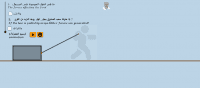
متى نقول إن قوة بذلت شغلًا؟ وكيف نحسبه للقوة المنتظمة والمتغيرة وعلى المستويات المائلة؟When do we say a force did work? How do we calculate it for constant and variable forces and on inclined planes?
- المعنى الفيزيائي للشغل وشرطاهThe physical meaning of work and its two conditions
- الشغل بقوة منتظمة وأثر الزاويةWork by a constant force and the effect of the angle
- إشارة الشغل: موجب وسالب ومعدومSign of work: positive, negative and zero
- الشغل بالصيغة الاتجاهيةWork in vector form
- تمرين تفاعلي: احسب الشغل وحدد نوعهInteractive exercise: calculate the work and its type
- القوى على مستوى مائل خشنForces on a rough incline
- محصلة الشغل لقوى متلاقيةNet work of concurrent forces
- الشغل بقوة متغيرة ومساحة المنحنىWork by a variable force and the area under the graph
- الشغل والطاقة الحركيةWork and kinetic energy
- أمثلة محلولة متقدمةAdvanced worked examples
- ملخص ومراجعة وامتحان من 20 سؤالًاSummary, review and a 20-question exam
١. المعنى الفيزيائي للشغل1. The Physical Meaning of Work
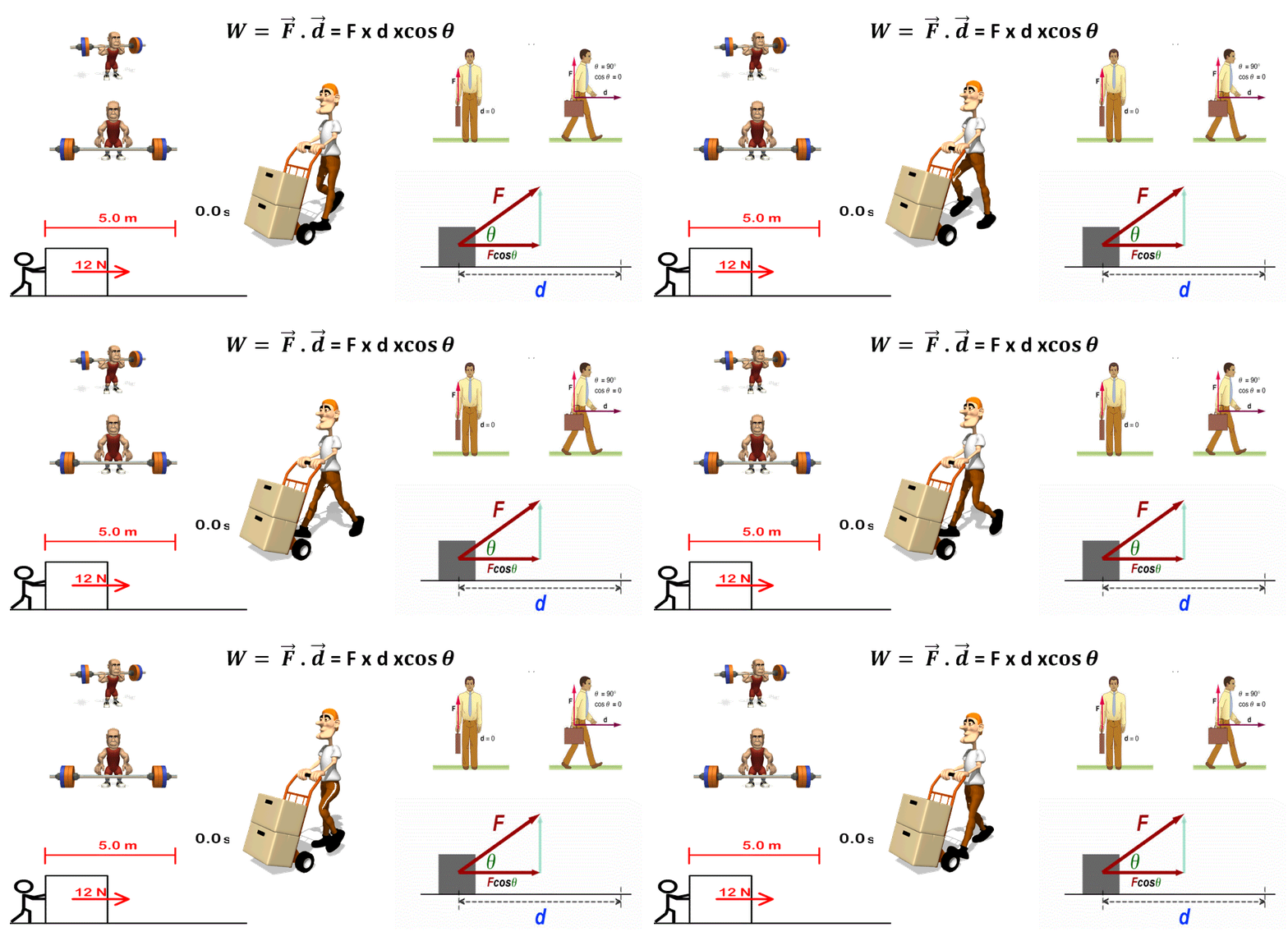
المعنى الشائع للشغل هو بذل جهد جسدي أو فكري، وهو يختلف عن المعنى الفيزيائي. الشغل الفيزيائي هو مقدار الطاقة اللازمة لتحريك جسم ذي كتلة معينة لمسافة معينة. ولا يقتصر الشغل على تحريك الأجسام، بل هو انتقال للطاقة من القوة إلى الجسم.The common meaning of work is physical or mental effort, which differs from the physical meaning. Physical work is the amount of energy needed to move a body of a given mass over a given distance. Work is not limited to moving bodies; it is the transfer of energy from a force to a body.

٢. الشغل بقوة منتظمة وأثر الزاوية2. Work by a Constant Force and the Effect of the Angle
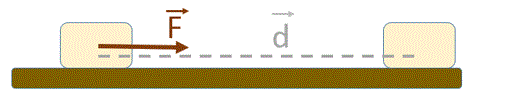
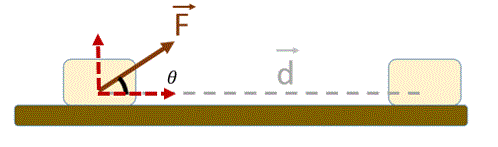
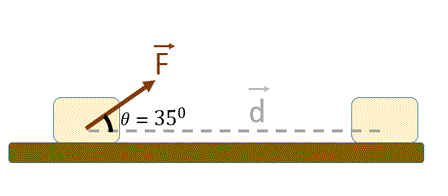
القوة المنتظمة هي التي تبقى ثابتة المقدار والاتجاه طوال فترة تأثيرها. إذا كانت موازية لاتجاه الحركة فإن الشغل W = F·d. أما إذا صنعت القوة زاوية θ مع الإزاحة فإننا نحلل القوة إلى مركبتين: مركبة موازية للإزاحة F·cosθ، ومركبة عمودية عليها F·sinθ لا تبذل شغلًا لأنها عمودية على الحركة.A constant force keeps the same magnitude and direction during its action. If it is parallel to the motion, the work is W = F·d. If it makes an angle θ with the displacement, we resolve it into a component along the displacement F·cosθ and a perpendicular component F·sinθ, which does no work because it is perpendicular to the motion.
٣. إشارة الشغل: موجب وسالب ومعدوم3. Sign of Work: Positive, Negative and Zero
٤. الشغل بالصيغة الاتجاهية4. Work in Vector Form
عندما تُعطى القوة والإزاحة بالمركبات، فإن الشغل هو الضرب القياسي (Dot product) للمتجهين، وهو يغني عن حساب الزاوية مباشرة:When the force and displacement are given in components, work is the dot product of the two vectors, which avoids computing the angle directly:
٥. تمرين تفاعلي: احسب الشغل وحدد نوعه5. Interactive Exercise: Calculate the Work and Its Type
تمرين تفاعلي: احسب الشغل وحدد نوعهInteractive exercise: calculate the work and identify its type
أدخل القوة والإزاحة والزاوية في كل صف، ثم اضغط «تحقق». احسب الشغل بالقانون W = F·d·cosθ، وحدد نوعه.Enter the force, displacement and angle in each row, then press “Check”. Calculate the work with W = F·d·cosθ and identify its type.
| القوة F (N)Force F (N) | الإزاحة d (m)Displacement d (m) | الزاوية θ (°)Angle θ (°) | الشغل W (J)Work W (J) | نوع الشغلType of work |
|---|---|---|---|---|
| 10 | 4 | 0 | ||
| 60 | 10 | 35 | ||
| 30 | 5 | 120 | ||
| 20 | 3 | 90 | ||
| 15 | 4 | 180 |
٦. القوى على مستوى مائل خشن6. Forces on a Rough Incline
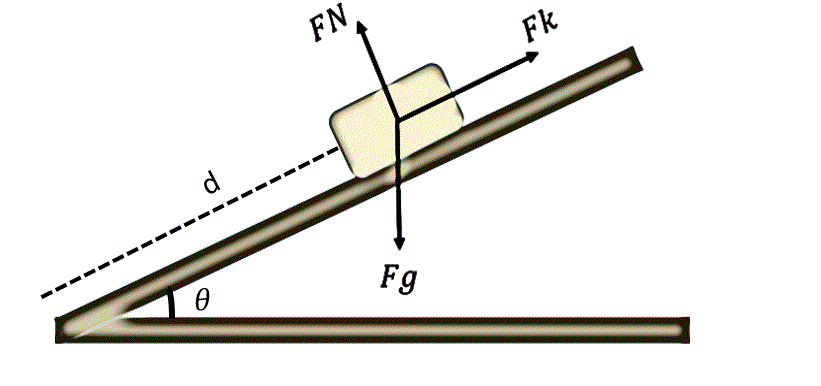
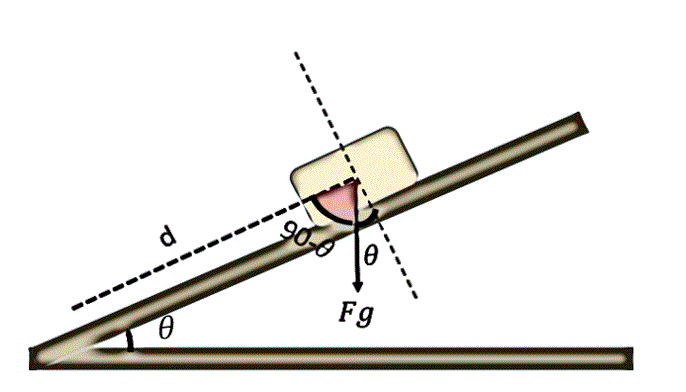
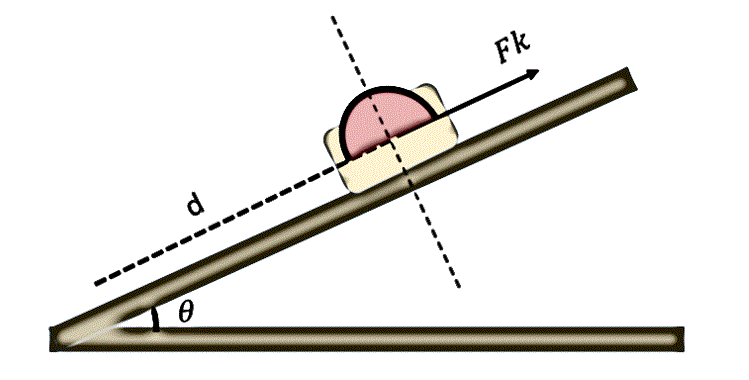
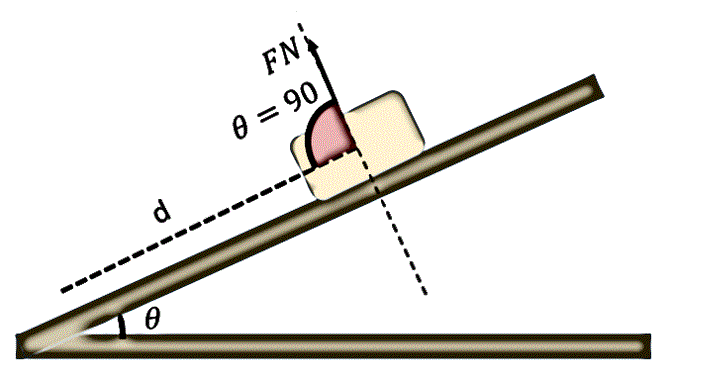
تؤثر ثلاث قوى في جسم ينزلق على مستوى مائل خشن: الوزن mg، والقوة العمودية N، وقوة الاحتكاك f = μ·N. ولنحسب شغل كل قوة نعرف زاويتها مع الإزاحة (الإزاحة على طول المستوى):Three forces act on a body sliding down a rough incline: the weight mg, the normal force N, and friction f = μ·N. To find the work of each force we need its angle with the displacement (taken along the incline):
٧. محصلة الشغل لقوى متلاقية7. Net Work of Concurrent Forces
القوى المتلاقية تؤثر في جسم من نقاط مختلفة لكنها تلتقي في نقطة واحدة. لإيجاد الشغل الكلي توجد طريقتان متكافئتان:Concurrent forces act on a body from different points but meet at one point. There are two equivalent ways to find the total work:
- الطريقة الأولى: نحسب شغل كل قوة على حدة ثم نجمعها جبريًا: W_net = W₁ + W₂ + …Method 1: calculate each force’s work separately and add them algebraically: W_net = W₁ + W₂ + …
- الطريقة الثانية: نجد المحصلة F_net ثم نحسب شغلها: W_net = F_net · d · cosθMethod 2: find the resultant F_net, then calculate its work: W_net = F_net · d · cosθ
٨. الشغل بقوة متغيرة ومساحة المنحنى8. Work by a Variable Force and the Area under the Graph
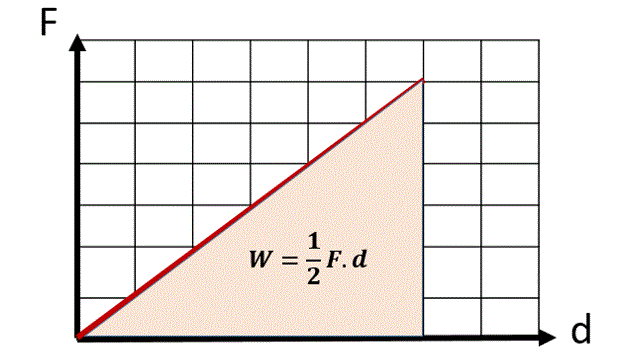
إذا تغيرت القوة أثناء الإزاحة لا يصح استعمال W = F·d. عندئذ نعتمد على التكامل: W = ∫ F(x) dx، أي المساحة تحت منحنى القوة مع الإزاحة. وهذا يشمل الحالات الخاصة: مستطيل لقوة ثابتة، ومثلث للزنبرك، وشبه منحرف عندما تتغير القوة خطيًا.If the force changes during the displacement, W = F·d cannot be used. We then use integration: W = ∫ F(x) dx, i.e. the area under the force–displacement graph. This includes special cases: a rectangle for a constant force, a triangle for a spring, and a trapezium when the force changes linearly.
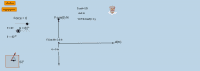
تجربة تفاعلية: الشغل بالمساحة تحت المنحنىInteractive experiment: work as the area under the graph
تجربة: الشغل الناتج عن قوة غير منتظمة (زنبرك)Experiment: work done by a variable force (a spring)
اسحب الزنبرك بمقدار x. القوة F = kx تتغير مع الاستطالة، والشغل يساوي المساحة تحت منحنى F–x. قارن المساحة بالقانون ½kx².Stretch the spring by x. The force F = kx changes with extension, and the work equals the area under the F–x graph. Compare the area with the formula ½kx².
٩. الشغل والطاقة الحركية9. Work and Kinetic Energy
الشغل الكلي المبذول على جسم يساوي التغير في طاقته الحركية: W_net = ½m·v_f² − ½m·v_i². وهذه العلاقة تتيح حساب السرعة إذا عُرف الشغل، أو حساب الشغل إذا عُرفت السرعتان.The total work done on a body equals the change in its kinetic energy: W_net = ½m·v_f² − ½m·v_i². This lets us find the speed when the work is known, or the work when the two speeds are known.
١٠. أمثلة محلولة متقدمة10. Advanced Worked Examples
- W = F·d·cosθ للقوة المنتظمة، و W = ∫F(x)dx للقوة المتغيرة، و W = F⃗·d⃗ بالمركبات.W = F·d·cosθ for constant forces, W = ∫F(x)dx for variable forces, and W = F⃗·d⃗ with components.
- إشارة الشغل تعتمد على الزاوية: موجب (θ < 90°)، سالب (θ > 90°)، معدوم (θ = 90°).The sign of work depends on the angle: positive (θ < 90°), negative (θ > 90°), zero (θ = 90°).
- على المستوى المائل: الوزن يبذل شغلًا موجبًا عند النزول، والاحتكاك سالب دائمًا، والقوة العمودية لا تبذل شغلًا.On an incline: weight does positive work when going down, friction always does negative work, and the normal force does no work.
- W_net = ΔKE، وهي أداة قوية لحساب السرعة.W_net = ΔKE, a powerful tool for finding speed.
اختبار الشغل في الفيزياء Work in Physics Quiz
20 سؤالاً - الشغل، والقوة المنتظمة والمتغيرة، والمحصلة 20 Questions - Work, constant and variable forces, net work
• عدد الأسئلة: 20 سؤالاً
• مدة الاختبار: 30 دقيقة
• لا يمكنك تغيير إجاباتك أو إعادة الاختبار إلا بعد 24 ساعة من التسليم.
• تأكد من إجاباتك قبل التسليم! 📌 Important Instructions:
• Number of questions: 20 questions
• Quiz duration: 30 minutes
• You cannot change your answers or retake the quiz for 24 hours after submission.
• Make sure of your answers before submitting!